Key Takeaways
Key Takeaways A trustworthy Ethiopian clothing marketplace verifies that every garment is handwoven or handcrafted by skilled artisans — not mass-produced abroa
Key Takeaways
A trustworthy Ethiopian clothing marketplace verifies that every garment is handwoven or handcrafted by skilled artisans — not mass-produced abroad.
The habesha kemis is distinguished by regional tilet (embroidery) patterns from Gondar, Tigray, Addis Ababa, and Bahir Dar — each with its own signature aesthetic.
Diaspora shoppers need detailed sizing guides, fabric descriptions, and high-resolution photos to buy traditional clothing with confidence online.
Different Ethiopian and Eritrean ceremonial occasions — weddings, Enkutatash, Timkat, Meskel — call for specific garment weights, colors, and embroidery styles.
Authentic netela and gabi are woven on traditional handlooms; understanding the craft helps buyers appreciate and protect their investment.
Purchasing through a curated marketplace like Derbaba directly sustains generational weaving and embroidery traditions across Ethiopia and Eritrea.
Finding Authentic Habesha Clothing in the Diaspora
Finding genuine habesha kemis, netela, and zuria outside of Ethiopia used to mean relying on a relative's suitcase or a lucky find at a local bazaar. The diaspora experience of sourcing traditional clothing was, for decades, defined by scarcity and uncertainty — a beautiful garment might arrive with the wrong embroidery style, the wrong fabric weight, or dimensions that simply didn't fit. Now, a dedicated Ethiopian clothing marketplace changes that equation entirely, connecting buyers in North America, the UK, and Europe directly with verified artisan sellers from Addis Ababa, Gondar, Tigray, and Bahir Dar.
The demand is real and growing. Ethiopian and Eritrean communities in cities like Washington D.C., Toronto, London, Stockholm, and Minneapolis number in the hundreds of thousands, and the occasions that call for traditional dress — weddings, baptisms, Enkutatash, Timkat, Meskel, and university graduations — happen every year without pause. The gap between that demand and reliable supply is precisely what a curated, culturally informed marketplace is built to close.
What Makes an Ethiopian Clothing Marketplace Truly Authentic
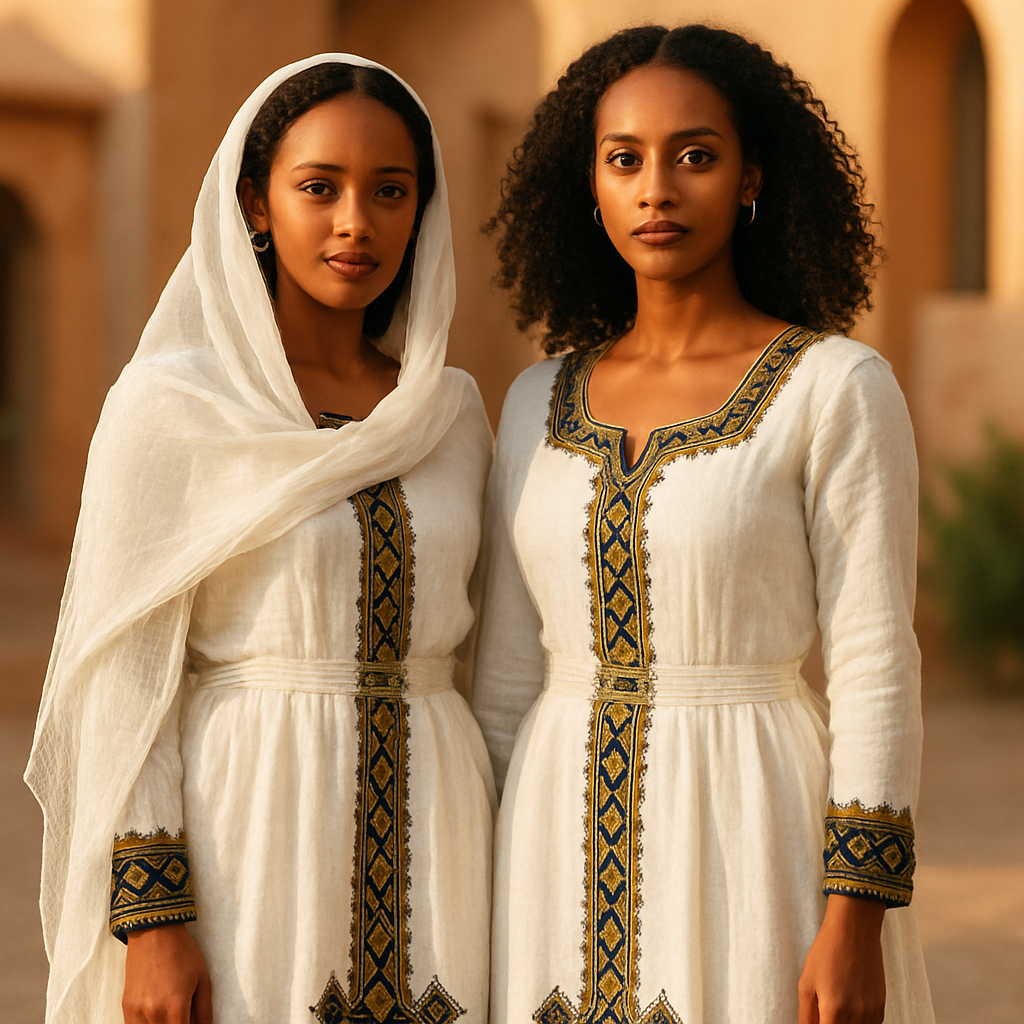
Beyond the fabric itself, authenticity in habesha clothing is expressed through the tilet — the embroidery or woven border that decorates the hem, collar, and cuffs of traditional garments. In a genuinely authentic piece, the tilet is either hand-embroidered using needle and thread or woven directly into the fabric on the loom as a continuous pattern. The motifs used — crosses, geometric stars, stylized flowers, and interlocking borders — carry regional meaning. A Gondarian tilet pattern differs visibly from a Tigrayan one, and an experienced eye can read a garment's origin from the embroidery alone. A marketplace that claims authenticity must be able to communicate these distinctions to buyers who may not yet have that trained eye.
Derbaba approaches this challenge through detailed product documentation. Each listing includes information about the weaving region, the artisan or cooperative that produced the piece, the fiber content, and the specific embroidery tradition represented. This is not merely good retail practice — it is cultural preservation in action. When a buyer in Minnesota purchases a habesha kemis and knows that it was woven by a specific cooperative in Gondar using patterns passed down through four generations, the garment carries meaning that a mass-produced approximation never could.
Regional Styles: Understanding the Differences Between Gondar, Tigray, Addis Ababa, and Bahir Dar
Ethiopia is a country of extraordinary regional diversity, and that diversity is nowhere more visible than in traditional textile traditions. Diaspora buyers who grew up in a particular region often have strong preferences for the aesthetic of their home area, while others — particularly second-generation Ethiopian-Americans or Ethiopian-Canadians — may be exploring the full range of habesha clothing styles for the first time. Understanding regional distinctions helps buyers make informed choices and deepens appreciation for the breadth of Ethiopian material culture.
Gondar is historically associated with some of Ethiopia's most elaborate embroidery traditions. Gondarian habesha kemis frequently feature dense, richly colored tilet work along the hem and neckline, with gold and silver thread woven into the borders for formal occasions. The silhouette tends toward a fuller skirt with a structured bodice, and the overall aesthetic is one of regal elegance — fitting for a city that served as Ethiopia's imperial capital for over two centuries. Wedding garments from Gondar are particularly prized for their intricate cross motifs and layered embroidery panels.
Tigray has its own distinct textile identity, characterized by bold geometric patterns and a preference for high-contrast color combinations. Tigrayan netela often feature strong black or red borders against white cotton, and the embroidery motifs tend toward angular, interlocking designs that reflect the region's ancient pre-Aksumite and Aksumite artistic heritage. The fabric weight in traditional Tigrayan garments is often slightly heavier, suited to the cooler highland climate of the region. For diaspora buyers with Tigrayan roots, finding a garment that reflects this specific aesthetic — rather than a generic "Ethiopian" style — is deeply meaningful.
Addis Ababa, as the cosmopolitan capital, represents a synthesis and evolution of Ethiopian textile traditions. Addis-based designers and artisans have spent decades refining habesha kemis silhouettes, experimenting with embroidery placement, and introducing contemporary color palettes while retaining the fundamental handwoven cotton construction. The result is a range of garments that work equally well for a traditional ceremony and a modern cultural event. Many of the most innovative Ethiopian fashion designers operate out of Addis, and their work — which blends tilet embroidery with contemporary tailoring — is increasingly sought by diaspora buyers who want traditional clothing that also fits modern social contexts.
Bahir Dar, situated on the shores of Lake Tana, is the gateway to the Amhara highlands and home to weaving traditions closely connected to the monasteries of the lake islands. The cotton grown and processed in the Amhara region around Bahir Dar has a particular quality, and the netela and gabi produced there are known for their fine weave and exceptional softness. Bahir Dar–style garments often feature lighter embroidery than Gondarian pieces, with delicate borders that emphasize the quality of the underlying fabric rather than competing with it.
Navigating Fabric Weight and Occasion: A Practical Guide
One of the most common sources of disappointment for diaspora buyers purchasing Ethiopian clothing online is receiving a garment with the wrong fabric weight for the intended occasion. This is an entirely preventable problem when the marketplace provides adequate information — and it is one of the areas where a culturally informed platform makes the greatest practical difference.
Ethiopian traditional garments exist across a spectrum of fabric weights, from the gossamer-light netela used as a head covering or shoulder wrap at indoor ceremonies, to the substantial double-woven gabi designed to provide warmth during outdoor religious observances in the Ethiopian highlands. Understanding where a garment falls on this spectrum is essential before purchasing.
For Enkutatash — the Ethiopian New Year celebrated in September — the occasion calls for fresh, bright white garments that signal renewal and celebration. The fabric weight should be light to medium, comfortable in early autumn temperatures, and the embroidery is typically festive and colorful. A habesha kemis with vibrant tilet in green, yellow, and red is traditional for this occasion, and the garment is often worn with a matching netela draped over the shoulders.
For Timkat — the Ethiopian Orthodox celebration of Epiphany in January — the context is an outdoor procession, often beginning before dawn in the cold highland air. Garments for Timkat need to be heavier, and a full gabi or a thick netela is essential for warmth. The color palette for Timkat is traditionally white, symbolizing spiritual purity, and the embroidery tends toward religious motifs including crosses and geometric patterns associated with the Ethiopian Orthodox tradition.
For Meskel — the Finding of the True Cross, celebrated in late September — the mood is joyful and communal, with large bonfires and outdoor gatherings. Medium-weight garments work well, and the occasion allows for more color variation than Timkat. Bright yellows and golds are particularly associated with Meskel celebrations.
Weddings represent the most elaborate occasion for habesha clothing, and the expectations vary by regional tradition and family preference. In many Ethiopian weddings, the bride wears a heavily embroidered habesha kemis in white or ivory, with tilet work that may take a skilled artisan weeks to complete. The groom may wear a matching white outfit with embroidered trim. Wedding garments are typically the heaviest and most ornate pieces in the traditional wardrobe, and they are often preserved as family heirlooms.
Sizing, Fit, and the Challenge of Buying Traditional Clothing Online
Traditional Ethiopian garments were historically made to measure, cut and sewn by local tailors who knew their clients personally. The shift to online retail introduces a genuine challenge: how do you ensure that a habesha kemis purchased from a seller in Addis Ababa will fit a buyer in Toronto? This is not a trivial problem, and it is one that many general-purpose marketplaces handle poorly when it comes to traditional clothing.
The solution requires a combination of detailed measurement guidance, clear size charts that account for the specific cut of traditional garments, and high-resolution photography that shows how the garment drapes on a body. A habesha kemis, for example, is not sized like a Western dress. The bodice construction, the placement of the embroidered neckline, and the length of the skirt all interact in ways that standard Western sizing charts do not capture. A buyer who orders based on a generic size medium may find that the garment fits in the shoulders but is too short, or that the neckline embroidery sits incorrectly because the bodice proportions differ from what she expected.
The best Ethiopian clothing marketplaces address this by providing measurements in centimeters for bust, waist, hip, and total length, along with guidance on how traditional garments are meant to fit — which is often more relaxed and flowing than contemporary Western fashion. Many sellers also offer custom sizing, where a buyer submits her measurements and the garment is made to order. This service, which was once only available to those with personal connections to tailors in Ethiopia, is now accessible to diaspora buyers anywhere in the world through a well-organized marketplace platform.
The Artisans Behind the Garments: Sustaining a Living Tradition
Every habesha kemis, every netela, every gabi sold through an authentic Ethiopian clothing marketplace represents hours of skilled human labor. The weavers who produce handloom cotton fabric in Ethiopia work on looms that have changed little in centuries, throwing the shuttle by hand across the warp threads in a rhythm that experienced weavers can maintain for hours. A single meter of quality handwoven Ethiopian cotton may take a full day to produce. The embroiderers who add tilet work to finished garments may spend days on a single neckline, working with needles so fine that the thread count per centimeter rivals the finest European needlework traditions.
This labor is chronically undervalued in global markets, and one of the most important functions of a curated, ethical marketplace is to ensure that artisans receive fair compensation for their work. When diaspora buyers purchase through a platform that has established direct relationships with weaving cooperatives and individual artisans, a significantly larger share of the purchase price reaches the people who actually made the garment. This is in stark contrast to the supply chains of fast fashion or generic "ethnic clothing" retailers, where the connection between buyer and maker is completely obscured and margins are extracted at every intermediary step.
The economic stakes are significant. Weaving and embroidery provide livelihoods for tens of thousands of Ethiopian families, particularly in regions where agricultural income is uncertain. The Dorze weavers of the Southern Nations, the cotton processors of the Amhara highlands, the embroiderers of Addis Ababa's artisan workshops — all of these communities depend on sustained demand for their products. Diaspora buyers, by choosing to purchase authentic handmade garments rather than cheaper imitations, are making a direct contribution to the economic resilience of these communities.
Caring for Your Habesha Kemis, Netela, and Gabi
Authentic handwoven Ethiopian garments require care that reflects their construction. The handspun cotton used in traditional netela and gabi is durable but sensitive to aggressive washing and high heat. Most experienced wearers recommend hand washing in cool water with a gentle detergent, then laying the garment flat to dry away from direct sunlight. Machine washing on a delicate cycle is possible for some garments, but the agitation of a standard wash cycle can distort the weave structure and cause embroidery threads to loosen over time.
Ironing is typically recommended for habesha kemis and netela, as the natural cotton fabric wrinkles easily and the crisp, pressed appearance is part of the traditional aesthetic. A medium iron temperature with a pressing cloth between the iron and the embroidered sections will protect the tilet work while smoothing the main fabric panels. Some wearers lightly starch their netela before important occasions to achieve the structured drape that is characteristic of formal habesha dress.
Proper storage matters as well. Handwoven Ethiopian garments should be stored folded rather than hung, as the weight of the fabric can distort the shape of a garment left on a hanger over time. Acid-free tissue paper between folds helps prevent crease lines from setting permanently, and storage in a cool, dry environment protects against the mildew that can affect natural cotton fibers in humid conditions. For heirloom-quality pieces — wedding garments, heavily embroidered ceremonial kemis — professional textile storage is worth considering.
Building a Traditional Wardrobe Across Generations
For many diaspora families, habesha clothing is not simply a costume for special occasions — it is a thread of continuity connecting generations separated by migration and distance. Grandmothers who remember wearing handwoven netela every day pass down not just garments but the knowledge of how to wear them, how to drape a shoulder wrap correctly, how to distinguish quality fabric by touch. Mothers who grew up in Ethiopia and raised children in North America or Europe navigate the challenge of transmitting that knowledge in a context where traditional dress is reserved for specific celebrations rather than daily life.
The second and third generations of the Ethiopian and Eritrean diaspora are increasingly interested in reclaiming this heritage on their own terms — not as obligation, but as identity and pride. A young Ethiopian-American attending her first Enkutatash celebration in a habesha kemis she selected herself, understanding the regional tradition it represents and the artisan who made it, is participating in cultural continuity in a meaningful and informed way. A marketplace that provides not just garments but the context, knowledge, and direct artisan connections to make that participation fully informed is doing something more than selling clothing.
It is building a bridge — between the highlands of Ethiopia and the cities of the diaspora, between the hands of the weaver and the shoulders of the wearer, between the generations who kept these traditions alive under extraordinary circumstances and the generations who will carry them forward into a future that is still being woven, thread by thread, on looms that have not forgotten what they know.