What to Wear to an Ethiopian Wedding: The Complete Habesha Kemis Guide
Attending an Ethiopian wedding? This complete guide covers what brides, grooms and guests wear, how to choose the right habesha kemis, and where to buy authentic pieces shipped to Canada, USA and UK.
Illustration
The Bride: What She Wears
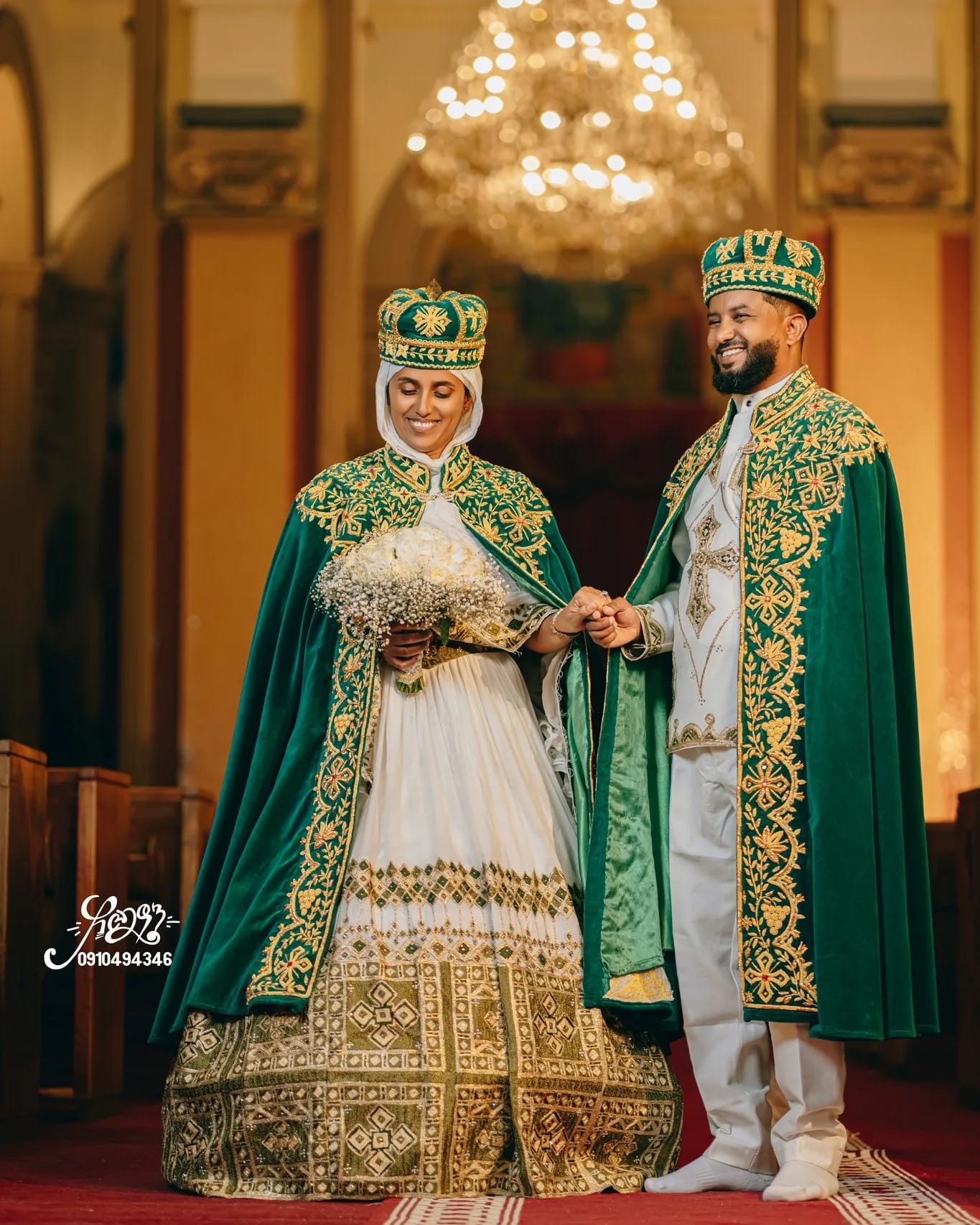
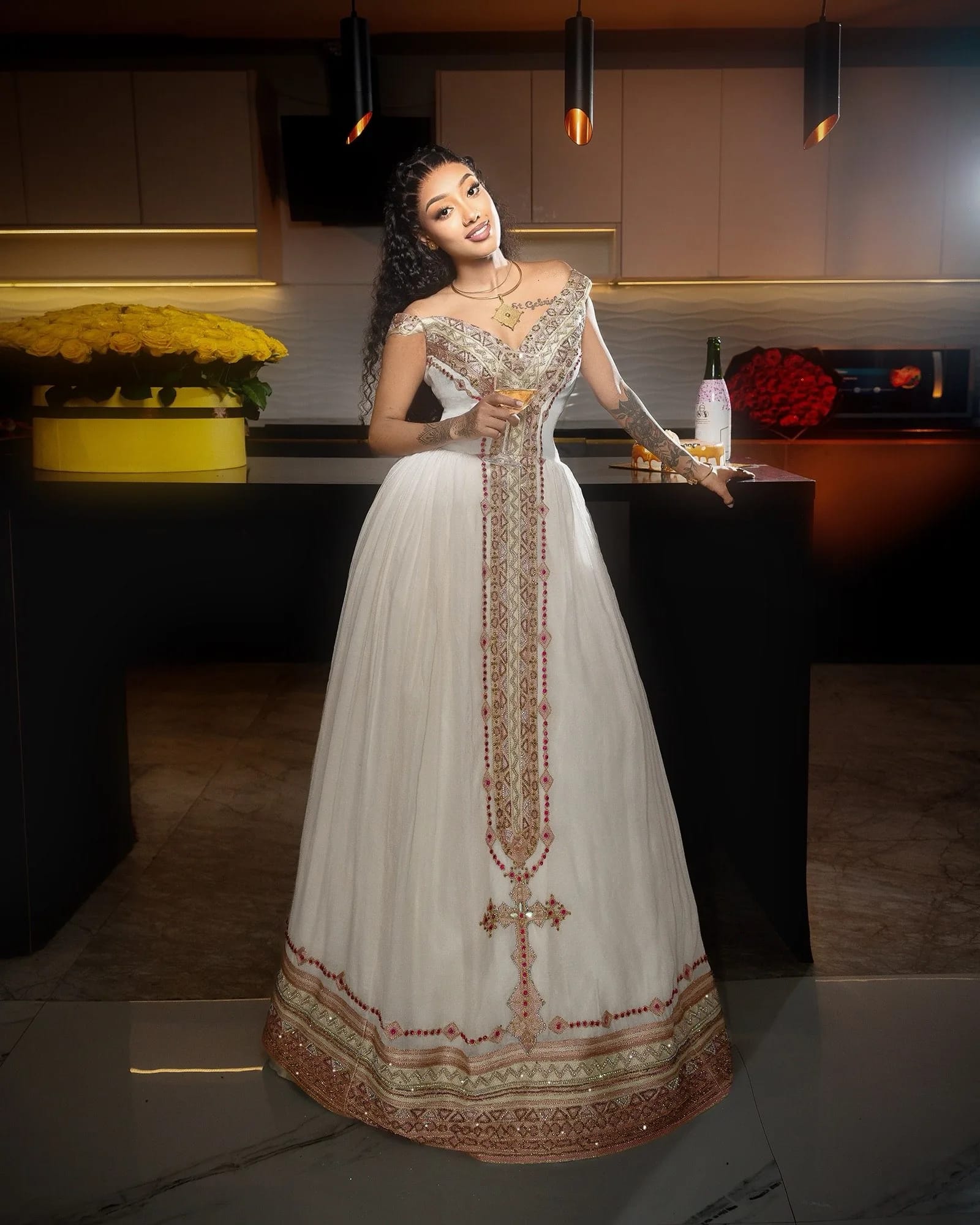
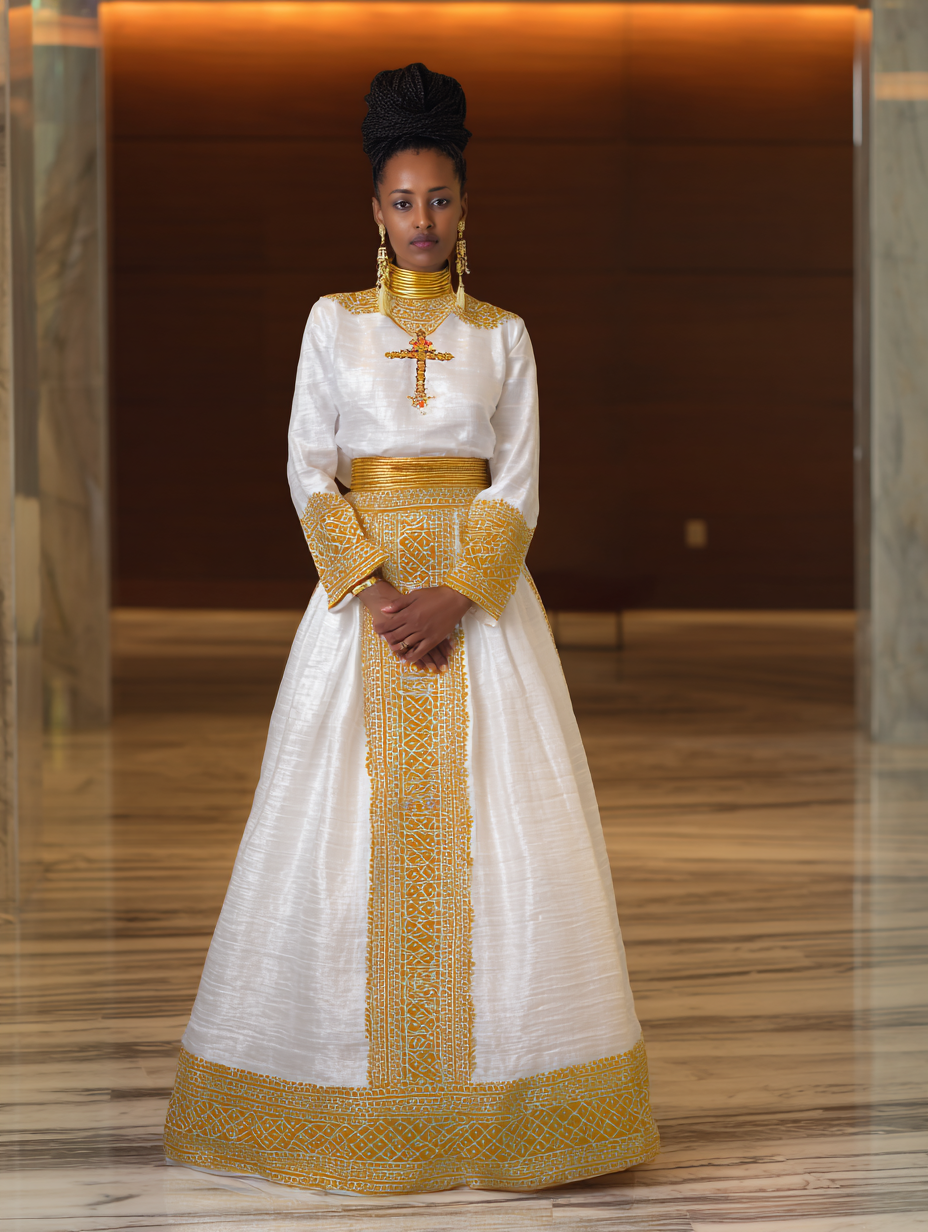
The centrepiece of an Ethiopian bride's outfit is the habesha kemis — an ankle-length, hand-woven cotton dress that has been the foundation of Ethiopian women's formal attire for centuries. For weddings, the kemis is almost always white or ivory, symbolising purity, joy, and the solemnity of the occasion. The fabric itself is lightweight handloom cotton, breathable and flowing, with a subtle texture that distinguishes it immediately from factory-made cloth. A bridal kemis is not something you pick off a rack — it is commissioned, measured to the bride's body, and woven or tailored specifically for the ceremony.
What elevates a bridal kemis from a beautiful dress to a statement of heritage is the tibeb and tilet work. Tibeb refers to the decorative border woven into the hem, cuffs, and collar — intricate geometric patterns created with supplementary weft threads on the loom. Tilet is the more elaborate version: a full panel of metallic gold thread that can cover the entire front skirt or chest of the dress. On a high-ceremony bridal kemis, the tilet panel is dense, lustrous, and unmistakable. It is always done in gold metallic thread, and the effect under ceremony lighting is breathtaking. A bridal kemis with full tilet panelling takes six to ten weeks to complete, depending on the complexity of the design and the skill of the weaver.
Over the kemis, the bride drapes a netela — a large, lightweight cotton shawl with a matching gold border that echoes the tibeb of the dress. The netela is worn over the shoulders and can be pulled up over the head during the church ceremony. It moves beautifully and adds a sense of grace and modesty to the overall silhouette. The gold border of the netela should match the tone and weight of the tibeb on the kemis; a well-coordinated bridal set looks unified from head to toe.
Jewellery completes the look. Ethiopian bridal jewellery is traditionally gold — real gold when the family can afford it, or high-quality gold plate. The most iconic piece is the Lalibela cross pendant, worn on a mateb cord (a braided silk or cotton neck cord that signifies Ethiopian Orthodox Christianity). Gold earrings, often large and ornate, frame the face, and gold bangles or cuffs stack on the wrists. The bride's hair is typically styled in traditional braids — tight cornrows that sweep back from the forehead, sometimes adorned with small gold pins or beads. Together, the kemis, netela, jewellery, and braids create one of the most striking bridal looks in the world.
The Groom: Traditional Wedding Attire
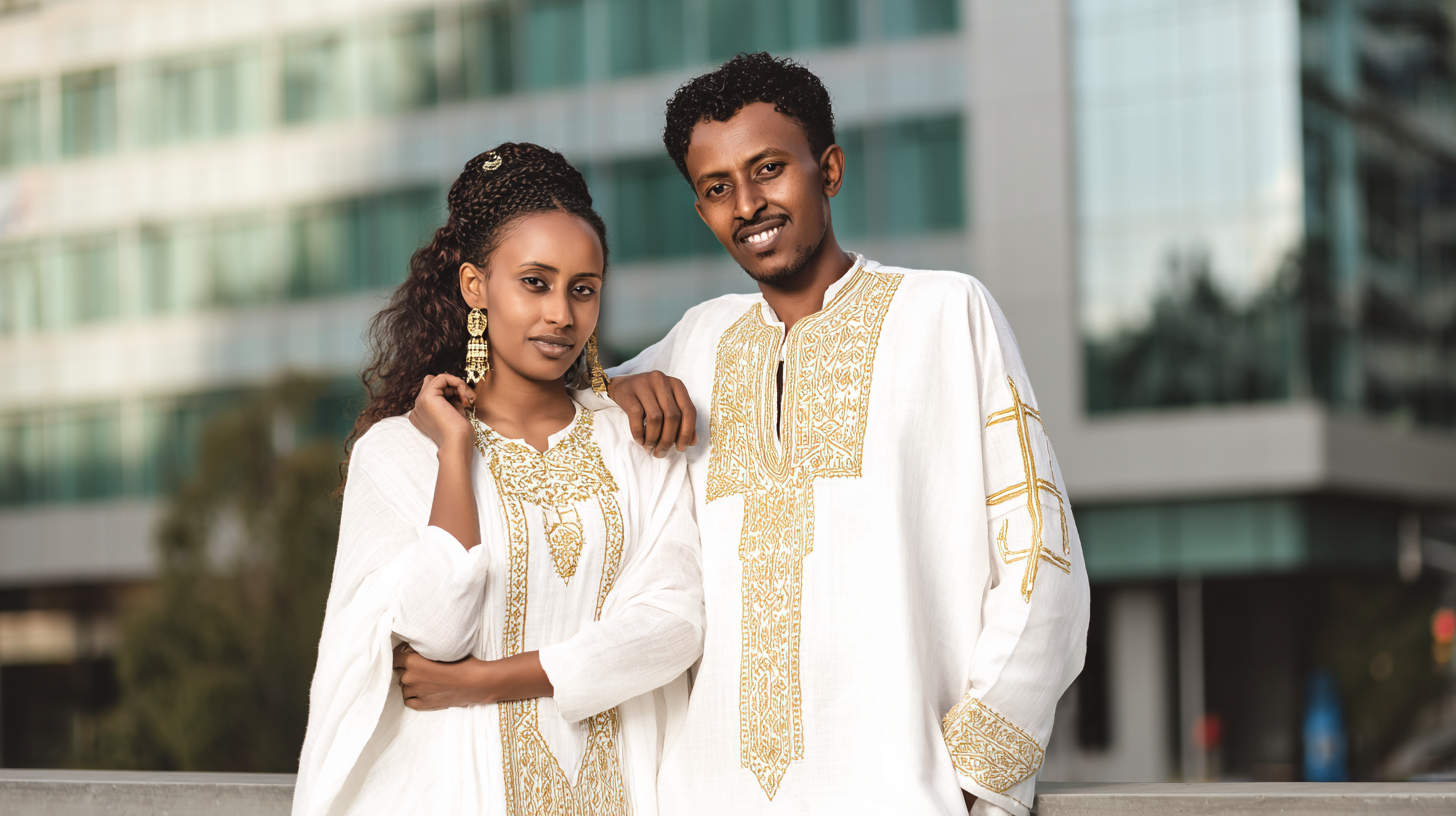
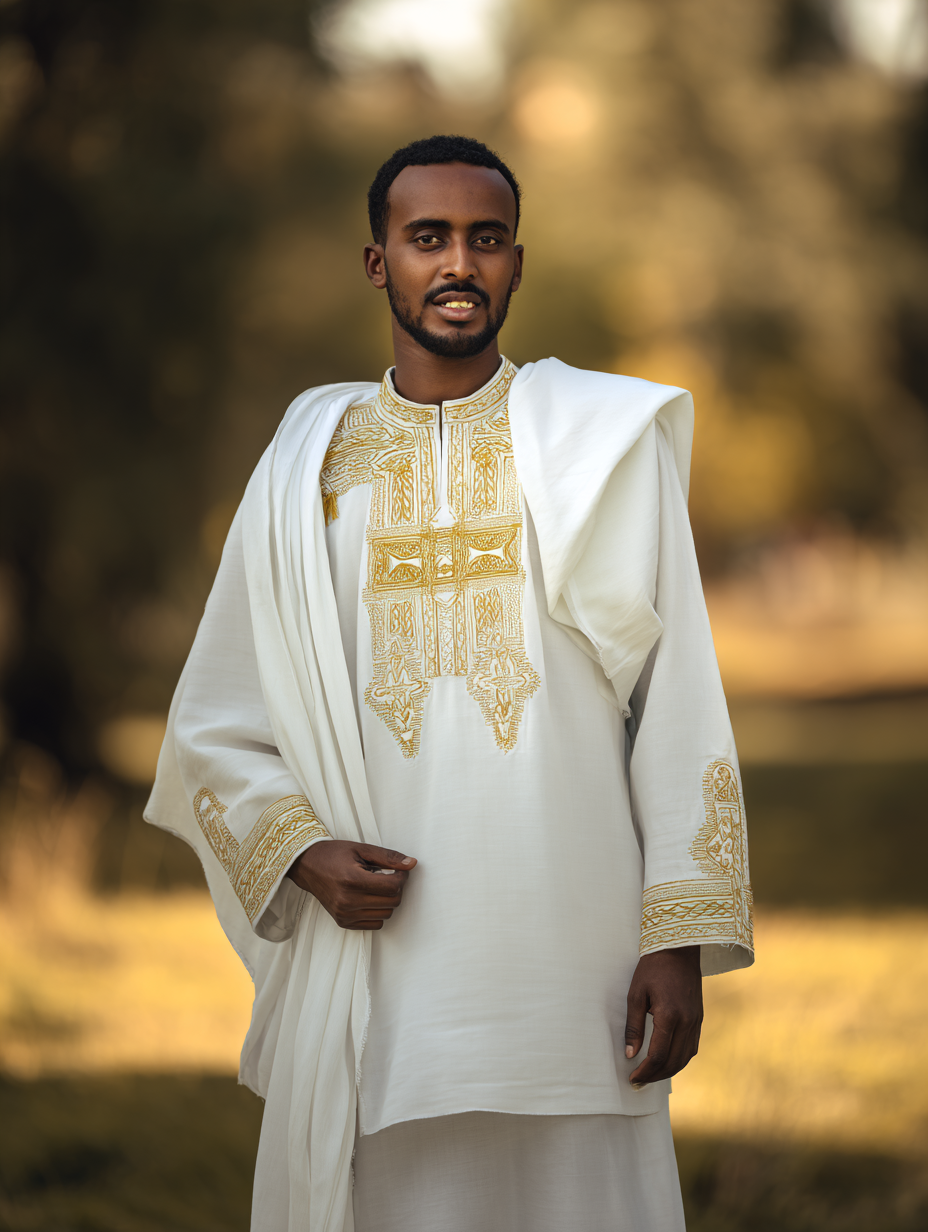
The groom's traditional attire mirrors the bride's in its emphasis on white cotton and fine embroidery, but follows a distinctly masculine silhouette. The core garment is a white cotton tunic — cut to mid-thigh or knee length, with long sleeves and a high neckline. The tunic typically features Coptic cross embroidery on the chest, collar, or cuffs, rendered in the same gold or coloured thread used in the bride's tibeb. Beneath the tunic, the groom wears white cotton trousers, usually straight-legged and hemmed to the ankle. Over everything goes the gabi — a heavier, thicker version of the netela shawl, draped over one shoulder or wrapped around both, with a prominent tibeb border along the edge.
In modern Addis Ababa, many grooms opt for a hybrid look that bridges tradition and contemporary fashion. This might be a tailored white suit — sometimes with a Nehru collar or mandarin collar — featuring Ethiopian cross embroidery on the lapels, cuffs, or pocket square. Some grooms commission a white blazer with tibeb-inspired patterns woven into the fabric itself. The result is a look that reads as distinctly Ethiopian even in a Western silhouette. Whether fully traditional or modern-hybrid, the groom's outfit is always coordinated with the bride's kemis in terms of colour tone and the style of embroidery or tibeb used.
Wedding Guests: What Is Expected
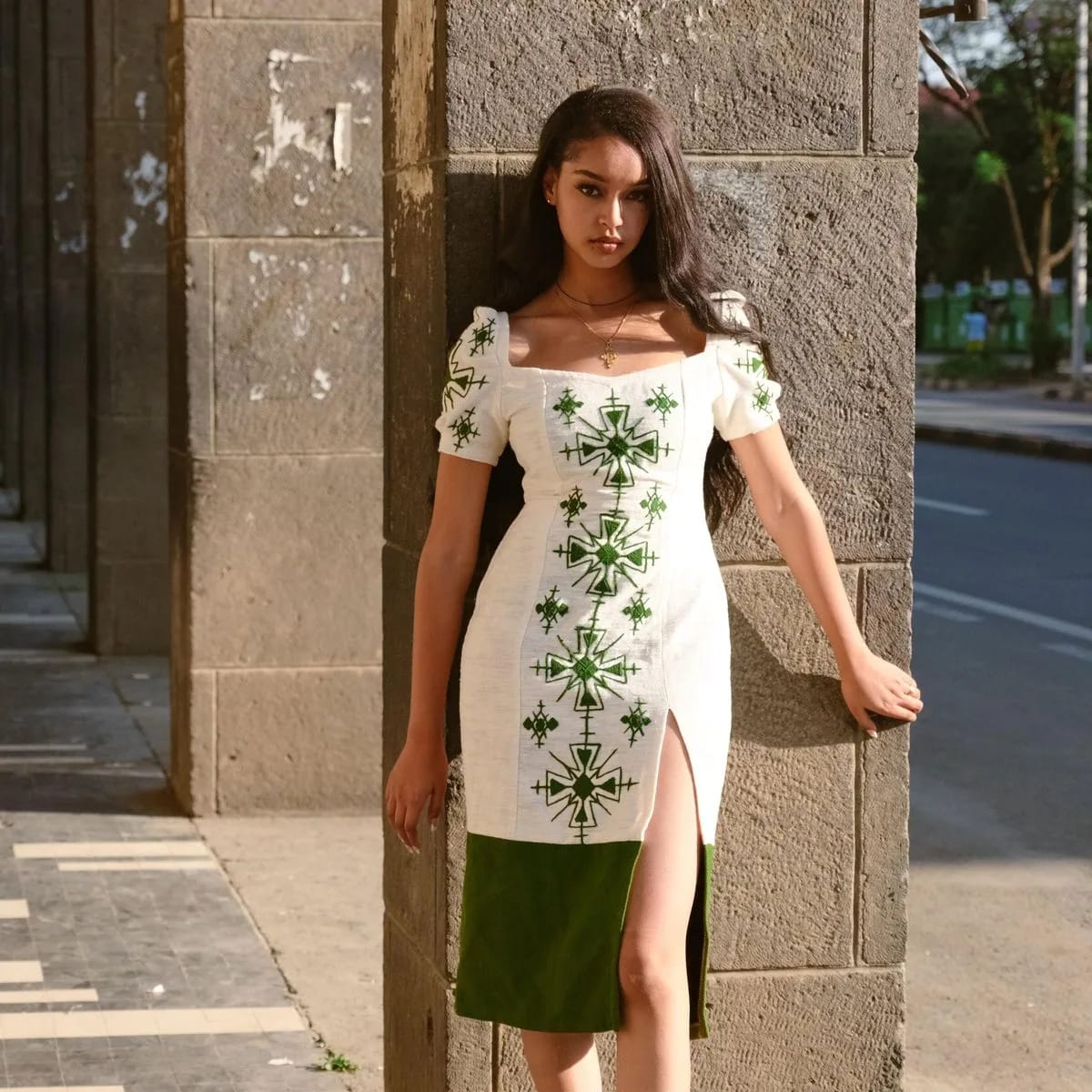
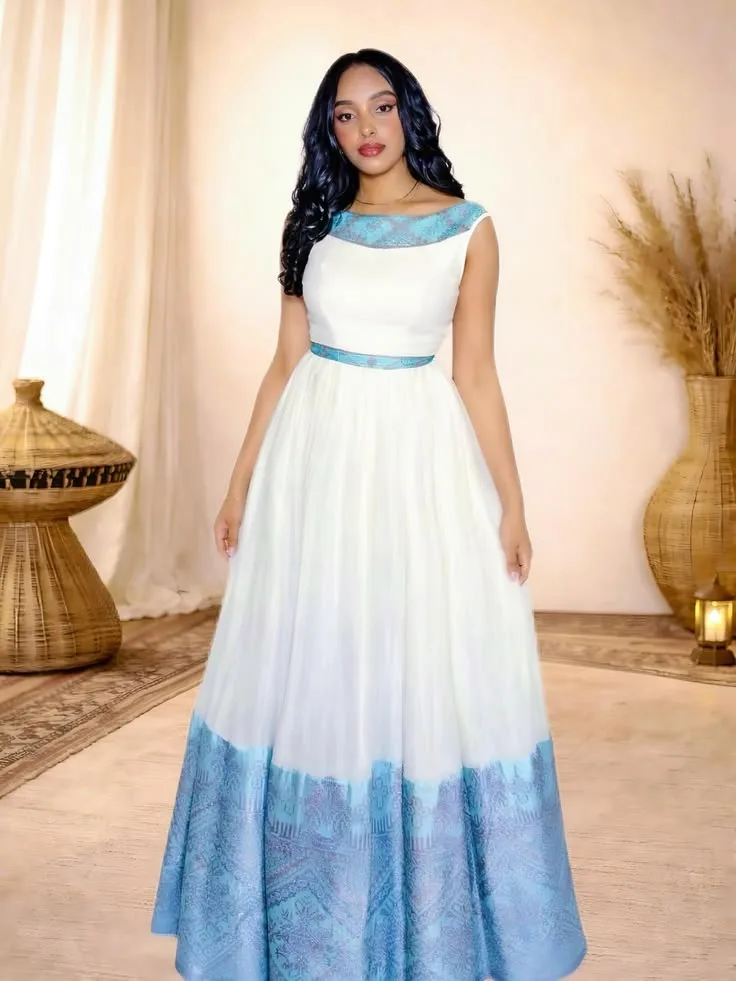
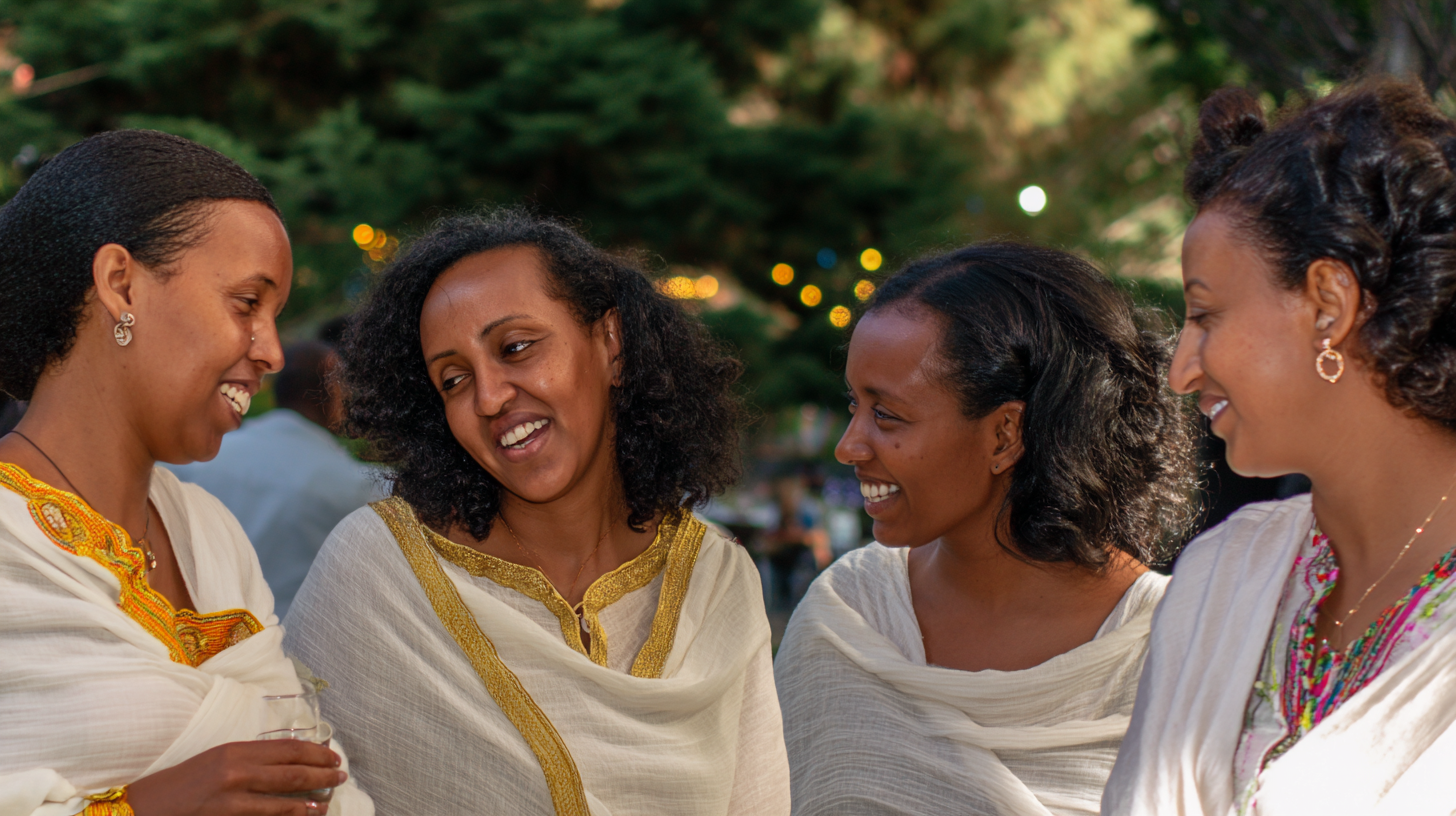
As a guest at an Ethiopian wedding, wearing traditional clothing is not only welcomed — it is deeply appreciated by the families involved. For women, the habesha kemis is the standard choice. However, there is an important unwritten rule: guests should avoid wearing pure white. Ivory, cream, and off-white are all perfectly acceptable and very common, but brilliant white is reserved for the bride. Many women guests also choose kemis in soft colours — pale gold, champagne, light blue, or blush — which look beautiful in photographs and clearly distinguish the guest from the bridal party.
The tibeb on a guest's kemis should be less elaborate than the bride's. A border tibeb at the hem and cuffs is ideal — elegant and respectful without competing with the bride's full tilet panel. Many diaspora women own one or two ceremony-grade kemis that they wear to weddings, holidays, and church events throughout the year. If you do not own a kemis and are attending your first Ethiopian wedding, purchasing one is a worthwhile investment. It signals genuine respect for the culture, and you will wear it again.
For men, the traditional option is a white tunic and trousers with a tibeb scarf draped over one shoulder. This is the simplest and most universally appropriate choice. Men who prefer Western clothing can wear a dark suit with a traditional scarf or pocket square that incorporates Ethiopian textile patterns. The key detail for male guests is the scarf or shawl over the shoulder — even a simple white cotton netela with a thin tibeb border elevates a Western suit into something that honours the occasion.
Buying a Wedding Kemis from Abroad
If you are ordering a bridal or ceremony kemis from outside Ethiopia, the most important thing you can do is provide accurate measurements. Sellers need five key measurements, all in centimetres: bust, waist, hip, full height (from the top of the shoulder to the floor), and shoulder width. Some sellers will also ask for arm length and neck circumference. Take these measurements over lightweight clothing, standing straight, and have someone help you — self-measuring introduces errors, especially for shoulder width and height.
For a custom bridal kemis with full tilet work, budget six to eight weeks from the time you confirm the order. This is not a delay — it is the reality of hand-weaving. The tilet panel alone can take three to four weeks on the loom, and finishing, tailoring, and quality checks add additional time. If you are ordering for a wedding with a fixed date, place your order at least ten weeks in advance to allow for any adjustments or shipping delays.
Derbaba's sellers are independent tailors and weavers in Addis Ababa, and most kemis are made to order rather than shipped from stock. Production usually runs one to four weeks depending on how much tilet work the design involves, plus international shipping on top, the timing of which varies by courier and destination — ask the seller for a realistic estimate to your city. Some sellers may have a finished piece in a standard size ready sooner — it is always worth asking directly over WhatsApp before you order. For a wedding with a fixed date, message the seller as early as you can, confirm the full timeline in writing, and leave a buffer for shipping and any final alterations.
Regional Variations Worth Knowing
Ethiopian wedding attire is not monolithic — it varies significantly by region, and understanding these differences can help you choose a style that resonates with your family's heritage or simply appeals to your taste.
Gondar style is perhaps the most widely recognised. Gondare kemis feature a distinctive heavy tibeb rim along the back hem — a wide, dense band of gold thread that catches the light when the bride walks. The jano fabric associated with Gondar incorporates red tilet accents alongside the gold, creating a warm, regal palette that is unmistakable. Gondare bridal sets are often the most heavily ornamented of all Ethiopian regional styles, with tibeb covering a greater proportion of the garment surface.
Tigrayan style takes a bolder, more geometric approach. The embroidery tradition known as tilfi features prominent cross motifs — not just the Lalibela cross but also broader, more angular cross designs that are specific to Tigray. The patterns tend to be larger in scale, with thicker lines and more dramatic contrast against the white base cloth. Tigrayan bridal wear has a striking, architectural quality that photographs exceptionally well.
Harari style stands apart from the highland traditions entirely. Harari women wear the Tey Eraz for everyday occasions and the Gay Eraz for celebrations — both are more colourful than the highland kemis, incorporating rich purples, greens, oranges, and reds. Harari wedding dress draws from Islamic textile traditions as well as Ethiopian ones, and the result is a vibrant, layered look that is distinct from anything you will see at an Amhara or Tigrayan wedding. If you are attending a Harari wedding, ask the family for guidance on appropriate dress — the expectations differ from highland Ethiopian norms.