Netela and Shash: The Complete Guide to Ethiopian Shawls
What is a netela? What is a shash? This complete guide explains Ethiopia's most essential textile — how it's made, how it's worn, the different border styles, and how to buy authentic netela online.
Illustration
What Is a Netela?
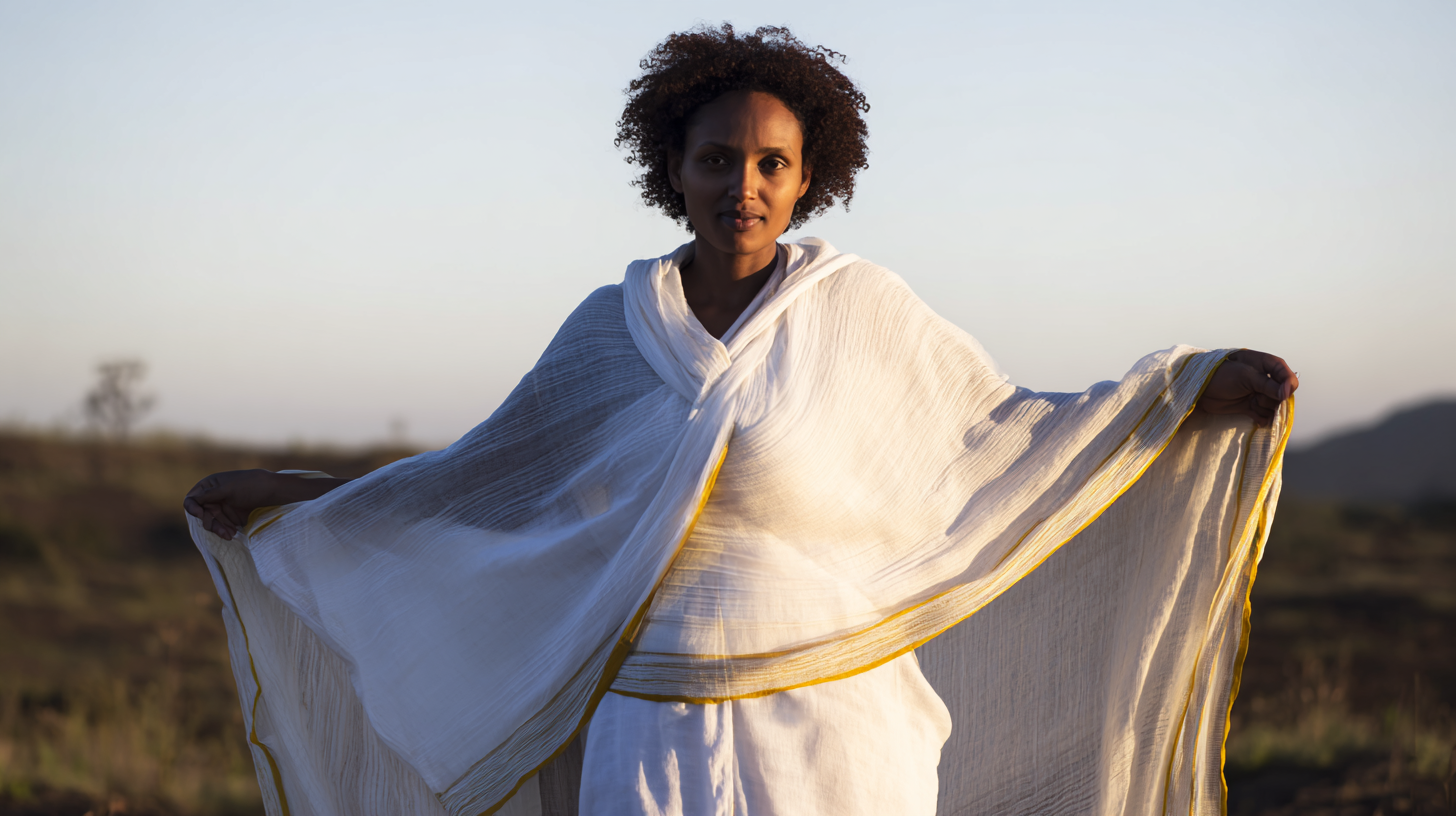
A netela (pronounced neh-TEH-la, sometimes spelled natala) is a large, lightweight rectangular shawl woven from hand-spun cotton. It is the most widely used traditional textile in Ethiopia, worn by women across ethnic groups and regions. The base fabric is almost always white or natural off-white, and the defining feature is the tibeb border — a strip of decorative weaving that runs along the bottom edge and sometimes the sides.
A standard netela measures roughly 160 centimetres wide by 260 centimetres long, though sizes vary by region and intended use. The weave is fine and loose, which gives the fabric its characteristic lightness. Even a large netela can be folded into a small bundle and carried in a handbag, then shaken out and draped in seconds. This portability is part of its cultural importance — it is always available, always appropriate, always ready.
The netela is distinct from the gabi, which is the heavier, thicker blanket-style shawl traditionally worn by men. A gabi is typically four layers of woven cotton, dense enough to serve as outerwear in highland cold. The netela, by contrast, is a single layer — light enough to drape and layer over a kemis without adding bulk, sheer enough to let the underlying garment show through when worn loosely. The two are sometimes confused in online listings, but the difference in weight, thickness, and intended use is significant.
The Border: Where the Netela Gets Its Character
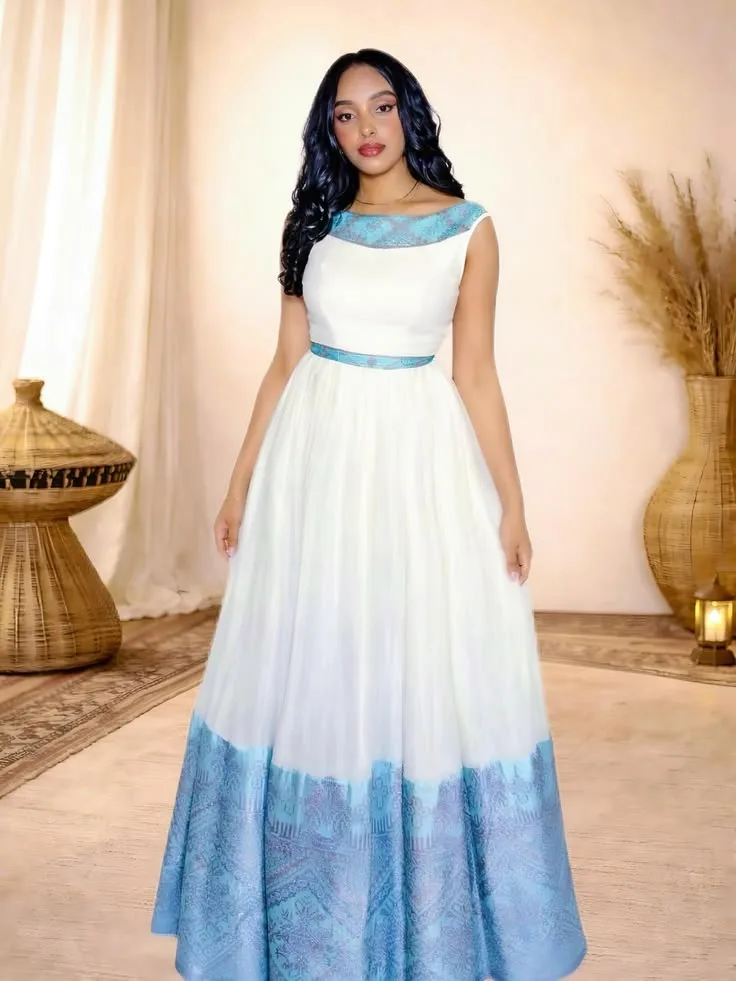
The border of a netela is where the craft, the cost, and the identity live. A plain netela with no tibeb is serviceable but unremarkable. The border transforms it into something specific — formal or casual, regional or national, sacred or celebratory. Four border styles are most common, and each carries its own meaning and associations.
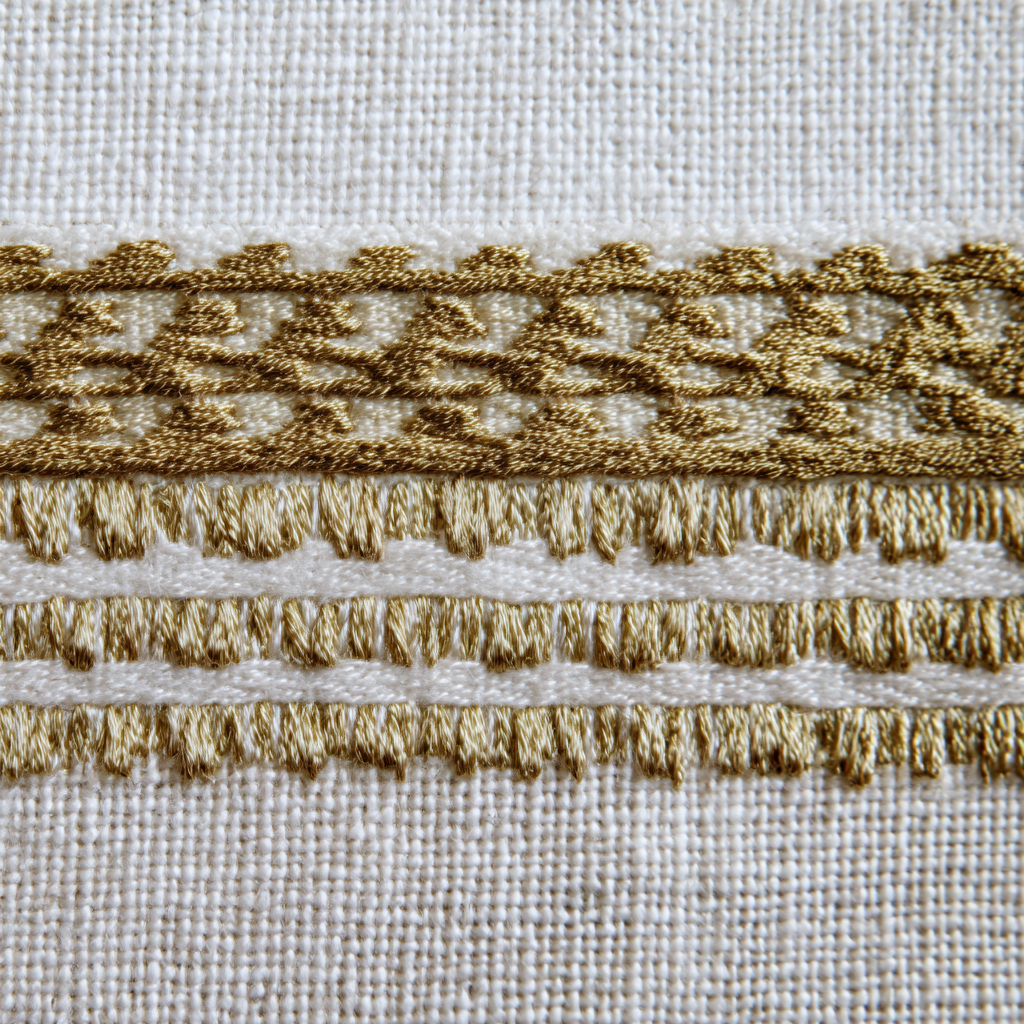
Menen border: Named for Empress Menen Asfaw, wife of Emperor Haile Selassie, this is the most formal and widely recognised netela border style. The Menen border features geometric patterns woven in gold or metallic thread, arranged in a repeating band that runs the full width of the shawl. The patterns are precise, symmetrical, and relatively narrow — a strip of light rather than a heavy panel. Menen-border netela are the standard choice for church attendance, formal dinners, and state occasions. When you see photographs of Ethiopian women at a wedding or a major holiday, the gold-bordered netela they are wearing is almost certainly Menen style.
Axum border: This style features cross motifs — typically the Ethiopian Orthodox cross in various stylised forms — woven into the border band. It is most common in Tigrayan netela and carries strong religious significance. The crosses may be small and repeated in a continuous row or larger and spaced further apart, depending on the weaver and the intended use. Axum-border netela are frequently worn to church services in Tigray and among Tigrayan communities in the diaspora.
Tilet border: A tilet border is broader and more ornate than a standard tibeb strip. It can cover several centimetres of the netela edge in densely woven geometric patterns, sometimes incorporating multiple colours of metallic or silk thread. A tilet-border netela is ceremony-grade — worn at weddings, christenings, and major religious holidays. The weaving time for a tilet border can add many hours to the production of the shawl, and the price reflects that investment.
Flag colours: Green, gold, and red borders are woven into netela for national celebrations — Enkutatash (Ethiopian New Year), Meskel, and patriotic occasions. These are festive rather than formal, and they make a strong visual statement. The colour bands are usually woven in satin-finish thread so they catch the light, and the effect against the white cotton base is striking. Flag-colour netela are popular in the diaspora for Independence Day celebrations and Ethiopian cultural events.
How the Netela Is Worn
The way a netela is draped communicates context, respect, and intention. There is no single correct way to wear one, but certain conventions are deeply established and widely understood across Ethiopian culture.
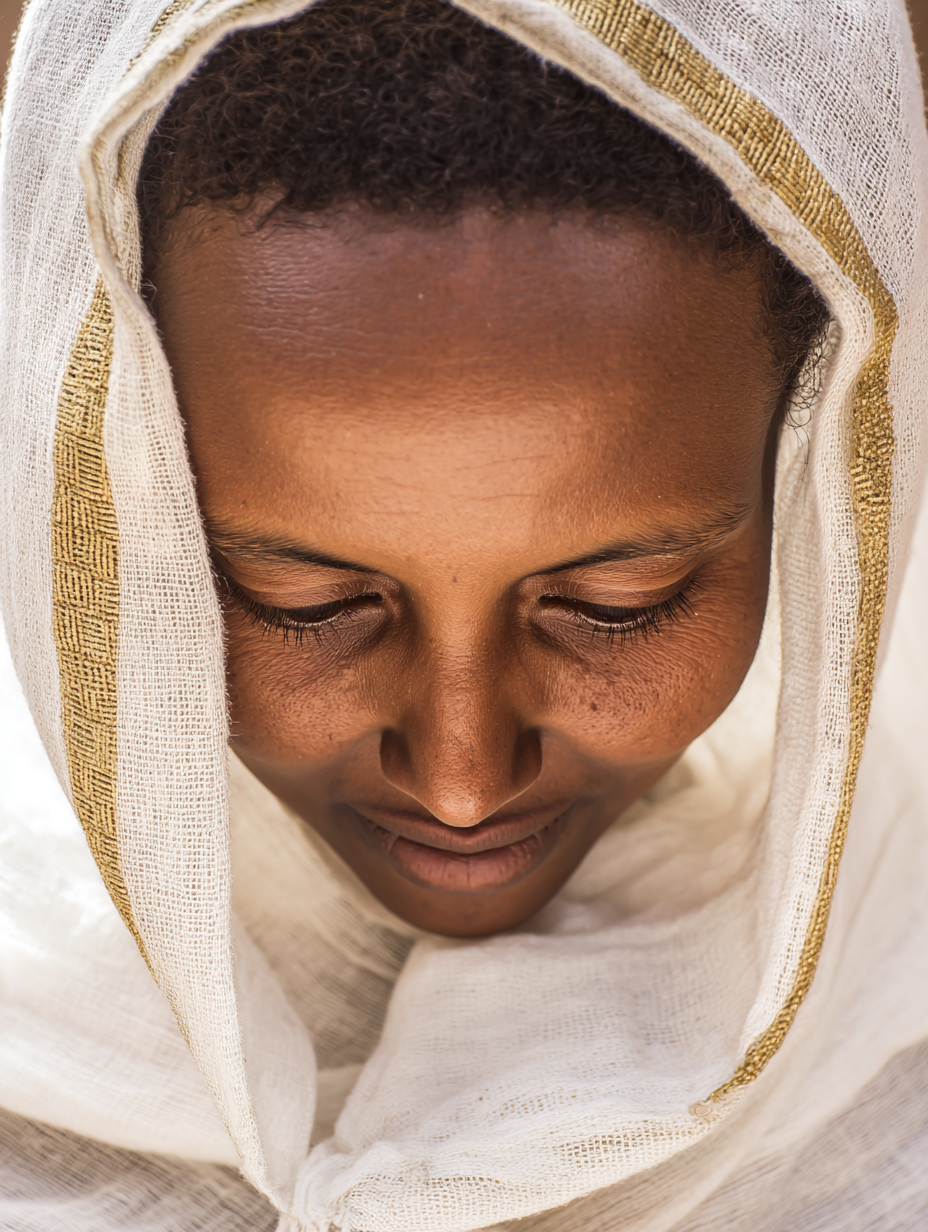
At church: The netela is drawn over the head so that it covers the hair entirely, with the tibeb border framing the face. The remaining length falls over both shoulders and down the back. This is a gesture of respect and modesty — it is considered inappropriate for women to enter an Ethiopian Orthodox church without a head covering, and the netela is the traditional choice. The way the border frames the face when worn this way is one of the most recognisable images in Ethiopian culture.
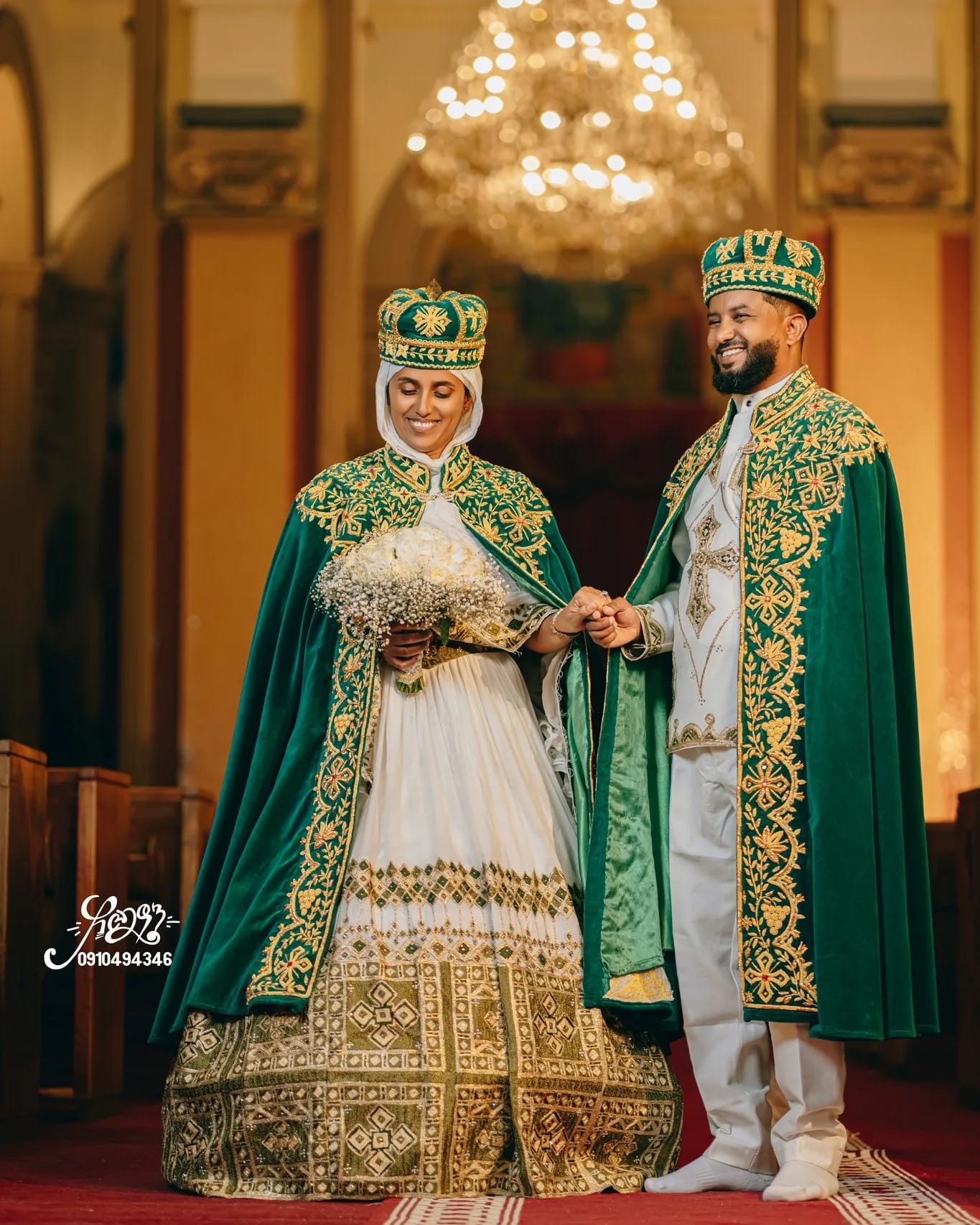
At weddings: The netela is draped over both shoulders and allowed to hang loosely, with the tibeb border visible at the front. The drape is open and generous — the netela is a display piece as much as a covering. Brides and guests often wear matching or coordinating netela, and the quality of the border is a point of pride. At formal receptions, the netela may be arranged so the border falls precisely across the front of the body, creating a visual frame for the kemis underneath.
Everyday wear: Outside of formal settings, the netela is worn loosely over one shoulder, sometimes tucked under an arm. This casual drape works naturally with Western clothing — jeans and a blouse with a netela over one shoulder is a common sight in Addis Ababa. Younger women in the diaspora wear netela this way at cultural events, coffee ceremonies, and family gatherings, blending tradition with personal style.
At christenings: After baptism in the Ethiopian Orthodox tradition, the newborn is wrapped in a white netela. The fabric chosen for this purpose is usually new, clean, and finely woven — sometimes a family heirloom passed through generations. The act of wrapping the child in the netela carries spiritual significance and marks the infant's entry into the faith community. Many families keep the christening netela as a keepsake.
What Is a Shash?
While the netela belongs to the Amhara and Tigrayan highland traditions, the shash comes from a different world — the walled city of Harar and the broader Harari cultural sphere in eastern Ethiopia. A shash is a structured head covering, worn by Harari women as part of their distinctive traditional dress. Unlike the netela, which is draped freely and can serve many functions, the shash is specifically a head garment, shaped and decorated with intention.
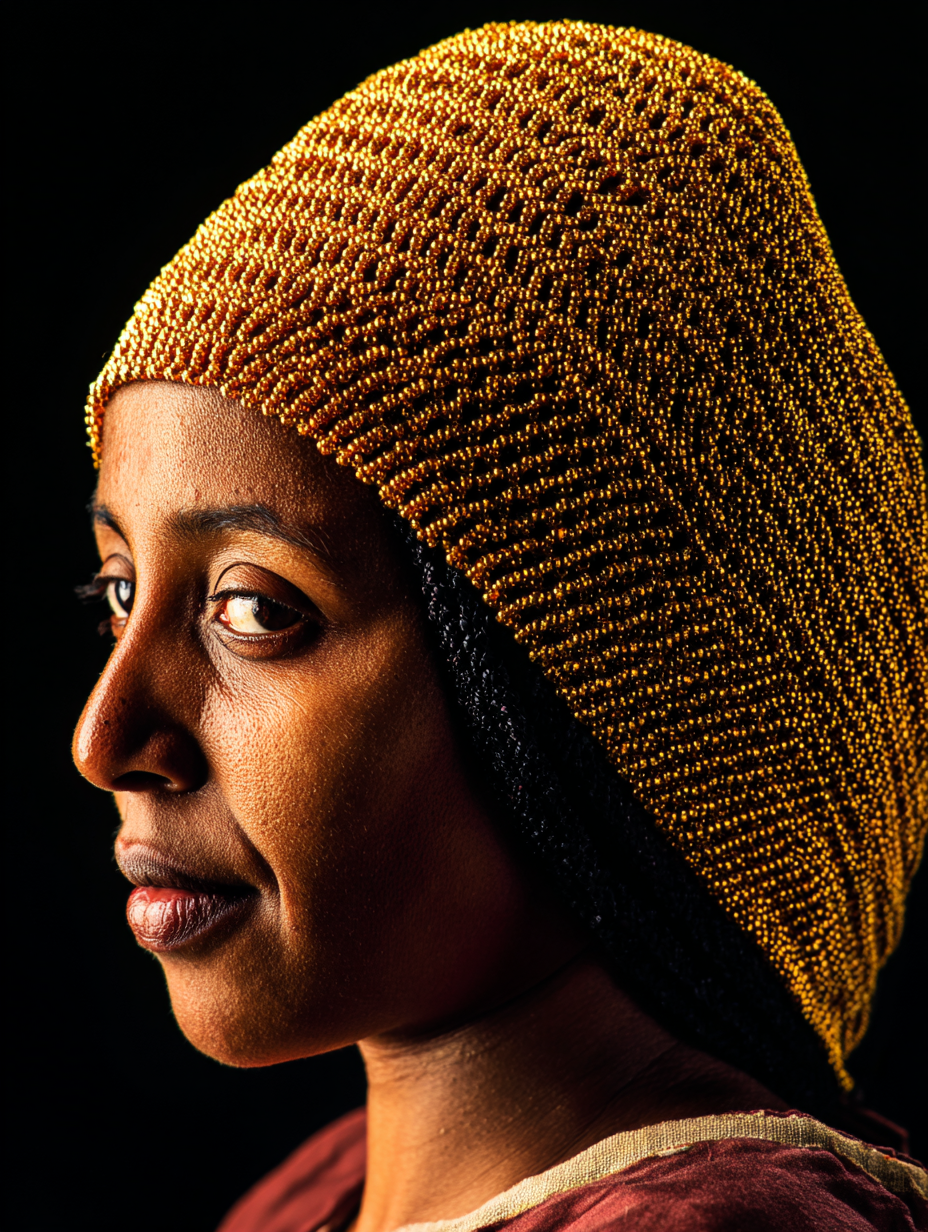
The defining feature of a Harari shash is the beadwork. Gold, amber, and jewel-tone glass beads are sewn individually by hand onto the fabric, creating intricate geometric patterns that can take days to complete. The bead colours and arrangements are not random — they communicate the wearer's social status, marital status, and sometimes her specific family lineage within Harari society. A heavily beaded shash with gold-tone and amber elements is typically reserved for married women and formal occasions.
The craft of making a shash is distinct from the loom-based textile work of highland Ethiopia. Shash-making is a needle art — the beadwork is applied by hand, bead by bead, onto a base fabric that may itself be embroidered or dyed. The skills are passed from mother to daughter within Harari families, and a well-made shash is considered a significant personal possession. In the context of Ethiopian textiles, the shash represents a completely different aesthetic tradition from the Amhara and Tigrayan netela — brighter, more structured, more overtly decorative, and rooted in the Islamic and trade-route influences of eastern Ethiopia.
Buying a Netela Online
Buying a netela without being able to touch it requires knowing what questions to ask and what details to look for in photographs. The difference between a beautiful, long-lasting netela and a disappointing one often comes down to four factors.
Ask about the thread. Hand-spun cotton is the traditional material and produces a netela with a soft, slightly irregular texture that drapes naturally. Synthetic blends — polyester or nylon mixed with cotton — are cheaper but feel stiffer, hold less shape over time, and lack the breathability that makes a cotton netela comfortable in warm weather. A seller who knows their product should be able to tell you immediately whether the base fabric is hand-spun cotton or a synthetic blend.
Is the border woven or printed? This is the single most important quality question for a netela. A woven tibeb border is created on the loom as part of the fabric — the decorative threads are integrated into the weave structure and cannot be separated from the base cloth. A printed border is a pattern applied to the surface of the fabric after weaving, usually by heat transfer or screen printing. Woven borders have a raised, textured feel that is visible in close-up photographs. Printed borders look flat and uniform. The price difference between the two is substantial, and the durability difference is even more so — a printed border will fade with washing, while a woven border will not.
Check the dimensions. A proper netela should measure at least 160 centimetres wide by 240 centimetres long. Smaller pieces may be marketed as netela but are really scarves or half-size shawls that will not drape correctly when worn over the head and shoulders in the traditional style. If the listing does not specify dimensions, ask before purchasing.
Look for hand-rolled edges. On a quality handwoven netela, the long edges are finished by hand — the weaver rolls the raw edge inward and secures it with a fine running stitch. This creates a neat, slightly rounded edge that prevents fraying. Machine-serged edges are faster but less durable and less attractive. Hand-rolled edges are a reliable signal that the netela was made with care from start to finish.