Loading listings…
About the habesha kemis
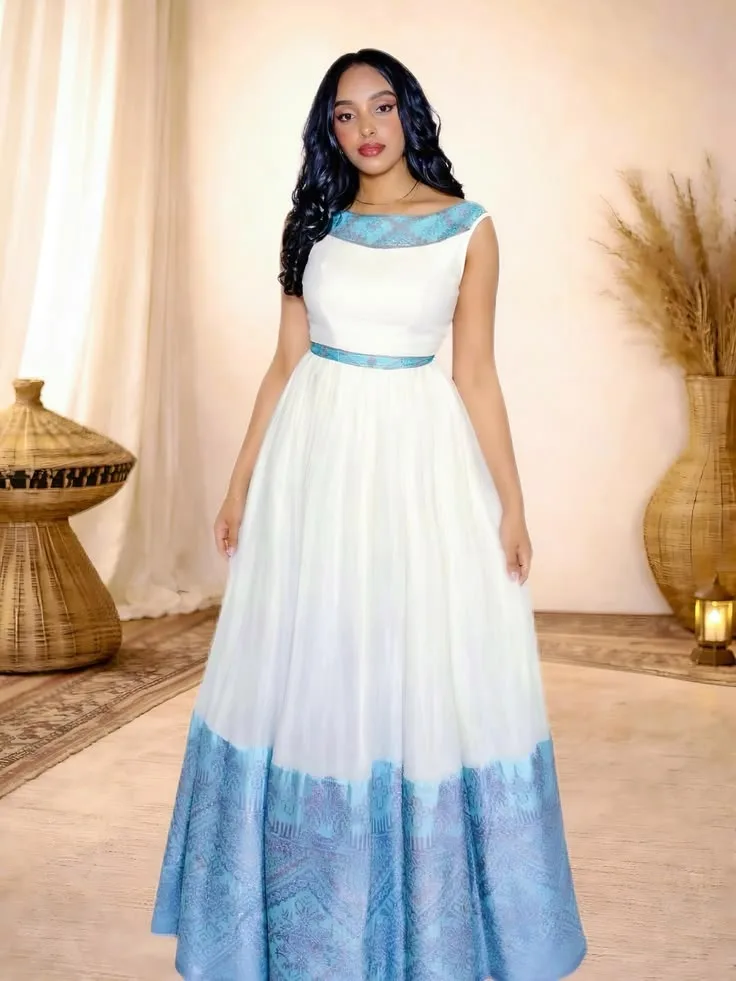
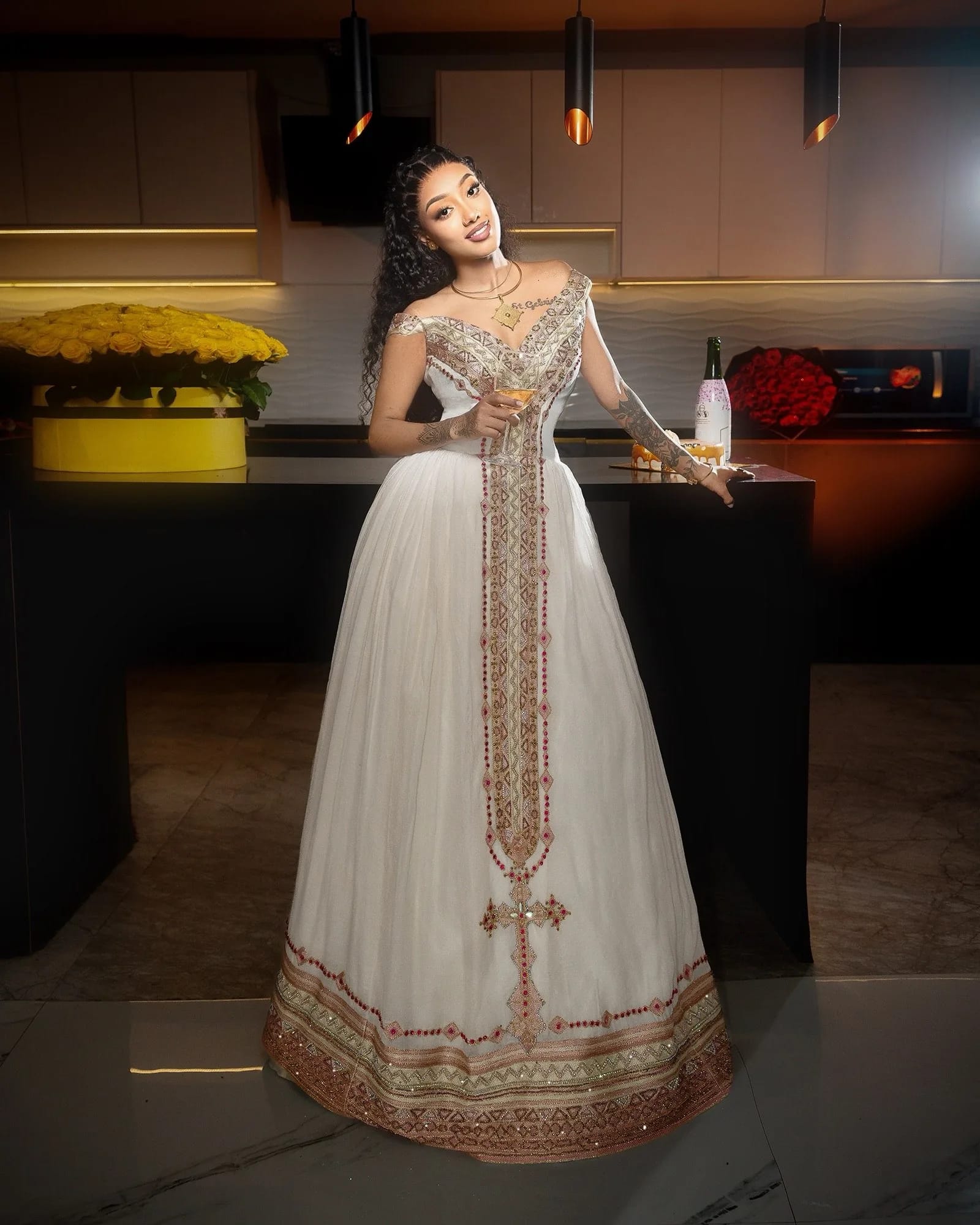
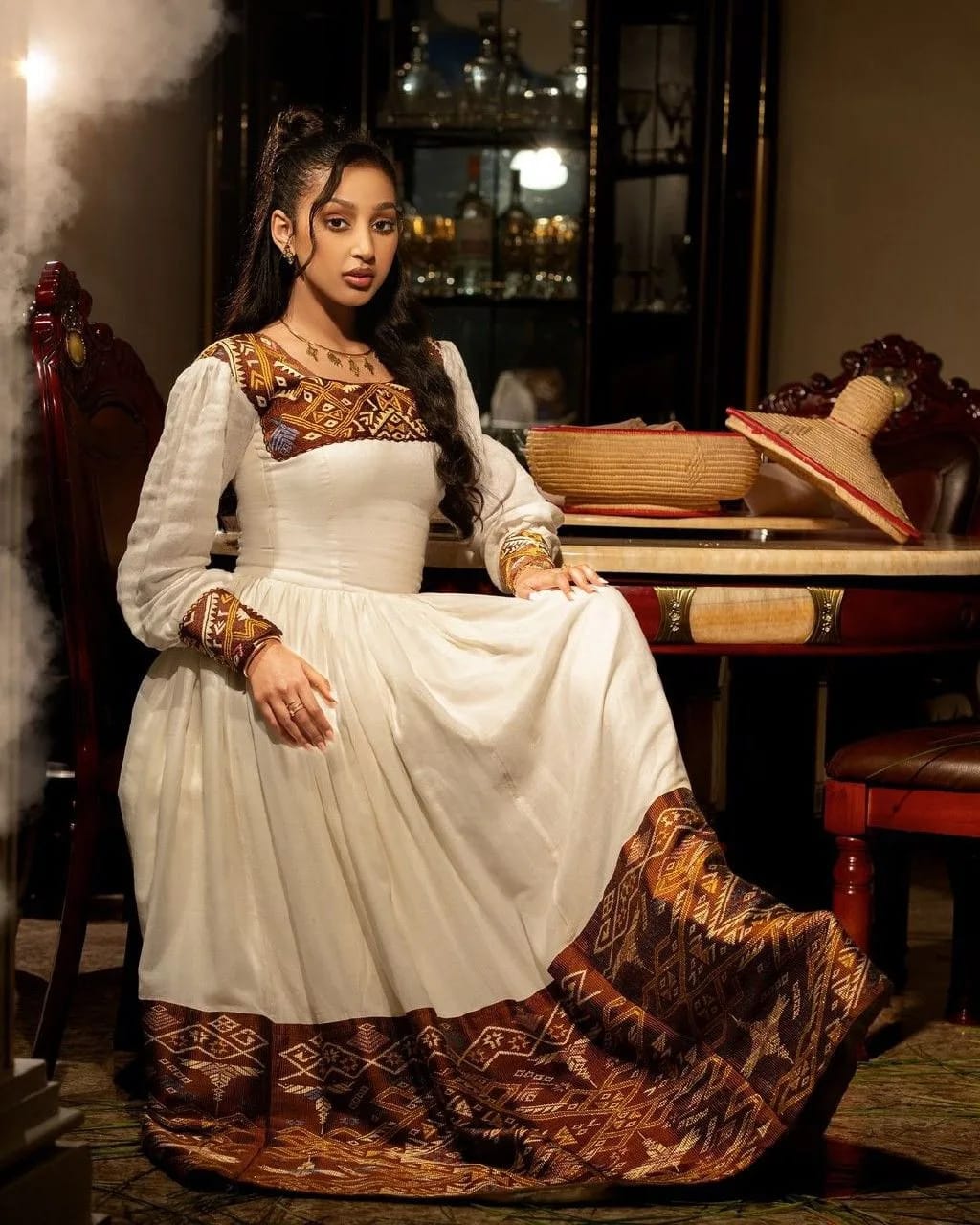
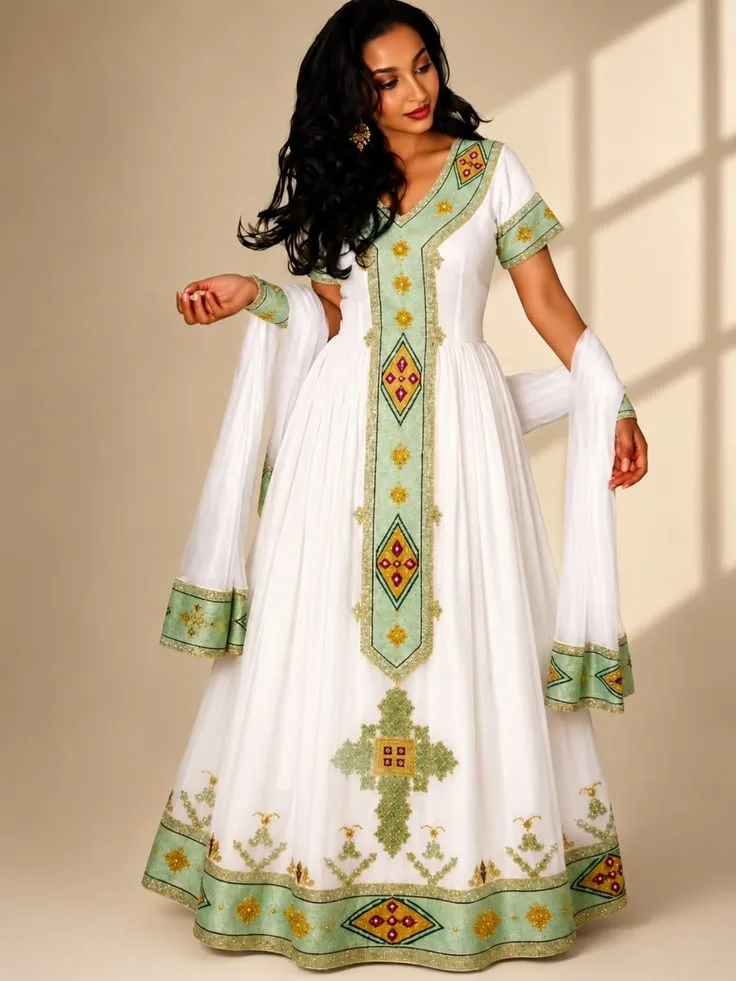
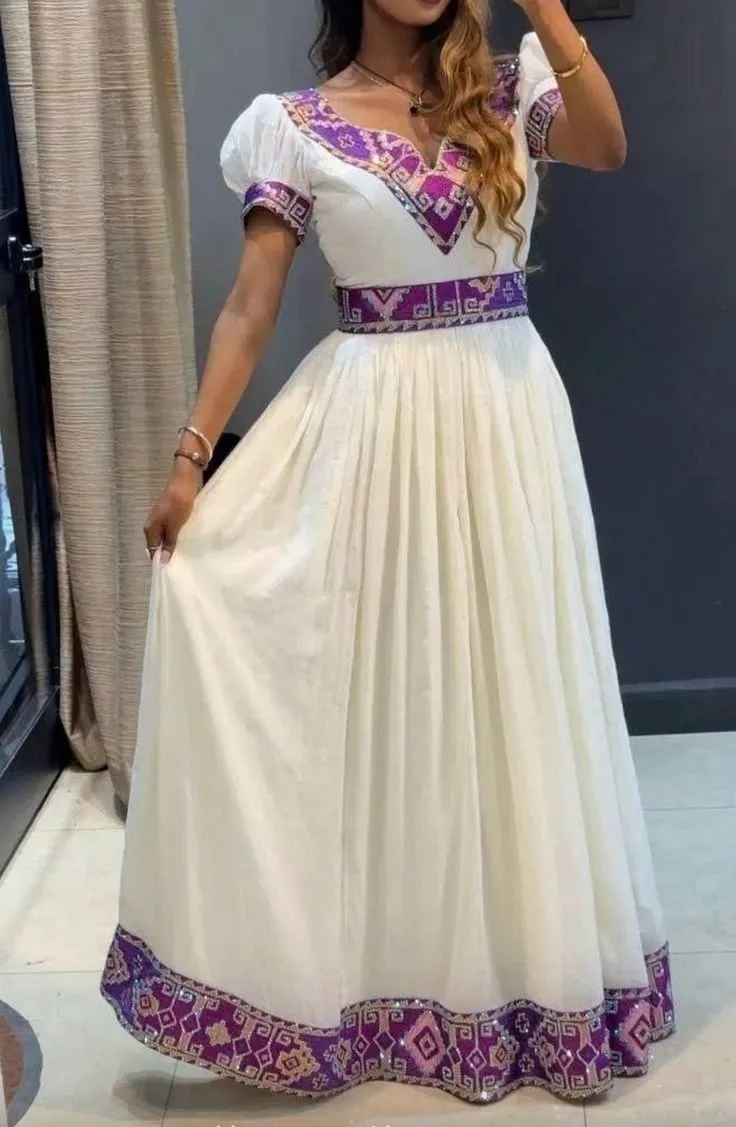
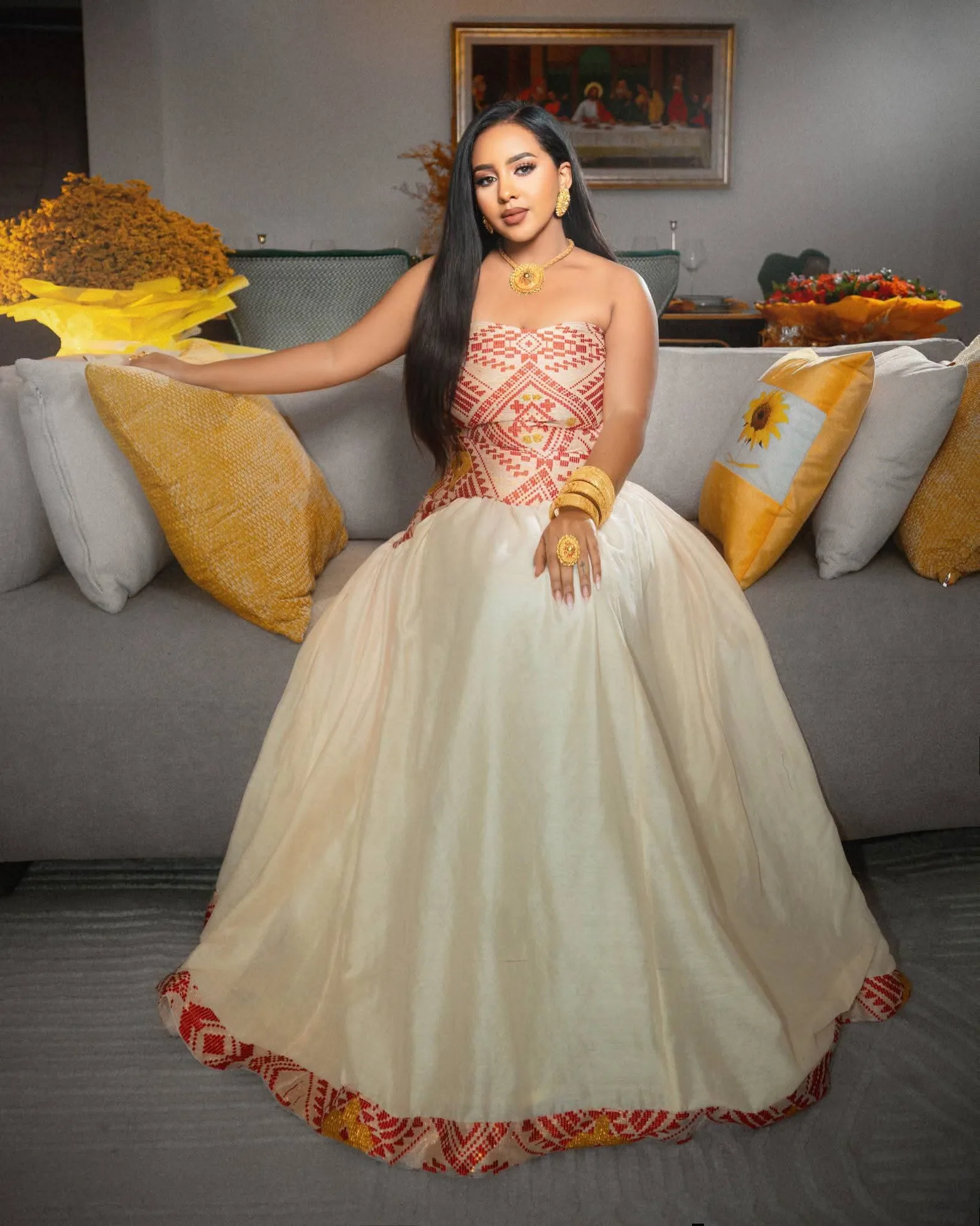
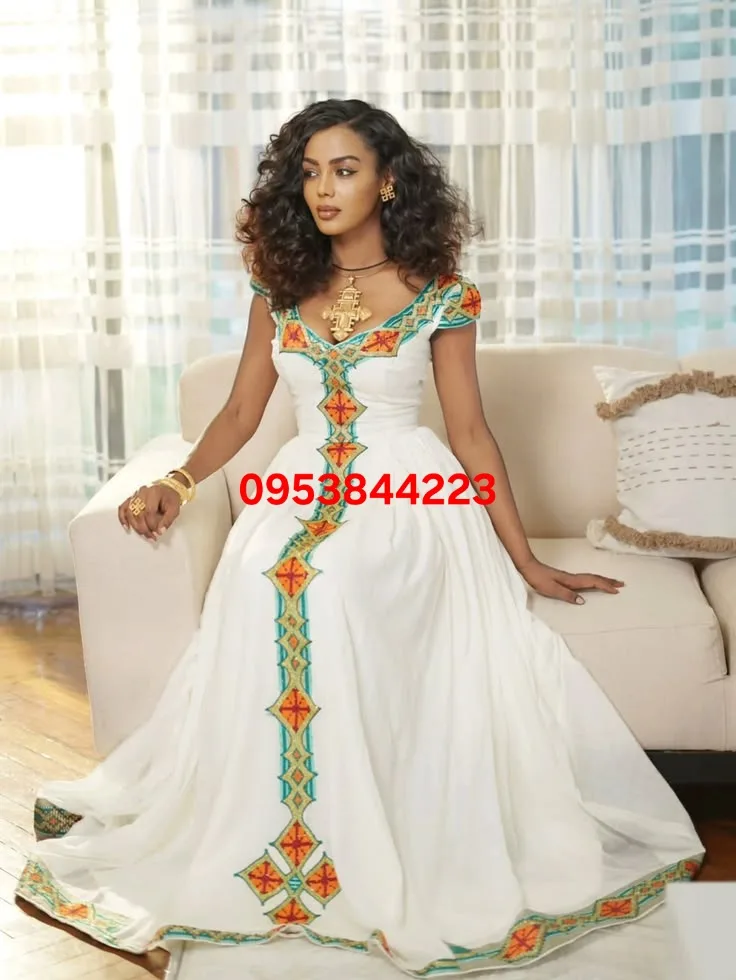
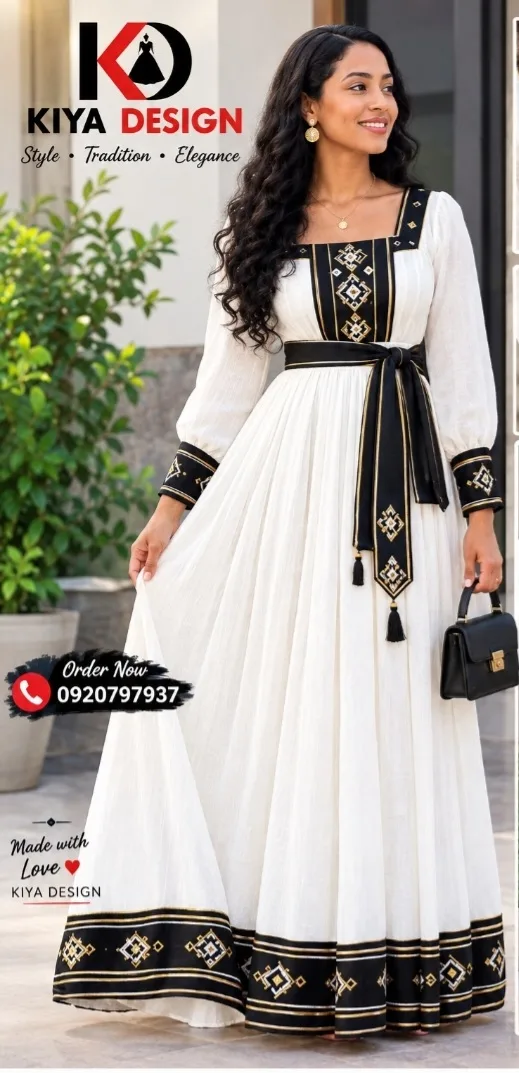
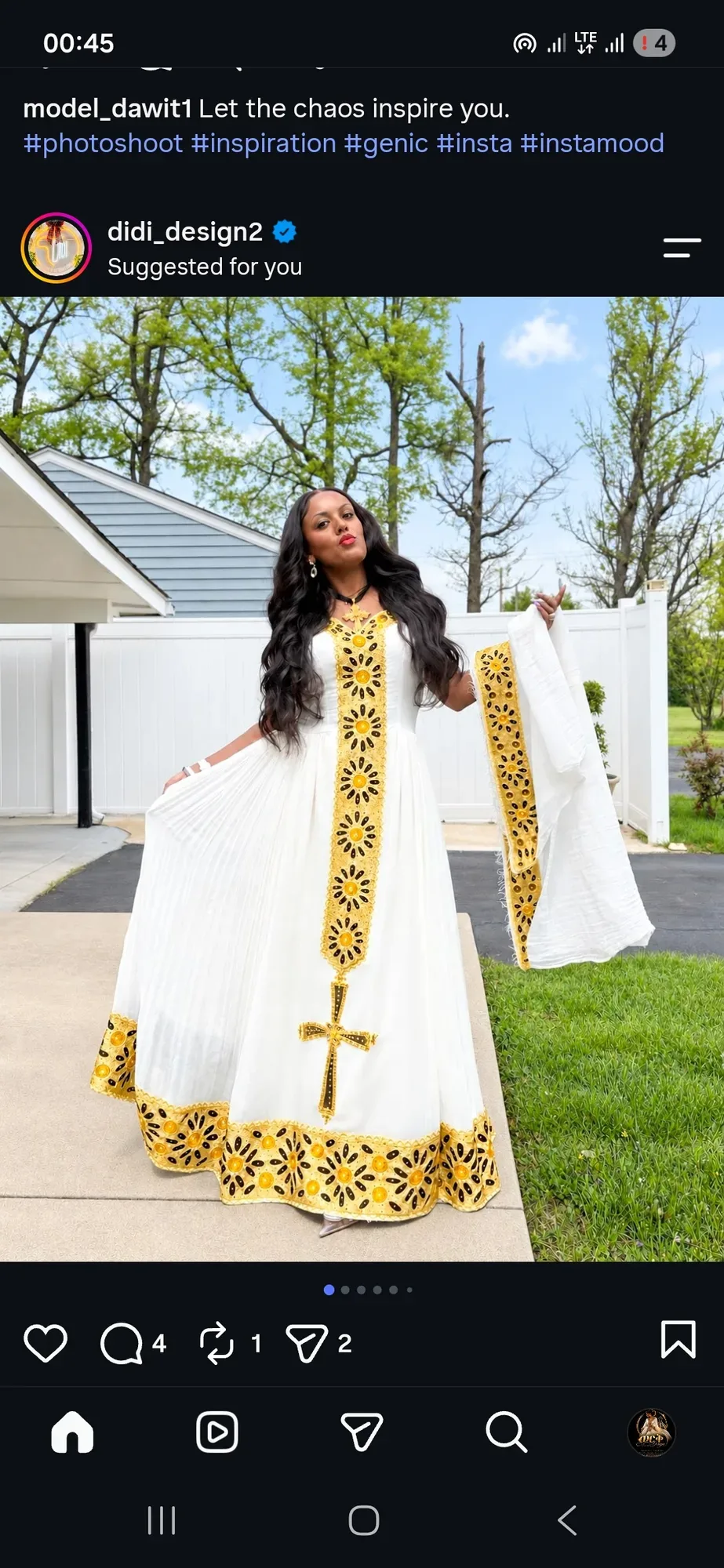
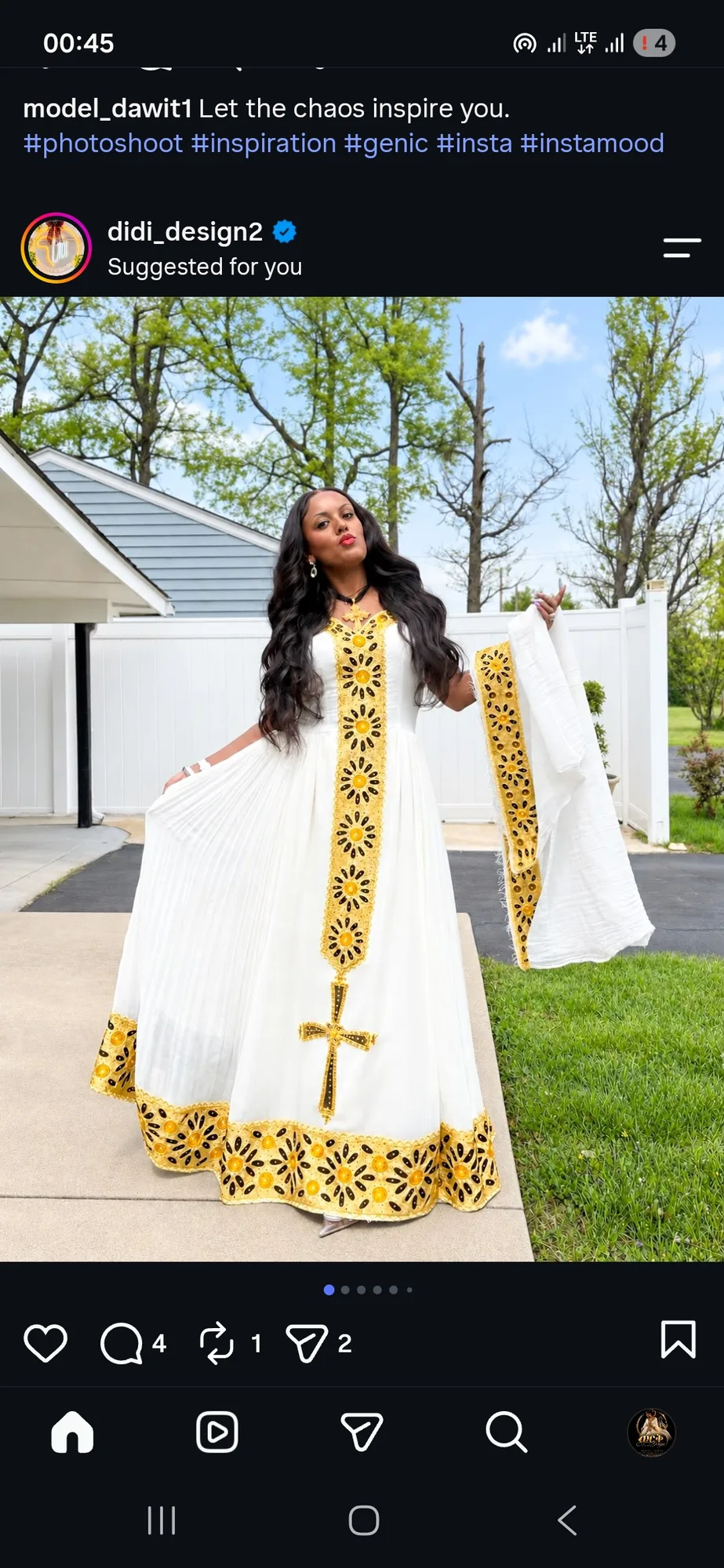
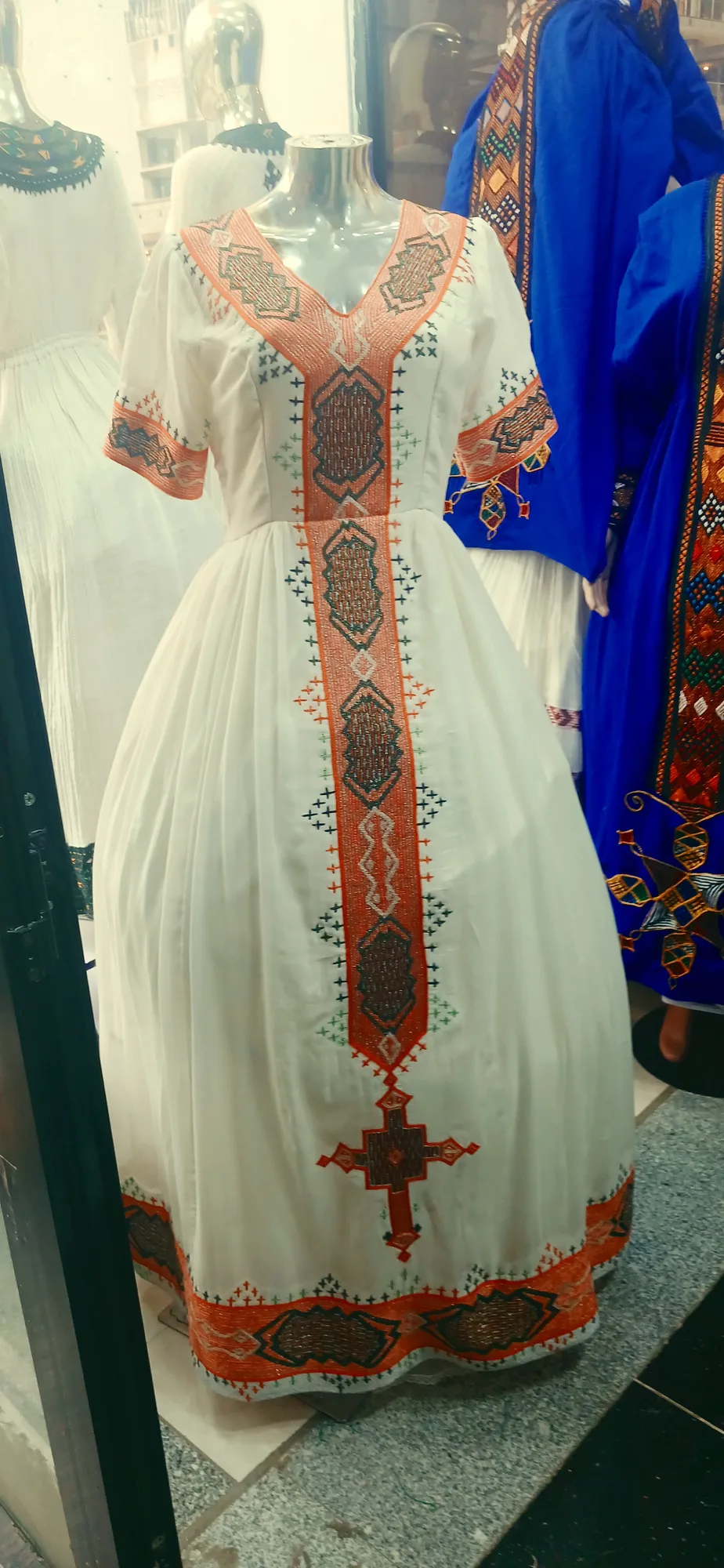
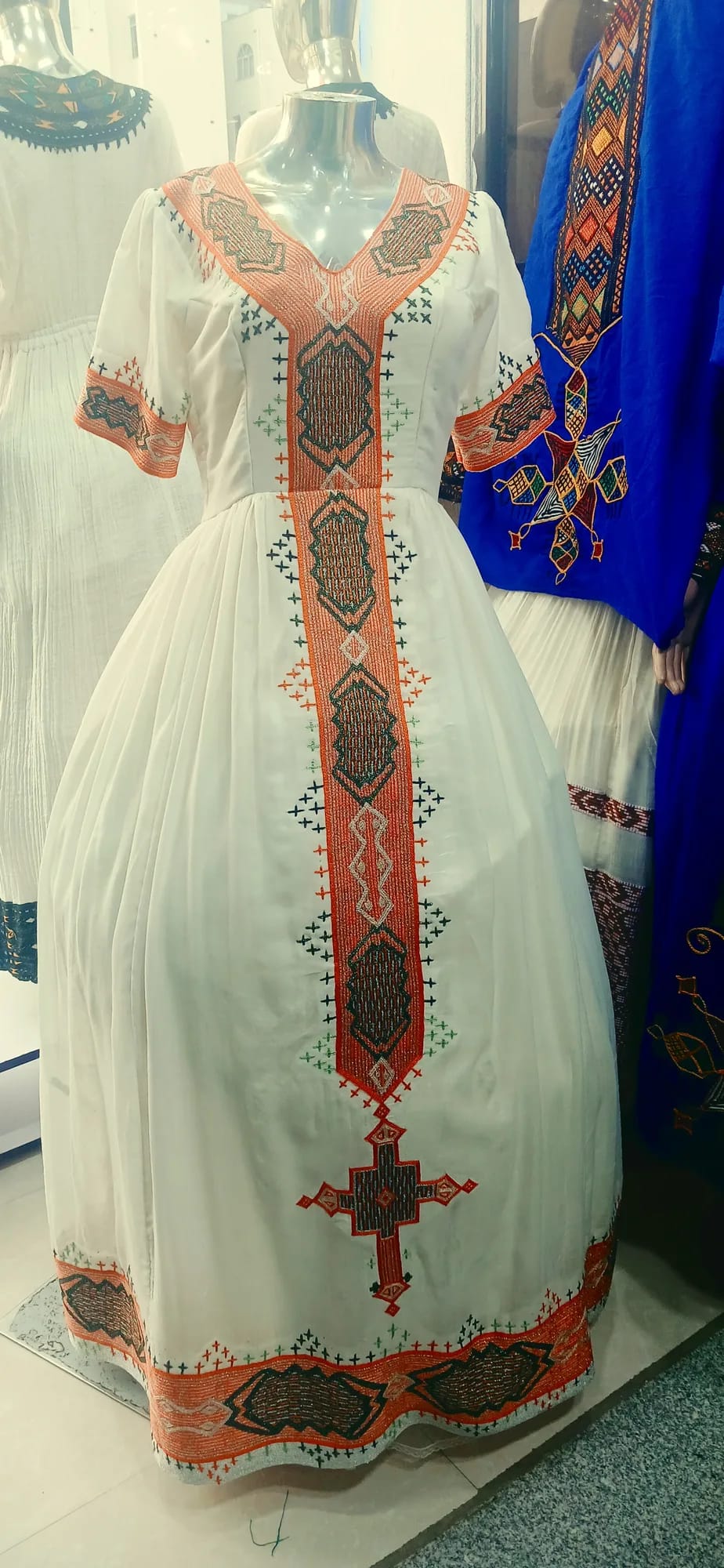
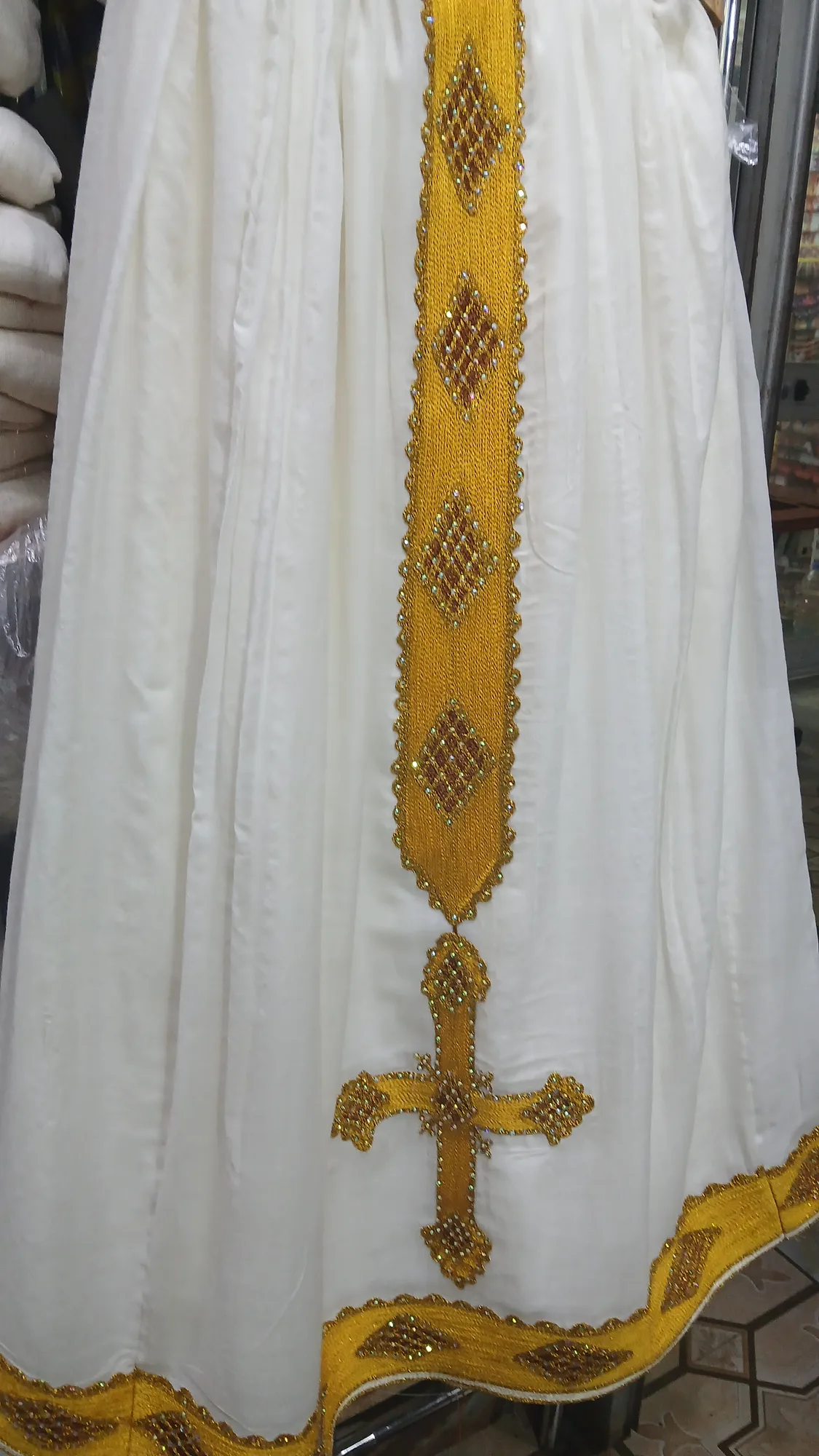
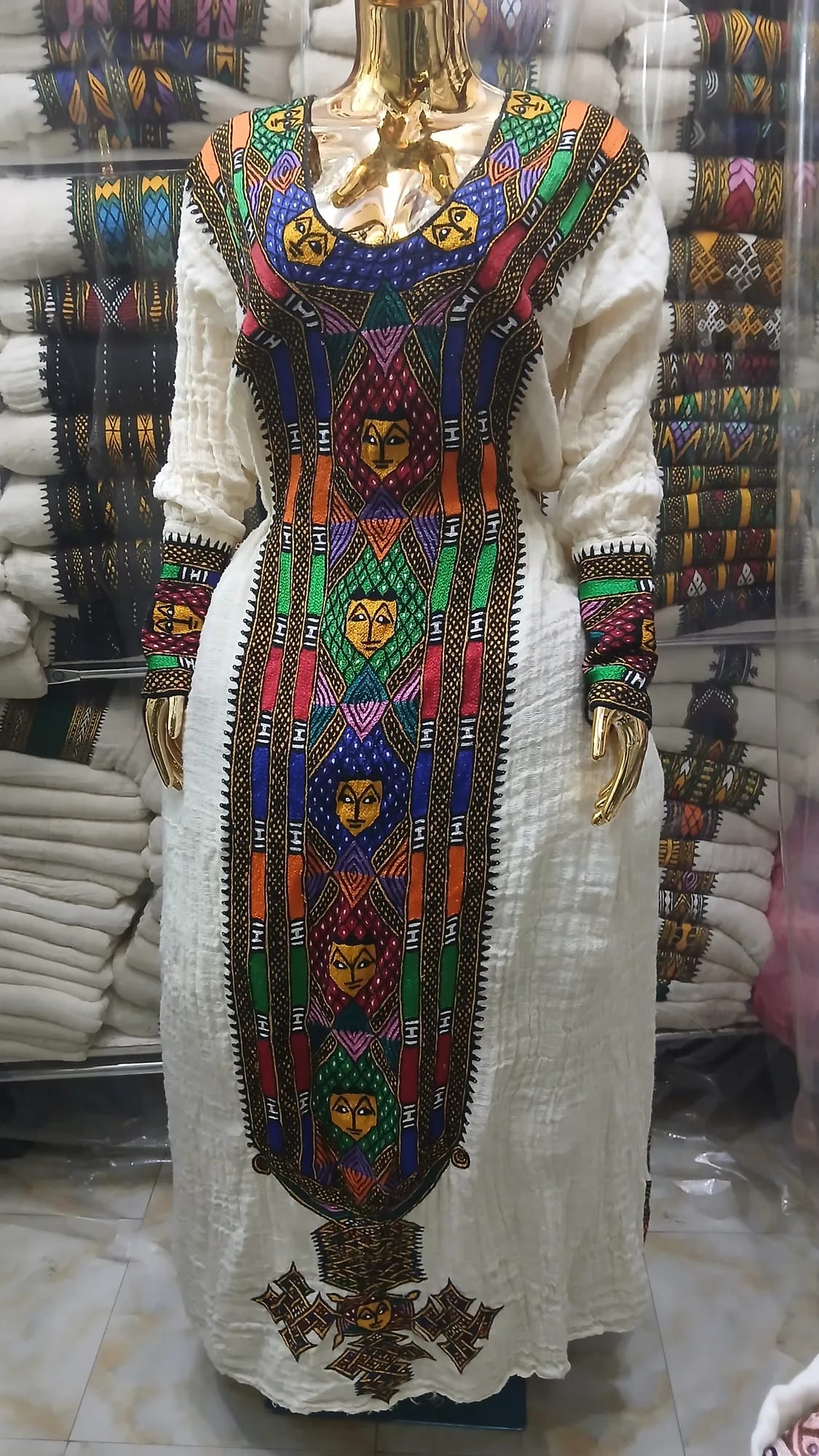
A habesha kemis is the handwoven cotton dress worn across Ethiopia and Eritrea for weddings, baptisms, Genna and Timket. What separates one from another is the tibeb — the coloured border woven into the hem, cuffs and neckline, and often carried down the front as a panel. Tibeb is woven on the loom rather than printed or embroidered on afterwards, which is why the pattern reads from both faces of the cloth and why a wide hand-woven border is days of a weaver’s work rather than hours.
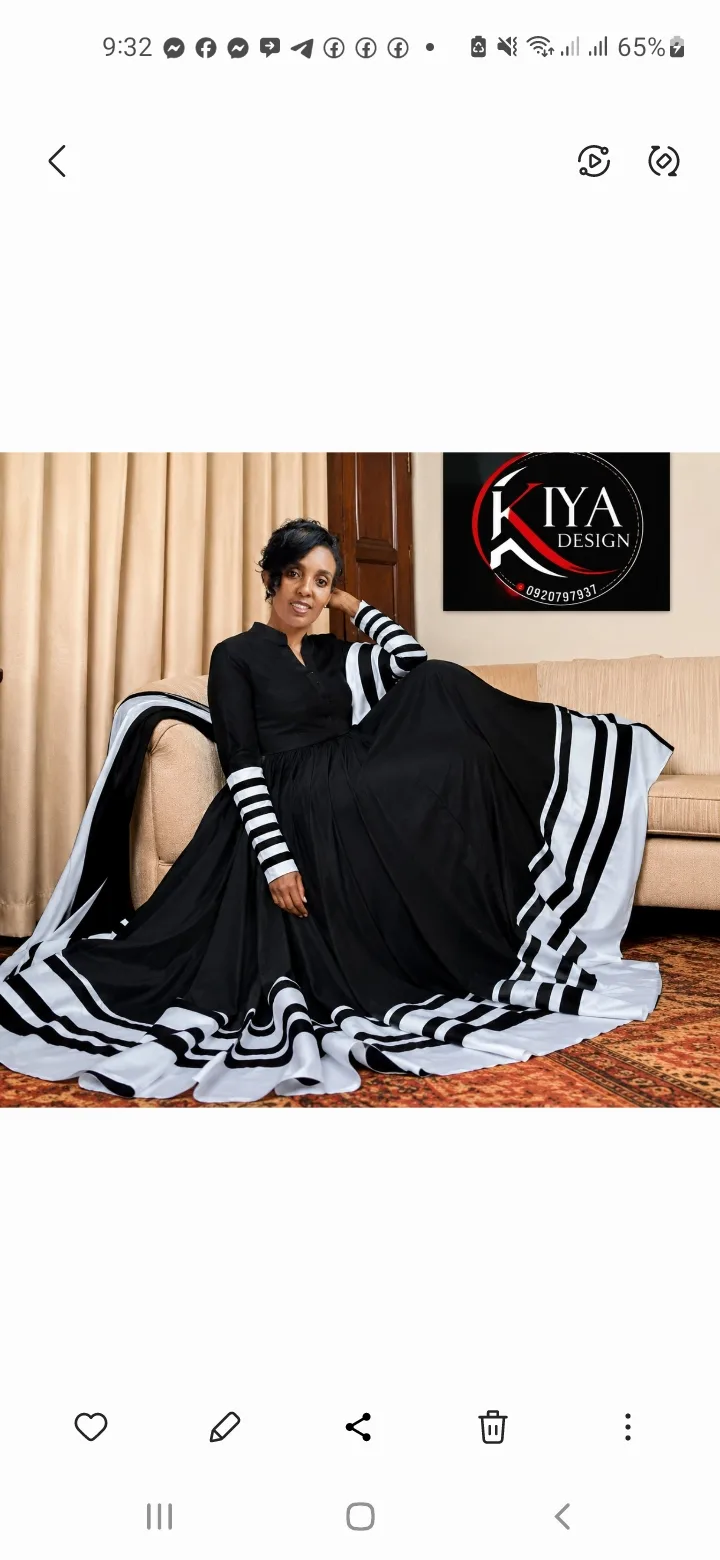
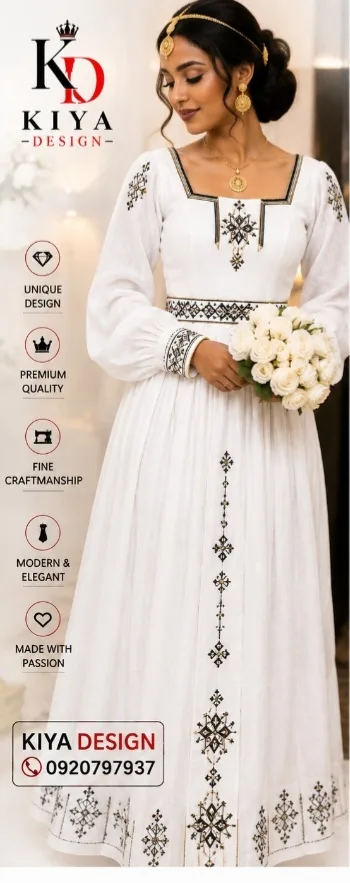
The pieces listed here come from sellers in Addis Ababa and from Ethiopian designers in the diaspora. Cloth weight varies: lighter shemma for everyday and summer wear, heavier cotton for ceremony. Most sellers will make to measure and will talk through tibeb colours with you before they start — message the shop directly and ask. Alongside the woven cotton there is a dressier modern register in chiffon (shifon, ሽፎን), where the tibeb is embroidered or printed rather than woven on the loom.
Common questions
- What is the difference between tibeb and tilet?
- People use both words for the woven pattern, and usage varies by region and family. We wrote out where the two part company in tibeb vs tilet.
- How do I get the size right?
- Most sellers here make to measure rather than working to standard sizes. Send your measurements when you message them; a kemis is cut loose, so length and shoulder matter more than an exact fit.
- How should it be washed?
- Hand wash cold and dry flat in shade. Hand-loomed cotton softens with washing, and the dyes in a tibeb border can bleed on a first hot wash — ask the seller what they used.
- Does it ship outside Ethiopia?
- Each listing states where its seller ships. Canada, the USA, the UK and Europe are the common destinations; you can narrow the results above by ships-to.
- What is worn with a kemis at a wedding?
- Usually a netela over the shoulders, matched to the tibeb rather than to the dress. What to wear to an Ethiopian wedding goes through it properly.