Ethiopian Traditional Clothing in the Diaspora: Keeping Culture Alive
Discover how Ethiopian traditional clothing keeps diaspora culture alive worldwide. Explore habesha kemis, tibeb, and the next generation of Ethiopian fashion. Read more.
Illustration
Key Takeaways
- The habesha kemis and netela are the most recognized symbols of Ethiopian cultural identity worn by diaspora communities across North America, Europe, and beyond.
- Ethiopian diaspora communities use traditional clothing as a centerpiece of celebrations including Timkat, Enkutatash (Ethiopian New Year), and weddings.
- Second-generation Ethiopians are blending ancestral habesha textiles with contemporary fashion to express layered cultural identities.
- Online boutiques and diaspora-owned shops have made authentic handwoven tibeb garments more globally accessible than ever before in 2026.
- Regional textile traditions from Tigray, Amhara, and Oromia carry distinct identities that diaspora wearers proudly distinguish and preserve.
- Young Ethiopian designers worldwide are leading a renaissance of habesha fashion, merging traditional weaving techniques with modern silhouettes.
A Garment That Holds More Than Fabric
Thousands of miles from Addis Ababa, a habesha kemis hanging in a closet can hold more meaning than a passport. For millions of Ethiopians living abroad, traditional dress is not a costume retrieved for special occasions — it is a living, breathing archive of who they are and where they come from. The way that Ethiopian traditional clothing in the diaspora is maintained, adapted, and passed down to new generations reveals something profound about identity, belonging, and the threads that connect communities to home.
Ethiopia's textile heritage is among the oldest and most sophisticated on the African continent. The country's handwoven cotton traditions date back centuries, with distinct regional styles emerging from communities in Tigray, Amhara, Oromia, and beyond. When Ethiopians began emigrating in significant numbers — first following the political upheavals of the 1970s and 1980s, and continuing through subsequent decades — they carried these textile traditions with them. Today, cities like Washington D.C., London, Stockholm, Toronto, and Melbourne host thriving Ethiopian communities where traditional dress remains a visible, celebrated part of daily and ceremonial life.
The Habesha Kemis and Netela: Icons of Ethiopian Identity
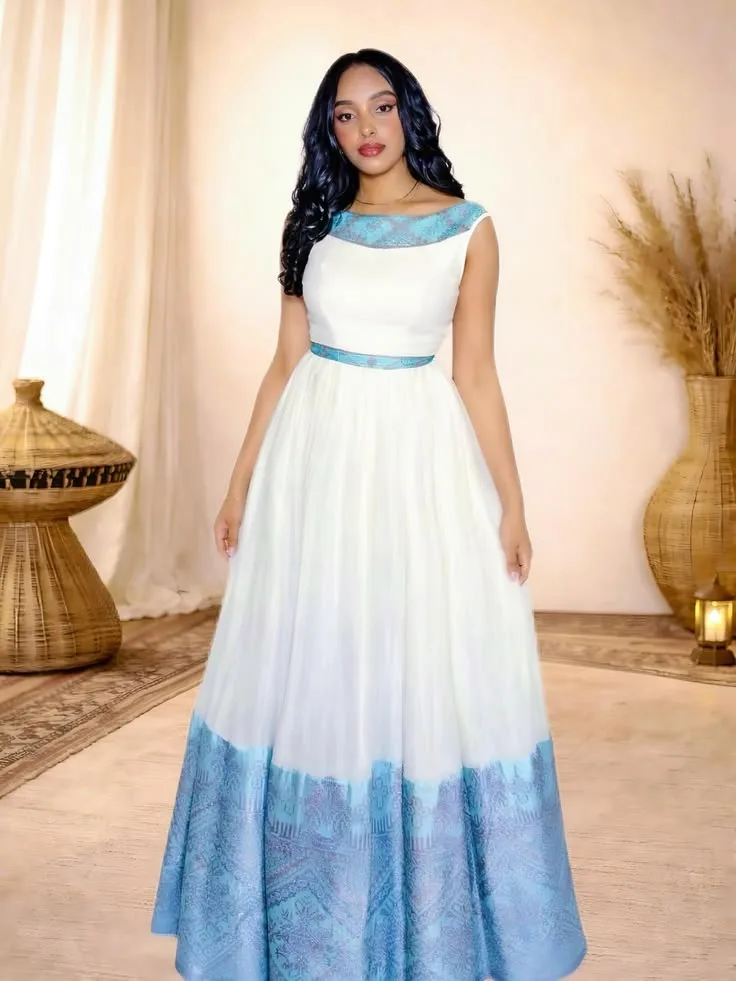
The habesha kemis is perhaps the single most recognizable garment in the Ethiopian traditional clothing diaspora experience. A long, flowing dress typically made from white or cream-colored handwoven cotton, the kemis is distinguished by its delicate embroidery and, most strikingly, by the tibeb — a band of richly colored, intricately woven geometric patterns that borders the hem, neckline, and sleeves. No two tibeb patterns are identical, and the specific designs often signal regional origin, family heritage, or the skill of the individual weaver.
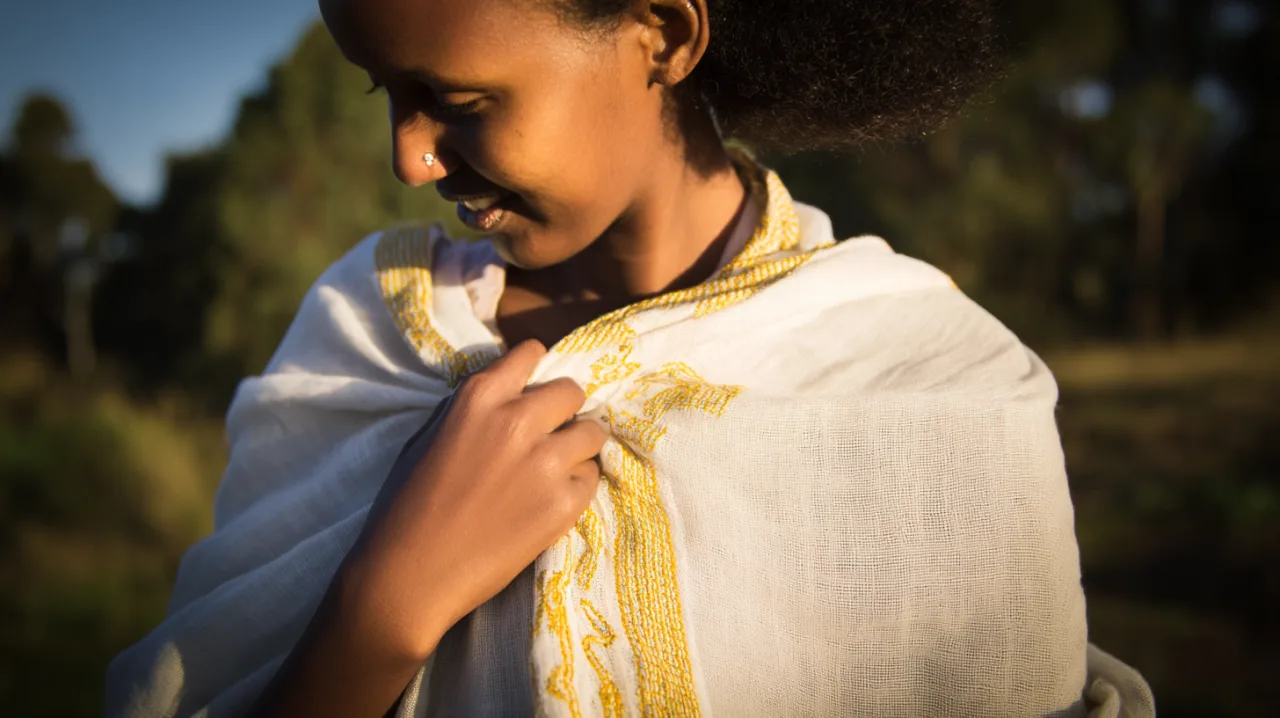
Worn alongside the kemis, the netela is a lightweight shawl or wrap, also typically white with tibeb borders, that carries deep cultural and spiritual significance. In Ethiopian Orthodox Christian tradition, the netela is draped over the shoulders and head during church services and religious festivals. For diaspora women, wearing a netela to an Ethiopian Orthodox church in London or Washington D.C. is an act of both devotion and cultural continuity — a way of saying, simultaneously, I belong to this faith and I belong to this people.
Regional Distinctions That Diaspora Wearers Proudly Carry
One of the most nuanced aspects of Ethiopian traditional dress is its regional specificity. The tibeb patterns woven by artisans in Tigray differ meaningfully from those produced in the Amhara highlands or in Oromia. Tigrayan garments often feature bolder, more geometric tibeb bands in deep reds and blues, while Amhara styles may incorporate finer, more intricate cross-stitch embroidery. Oromo communities have their own distinct textile traditions, including the use of bright colors and specific weaving techniques that reflect their cultural heritage.
In the diaspora, these regional distinctions matter enormously. Ethiopian communities abroad are not monolithic — they are composed of people from dozens of ethnic and regional backgrounds, each with their own sartorial heritage. Wearing a garment that signals one's specific regional identity is a form of pride and precision. It tells a story that goes beyond simply being Ethiopian; it says I am from here, specifically, even when here is thousands of miles away.
Traditional Clothing as the Heart of Diaspora Celebrations
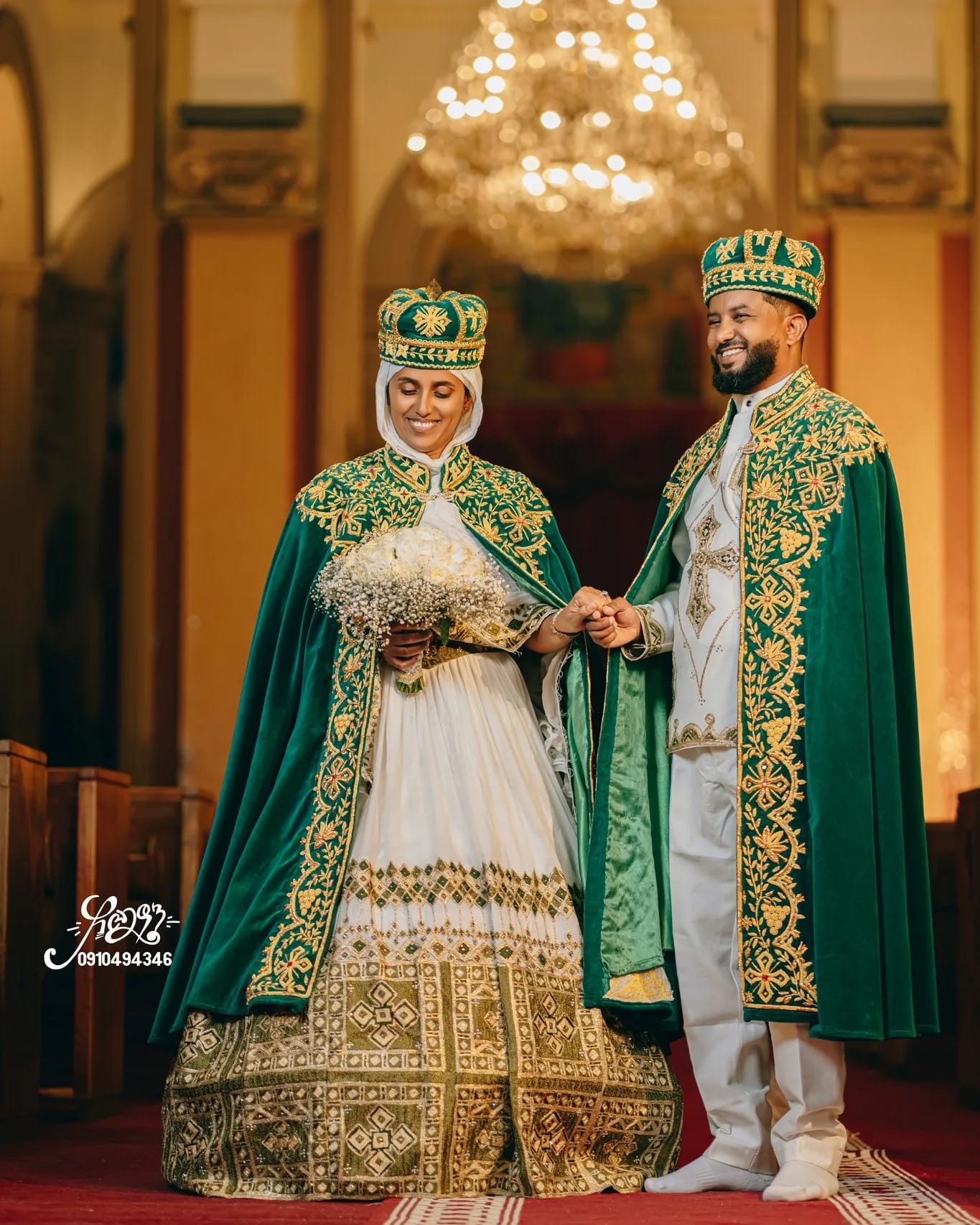
If you want to understand how Ethiopian traditional clothing functions in the diaspora, attend an Ethiopian wedding, a Timkat celebration, or an Enkutatash gathering in any major city with a significant Ethiopian community. The transformation is immediate and striking. Streets that might otherwise look indistinguishable from any other urban neighborhood are suddenly filled with white kemis dresses, colorful tibeb borders, and the shimmer of silk-blend habesha garments catching the light.
Timkat, the Ethiopian Orthodox celebration of Epiphany observed in January, is one of the most visually spectacular occasions for traditional dress in the diaspora. Communities in Washington D.C. — home to one of the largest Ethiopian populations outside Africa — gather in traditional white attire for processions, prayers, and communal meals. The collective visual impact of hundreds of people dressed in habesha garments in the middle of an American city is both arresting and deeply moving. It is a declaration that culture does not require a homeland to survive.
Enkutatash, the Ethiopian New Year celebrated in September according to the Ethiopian calendar, is another major occasion. Families dress in their finest traditional clothing, children receive gifts, and communities gather for feasts and music. For second-generation Ethiopians — those born or raised outside Ethiopia — Enkutatash is often their most visceral connection to a culture they may know primarily through their parents' stories. The act of putting on a kemis or a gabi (a heavier cotton wrap) for the new year is an annual ritual of cultural reaffirmation.
Second-Generation Ethiopians and the Fusion of Two Worlds
For young Ethiopians raised in London, Minneapolis, or Stockholm, the relationship with traditional clothing is more complex and more creative than it was for their parents. The first generation carried habesha garments across borders as direct continuations of a lived tradition. The second generation inherits that tradition but must also navigate a dual identity — Ethiopian by heritage, but shaped by the cultures of their birth countries. The result, increasingly, is a vibrant fusion aesthetic that is reshaping what Ethiopian traditional clothing in the diaspora looks like in 2026.
Young Ethiopian-American and Ethiopian-European designers are experimenting with tibeb fabric in ways that would have been unthinkable a generation ago. Tibeb-trimmed blazers, kemis silhouettes reimagined in contemporary cuts, habesha fabric incorporated into streetwear — these are not acts of cultural dilution but of cultural evolution. Fashion scholars and community elders alike have noted that this fusion approach is actually one of the most effective strategies for keeping traditional textile arts alive. When a 22-year-old in Toronto wears a tibeb-bordered jacket to a university event, she is introducing Ethiopian textile heritage to an entirely new audience.
Ethiopian Designers Leading a Global Fashion Renaissance
The Ethiopian traditional clothing diaspora is producing a remarkable generation of designers who are gaining international recognition. Designers such as Mahlet Afework, founder of the Addis Ababa-based label MAFI MAFI, have demonstrated that Ethiopian textile traditions can command attention on global fashion stages. In the diaspora, designers working from cities like Washington D.C., London, and Toronto are building brands that explicitly celebrate habesha heritage while speaking to contemporary aesthetics.
These designers are not working in isolation — they are deeply connected to the weavers and artisans back in Ethiopia whose skills produce the handwoven cotton and tibeb fabric that makes their work possible. Many diaspora designers actively collaborate with cooperatives of weavers in Ethiopia, creating economic links that sustain traditional craft communities while fueling creative innovation abroad. This transnational creative economy is one of the most hopeful stories in the Ethiopian traditional clothing diaspora landscape of 2026.
How the Digital Age Is Preserving and Spreading Ethiopian Textile Heritage
One of the most significant developments in the Ethiopian traditional clothing diaspora over the past decade has been the rise of online retail and digital community building. Authentic habesha kemis dresses, netela wraps, and handwoven tibeb fabric — once obtainable only through family networks, specialty shops in Ethiopian neighborhoods, or expensive trips back to Ethiopia — are now available through a growing ecosystem of diaspora-owned online boutiques.
Platforms like Etsy host dozens of Ethiopian sellers offering handwoven garments shipped directly from Ethiopia or from diaspora communities in the United States and Europe. Instagram and TikTok have become powerful tools for cultural transmission, with Ethiopian fashion influencers showcasing traditional and fusion looks to audiences that span continents. A young Ethiopian woman in Stockholm can now discover a weaving cooperative in Axum, place an order for a custom tibeb-bordered kemis, and receive it within weeks — a logistical reality that would have been impossible even fifteen years ago.
YouTube channels dedicated to Ethiopian fashion, styling tutorials for the habesha kemis, and documentary content about traditional weaving techniques have collectively accumulated millions of views. This digital infrastructure is not a replacement for in-person cultural transmission — nothing substitutes for a grandmother teaching her granddaughter how to drape a netela — but it is a powerful supplement that extends the reach of Ethiopian textile heritage far beyond any single community.
The Role of the Ethiopian Orthodox Church and Community Organizations
In cities with established Ethiopian communities, the Ethiopian Orthodox Tewahedo Church functions as far more than a place of worship — it is a cultural anchor. Churches in Washington D.C., London, Stockholm, and Toronto serve as community hubs where language classes are held, cultural festivals are organized, and traditional dress is worn weekly. The expectation of traditional attire at church services creates a regular, recurring occasion for diaspora Ethiopians to engage with their textile heritage.
Community organizations and cultural associations play a complementary role. Groups like the Ethiopian Community Development Council in the United States organize events that explicitly celebrate Ethiopian culture, including fashion shows, cultural education programs for children, and community dinners where traditional dress is encouraged. These organizations understand intuitively what researchers in diaspora studies have confirmed: that material culture — including clothing — is one of the most durable and emotionally resonant vehicles for cultural preservation across generations.
Challenges: Authenticity, Accessibility, and Generational Gaps
Preserving Ethiopian traditional clothing in the diaspora is not without its challenges. Authentic handwoven habesha garments are significantly more expensive than machine-made alternatives, and the economic pressures facing many diaspora families can make the purchase of quality traditional clothing difficult. The market has also seen an influx of mass-produced garments that mimic the aesthetic of habesha dress without the handwoven craftsmanship — a development that troubles both cultural preservationists and the artisan communities in Ethiopia whose livelihoods depend on their craft.
Generational gaps present another challenge. Third-generation Ethiopians, particularly those with limited connection to Ethiopian language and community networks, may feel uncertain about how to wear traditional garments correctly, which occasions call for which styles, or what the regional distinctions in tibeb patterns actually mean. Bridging this knowledge gap requires intentional effort from families, community organizations, and educators. Several diaspora communities have responded by creating cultural education programs specifically designed to teach young people about Ethiopian textile traditions — not as museum artifacts, but as living, wearable heritage.
Conclusion: Threads That Cross Every Border
Ethiopian traditional clothing in the diaspora is one of the most eloquent expressions of how culture survives displacement, adapts to new environments, and ultimately flourishes across generations. The habesha kemis worn at an Enkutatash celebration in Washington D.C., the tibeb-bordered jacket designed by a young Ethiopian-Canadian designer, the netela draped over the shoulders of an Ethiopian grandmother at church in Stockholm — these are not relics of a distant past. They are living statements of identity, made new every time they are worn.
The story of Ethiopian textile heritage in the diaspora is still being written, and its most exciting chapters may lie ahead. As second and third-generation Ethiopians find increasingly creative ways to engage with their ancestral traditions, and as digital tools make handwoven habesha garments more accessible than ever, the threads connecting diaspora communities to their cultural homeland grow stronger, not weaker. Culture, at its most resilient, finds a way — stitch by stitch, generation by generation.
At derBaba, we believe that the deepest expressions of culture are found not only in what we wear, but in what we cook, share, and serve to the people we love. If this journey through Ethiopian heritage has stirred something in you, we invite you to explore further — come cook like a Baba, and discover how food, like clothing, carries the whole world home.