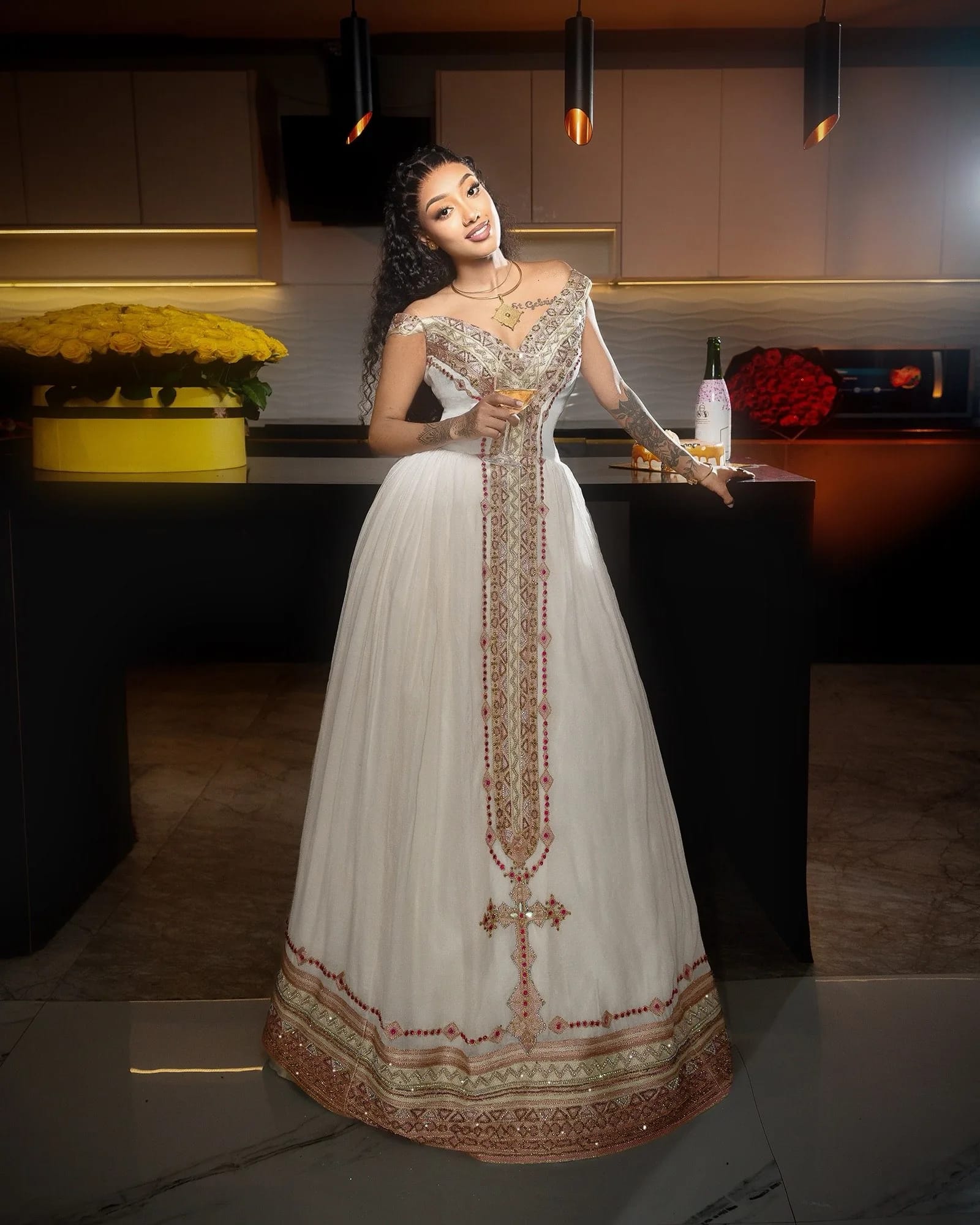
What to Wear for Enkutatash: Your Guide to Habesha Kemis for Ethiopian New Year
Enkutatash — Ethiopian New Year — falls in September. This guide covers the traditional kemis and clothing worn for the celebration, what colours are appropriate, and how to buy the right dress in time.
Illustration
What Enkutatash Means — and Why Clothing Matters
The word Enkutatash translates roughly as "gift of jewels." According to Ethiopian tradition, the name traces back to the Queen of Sheba's return from her famous visit to King Solomon in Jerusalem. When she arrived home, her courtiers welcomed her with enku — jewels — and the occasion became associated with gift-giving, renewal, and celebration. Whether you take the legend literally or not, the name captures the spirit of the holiday: generosity, beauty, and the marking of a fresh start.
In the Ethiopian Orthodox calendar, Enkutatash also coincides with the Feast of St John the Baptist (Yohannes), giving the holiday a sacred dimension alongside its secular one. Church services are held in the morning, families gather for a large meal, and communities come together in the afternoon and evening. The day bridges the religious and the cultural in a way that is characteristic of Ethiopian life.
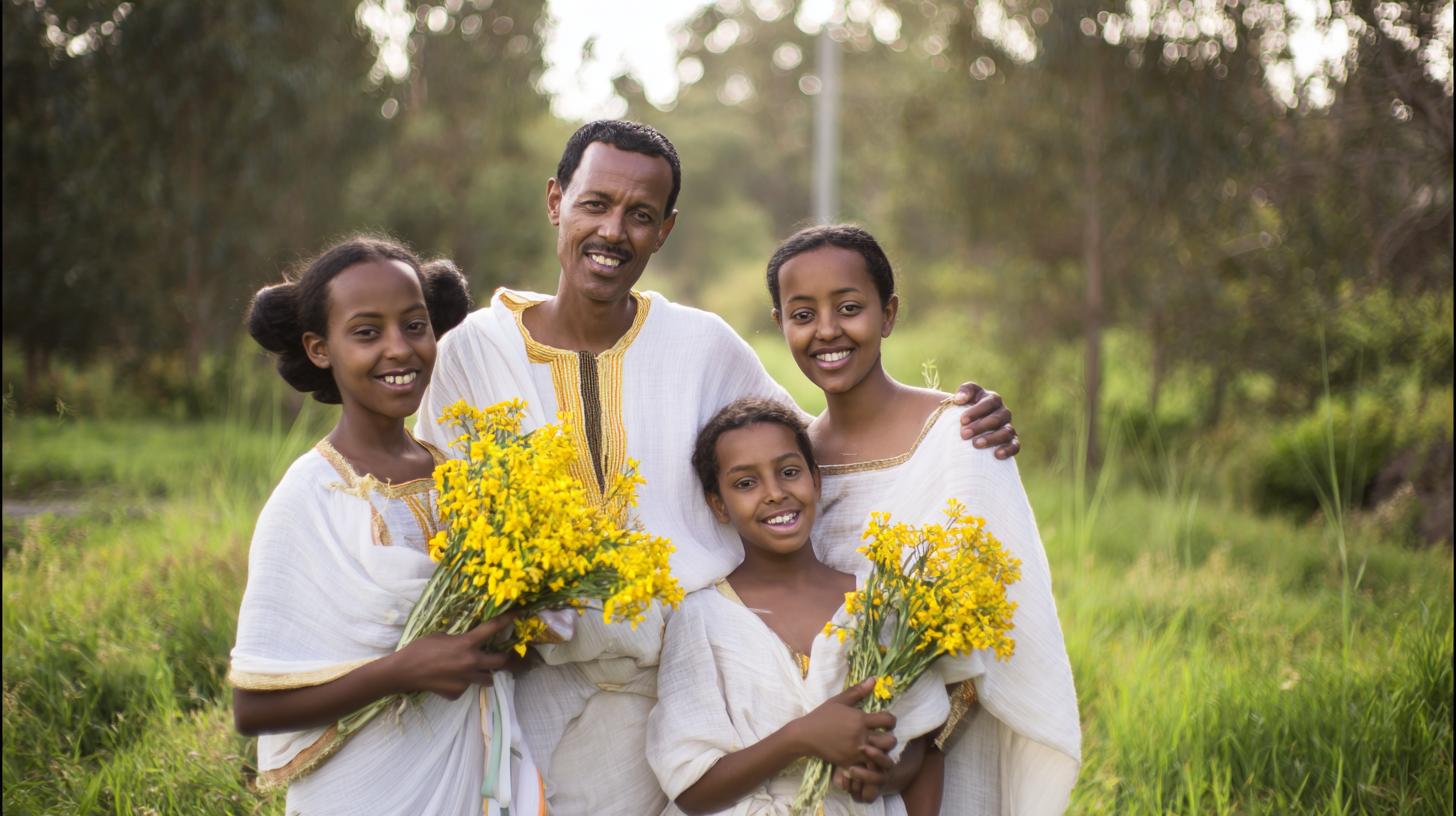
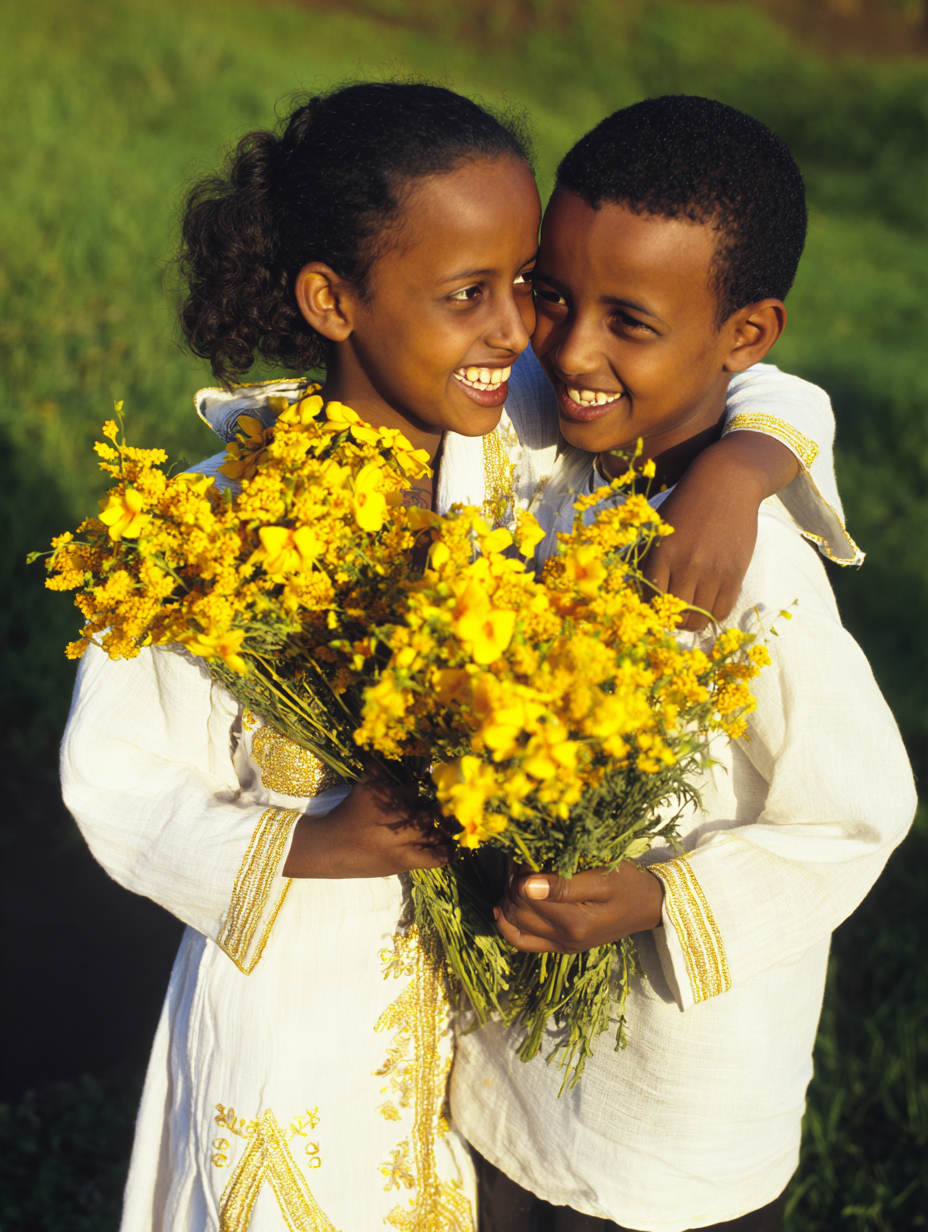
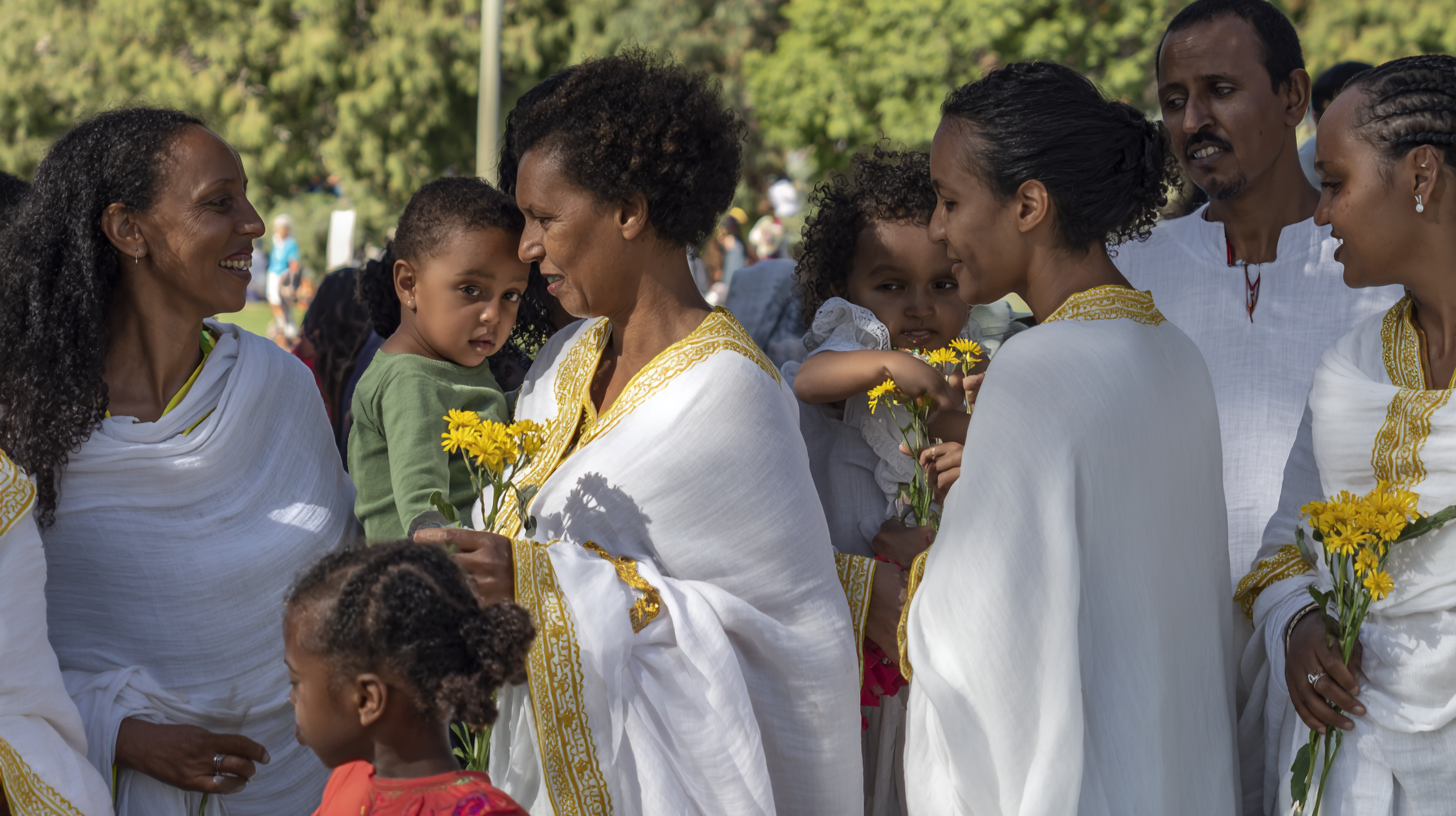
Children play a central role in the celebrations. Girls and boys dress in their best white clothing, carry bundles of yellow Adey Ababa flowers — the meskel daisies that bloom at the end of the rainy season — and go door to door singing traditional songs. In return they receive small gifts of money, bread, or sweets. The image of children in white carrying bright yellow flowers is one of the most iconic visual symbols of the Ethiopian year.
For the Ethiopian diaspora, Enkutatash has taken on additional significance as a moment of cultural connection. Community associations in cities like Washington DC, Los Angeles, Toronto, London, and Stockholm organise events ranging from formal dinners to outdoor festivals. Churches hold special services. Families host gatherings where three generations sit together over doro wot and injera. In all of these settings, clothing is not a secondary concern — it is part of how the holiday is expressed and experienced.
Enkutatash is one of the two peak demand periods for habesha kemis purchases each year, the other being wedding season. Sellers report that orders spike sharply in July and August as buyers try to secure their dresses in time. If you are planning to wear a new kemis for Enkutatash, the single most important piece of advice is to order early — and by mid-August at the very latest, since most pieces are made to order and then shipped internationally.
What Colours Are Worn for Enkutatash
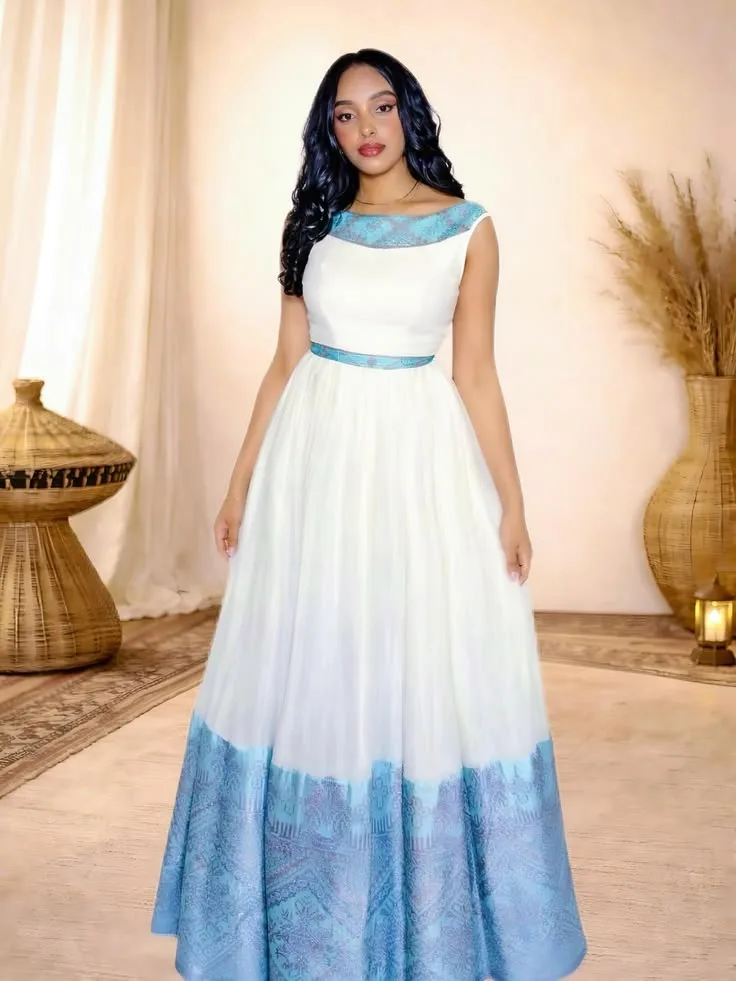
White is the traditional and most classic colour for Enkutatash. A white cotton kemis with a gold tibeb border — the woven decorative strip along the hem, neckline, and cuffs — is the standard that has been worn for generations. White represents purity, renewal, and the fresh start of a new year. It also echoes the white shemma cloth that is worn for church services, reinforcing the spiritual dimension of the day. If you are unsure what colour to choose, white with gold tibeb is always appropriate and always elegant.
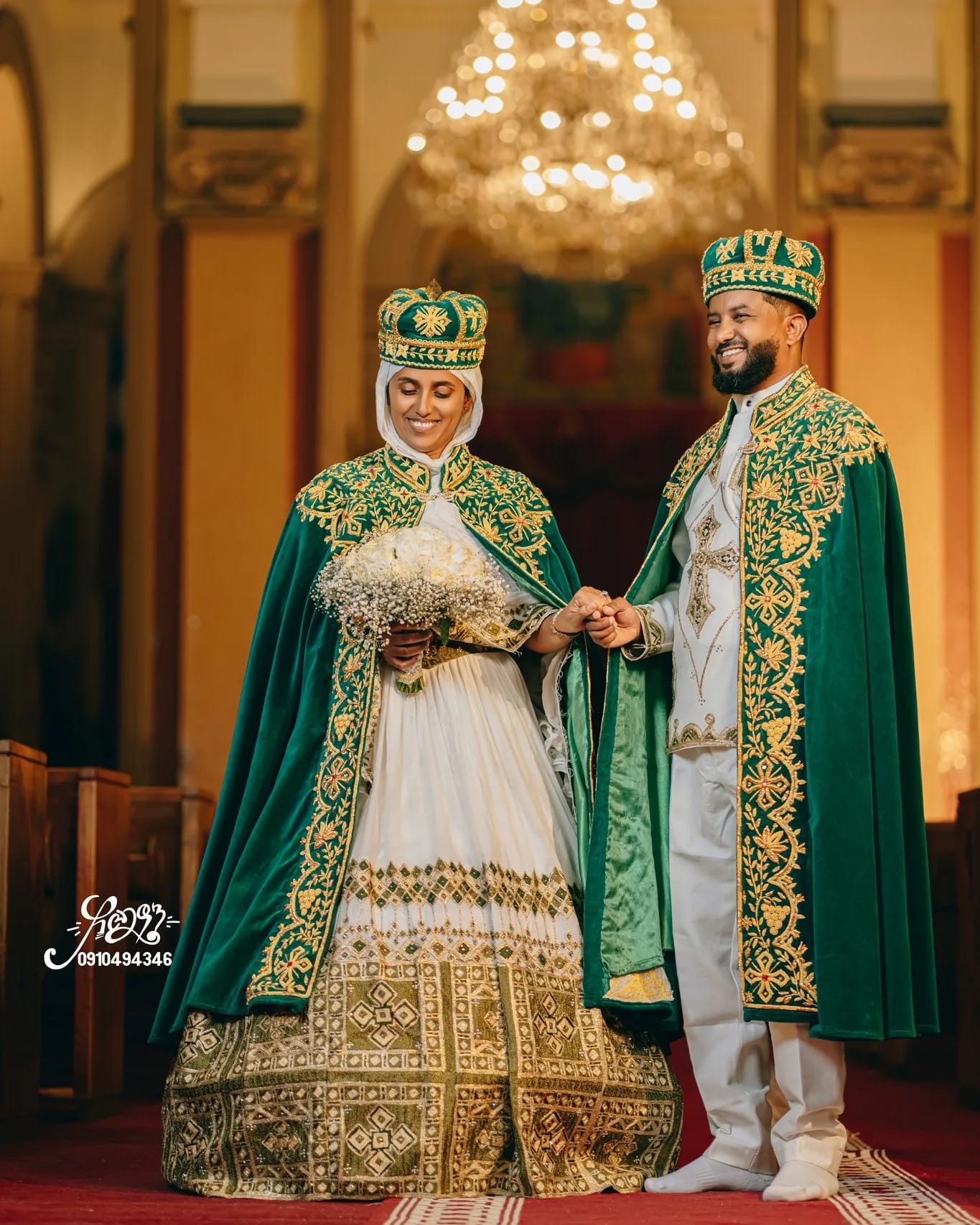
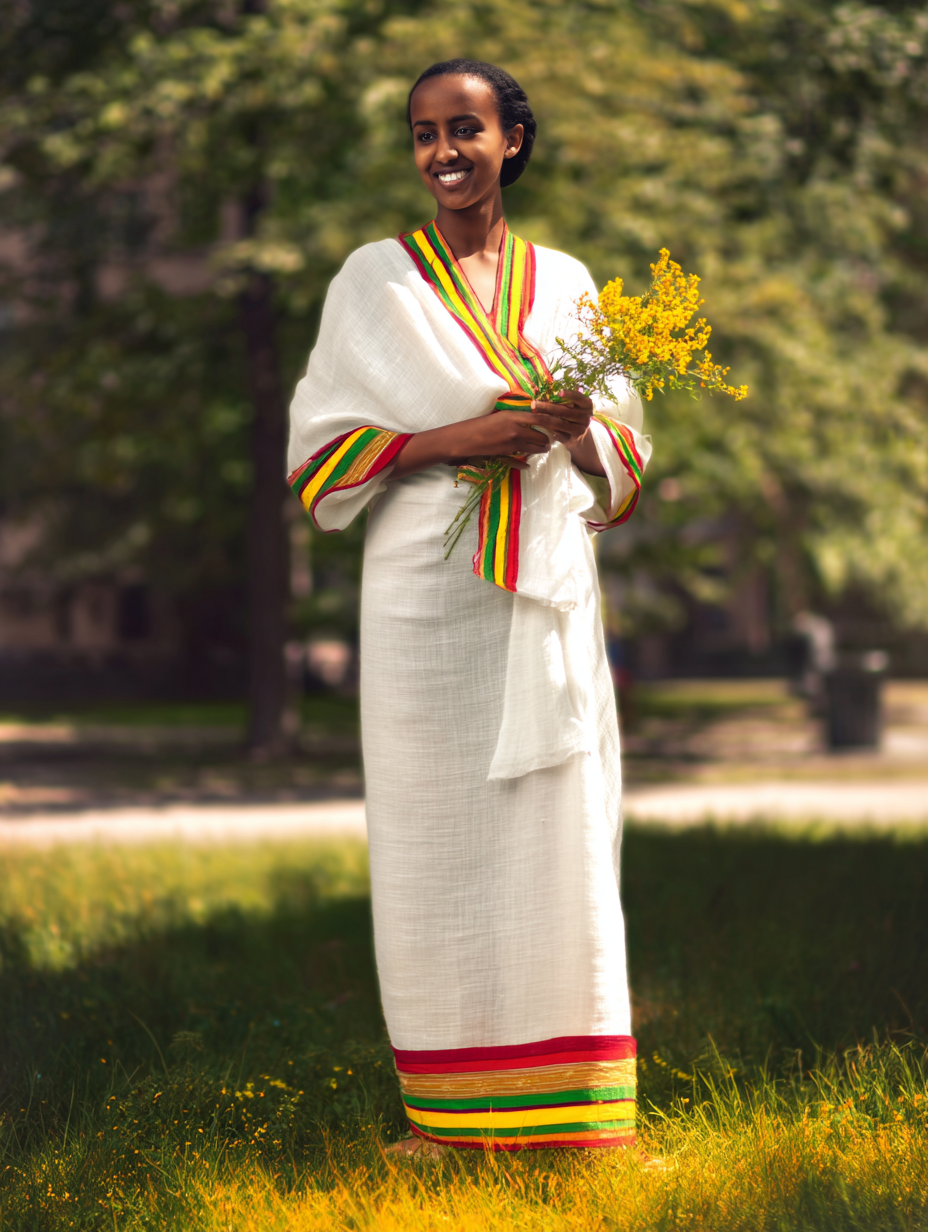
In recent years, especially among the younger diaspora, kemis in the Ethiopian flag colours — green, gold, and red — have become increasingly popular for Enkutatash. These dresses feature flag-colour tilet (the wider decorative panel) woven into the fabric, and they make a statement of national pride that resonates strongly at community events abroad. A flag tilet kemis is festive, distinctive, and immediately signals the occasion.
Bright colours such as burgundy, navy, emerald green, and deep gold are also acceptable, particularly for secular community events, diaspora parties, and less formal family gatherings. These colours allow for personal expression while still honouring the traditional silhouette and craftsmanship of the kemis. However, for church services and the most traditional family celebrations, white or flag-colour dresses remain the most connected to the meaning of the holiday.
Choosing the Right Kemis for Enkutatash
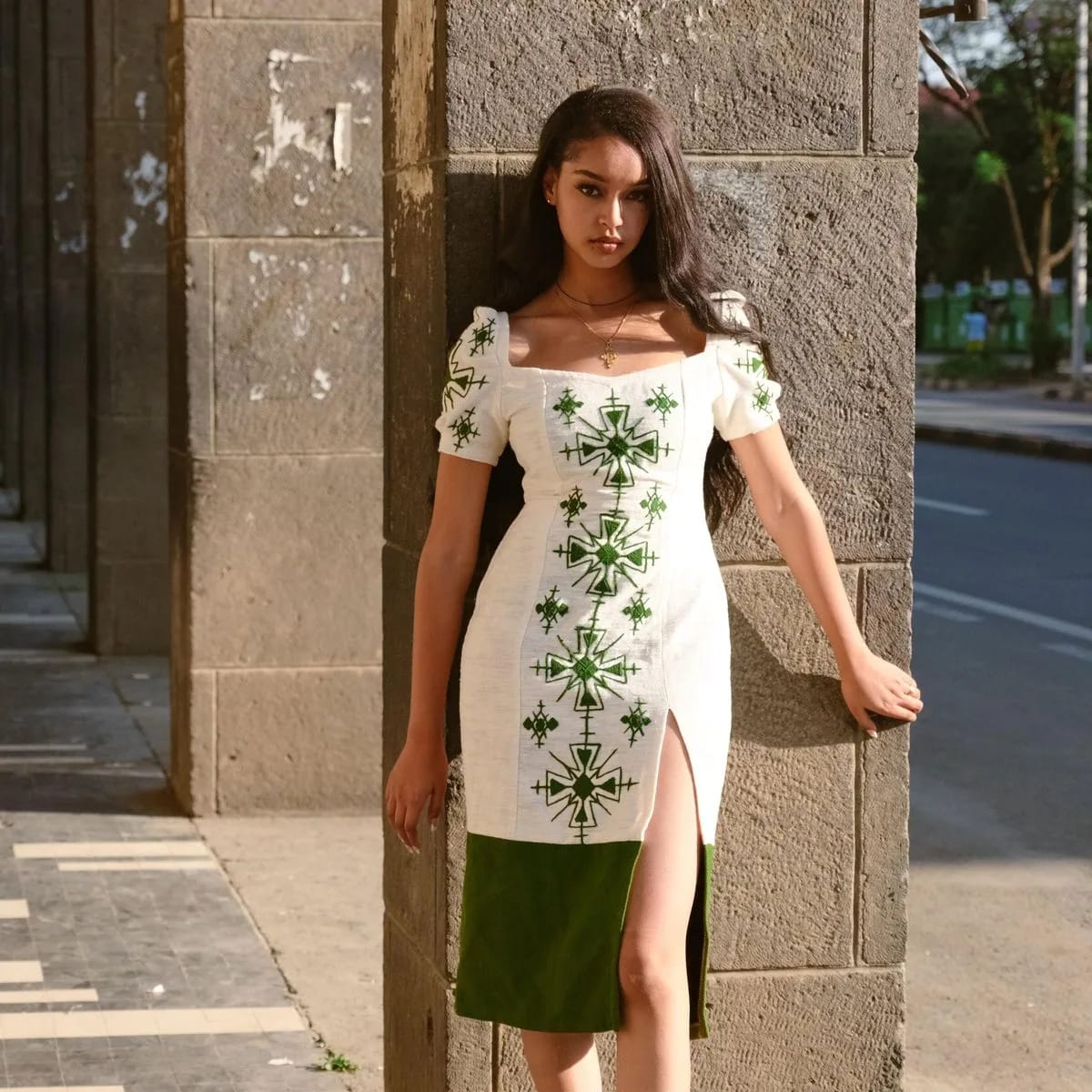
Enkutatash calls for a dress that is celebratory but not bridal. You want something with visible, well-crafted tibeb — the woven border that distinguishes a habesha kemis from an ordinary dress — but you do not need the full tilet panelling that is reserved for weddings and the most formal occasions. A mid-grade kemis with a generous gold tibeb border hits the right note: special enough for the holiday, versatile enough to wear again for other events throughout the year.
The classic Enkutatash choice is a white cotton kemis with a gold tibeb border. This is the dress you see in every photograph of the holiday, and it remains the most popular option for good reason. The white cotton is cool and comfortable in the lingering warmth of late kiremt, and the gold tibeb catches the light beautifully in photographs. Look for a dress where the tibeb is woven — not printed or machine-embroidered — for the best quality and durability.
If you prefer the flag tilet style, pay attention to how the green, gold, and red are incorporated. The best flag tilet kemis have the colours woven directly into the fabric on the loom, creating a pattern that is part of the cloth itself. Printed flag designs — where the colours are stamped onto the surface — are less expensive but also less durable and less impressive in person. Ask the seller whether the flag design is woven or printed before purchasing.
A matching netela — the traditional shawl — completes the outfit. For Enkutatash, the netela is typically worn loosely draped over the shoulders, not pulled over the head as it would be during a church service. The netela should match the tibeb pattern and colour of your kemis. Many sellers offer kemis-and-netela sets, which is the easiest way to ensure a coordinated look.
One practical consideration that is often overlooked: Enkutatash celebrations almost always involve eskista — the shoulder-shaking dance that is central to Ethiopian social gatherings. Your kemis should allow comfortable, unrestricted movement through the shoulders and upper body. A dress that is too tight across the chest or too stiff in the sleeves will limit your dancing and your enjoyment of the day. When trying on or ordering a kemis, pay attention to the fit through the upper body and arms, not just the length and waist.
For Children: New Clothes for the New Year
In Ethiopia there is a strong tradition of dressing children in new clothes for Enkutatash. The new year begins with fresh clothing — a tangible symbol of the fresh start the holiday represents. This custom carries over powerfully into the diaspora, where parents take pride in outfitting their children in traditional dress for community events and family gatherings.
For girls, the standard is a miniature habesha kemis that mirrors the adult version in structure and decoration. Many sellers now offer matching mother-daughter sets, where the patterns and tibeb are coordinated across both sizes. These sets are particularly popular for Enkutatash photos and community events, and they make a striking visual impression. The quality guidelines are the same as for adult dresses: look for woven tibeb, proper cotton construction, and a fit that allows the child to move and play comfortably.
For boys, the traditional Enkutatash outfit is a white embroidered tunic paired with white trousers. The tunic features embroidered detail around the neckline and sometimes along the front panel, using the same thread and motif vocabulary as the kemis tibeb. Some families opt for a miniature kuta (traditional men's shirt) with a nehru collar and tibeb trim along the front closure.
For both boys and girls, it is worth investing in proper hand-woven shemma cotton rather than synthetic alternatives. Children will be active — running, playing, carrying flowers, dancing — and natural cotton breathes better and holds up to a full day of celebration. Synthetic fabrics may look similar in photographs but tend to be less comfortable, especially in warm indoor venues where many diaspora events are held.
Ordering in Time for Enkutatash
Timing is the most common source of disappointment when shopping for an Enkutatash kemis. The holiday falls on a fixed date — September 11 — and the production and shipping timelines are real. Here is an honest guide to ordering in time:
Order now — by mid-August at the latest. Most kemis on Derbaba are made to order by a tailor or weaver in Addis Ababa. Production typically takes one to four weeks — about two weeks is common, though heavily patterned tilet work runs longer — plus international shipping on top, the timing of which varies by courier and destination. Counting back from September 11, that means placing your order by early-to-mid August at the latest, and sooner for a custom-sized or elaborately woven piece. Ordering to your exact measurements gives the best fit, but it needs this lead time.
Left it late? Ask a seller for a finished piece. Some sellers keep a few completed kemis in standard sizes, especially in the weeks before Enkutatash. If a seller has one ready in your size, you only wait on shipping rather than the full production time — ask the seller what transit to your city usually takes. Message sellers directly over WhatsApp to ask what they have on hand. Treat this as the exception rather than the plan: availability is not guaranteed, so ordering early and letting the maker build your piece remains the reliable route.
One important note on flag tilet kemis specifically: because they are in such high demand from August onward, they tend to sell out quickly. If a flag-colour dress is what you want for Enkutatash, order it as early as possible — ideally in July. Waiting until late August means you may find that the best options have already been claimed.
Curious how prices and lead times really break down? See what 146 Addis Ababa shops actually charge for a habesha kemis — original field data on prices, lead times and fabric.