Eritrean Traditional Clothing: A Complete Heritage Guide (2026)
Discover the meaning behind Eritrean traditional clothing — zuria, netela, and tibeb patterns — plus tips for finding authentic artisan pieces.
Every stitch in a zuria and every pattern in a habesha kemis tells a story older than borders — and if you're shopping for Eritrean traditional clothing today, you're carrying that story forward. From the highlands of Asmara to diaspora communities in Washington D.C., Toronto, and Frankfurt, these garments remain a living thread connecting generations. In 2026, as more young Eritreans and Ethiopians seek ways to honor their roots at weddings, Timkat, and graduations, understanding the craftsmanship and symbolism behind each piece matters more than ever.
This guide walks through the foundational garments, the meaning behind their colors and patterns, and how to shop for authentic Eritrean traditional clothing whether you're in Asmara, Addis Ababa, or anywhere in the diaspora.
Key Takeaways: Eritrean Traditional Clothing at a Glance
- Eritrean traditional clothing shares deep historical and stylistic roots with Ethiopian habesha fashion, especially the handwoven cotton zuria and netela, while maintaining distinct regional details.
- The tibeb border — intricate woven patterns along the hem and edges of a garment — is the signature feature that distinguishes handwoven habesha textiles from plain fabric.
- Color choices and embroidery density often signal the wearer's region, the occasion (wedding versus everyday wear), and sometimes marital or celebratory status.
- Men's traditional attire, including tailored tunics and shawls, is essential formal wear at weddings, Orthodox Christian holidays like Timkat, and cultural ceremonies.
- Authentic pieces are hand-loomed, often taking artisans days or weeks to complete, which sets them apart from mass-produced imitations sold online.
- Diaspora shoppers can style traditional garments for modern milestones — graduations, baptisms, holiday parties — while respecting the clothing's cultural weight.
The Shared Roots of Eritrean and Ethiopian Habesha Fashion
Eritrean traditional clothing cannot be fully understood in isolation from the broader habesha cultural sphere it shares with highland Ethiopia. The term "habesha" refers to the Semitic-speaking peoples of the Horn of Africa, and for centuries, Eritrean and Ethiopian communities — particularly the Tigrinya-speaking populations who span both sides of the modern border — have shared textile traditions, religious practices, and ceremonial dress codes. This is why a zuria worn in Asmara looks remarkably similar to one worn in Mekelle or Addis Ababa.
That said, Eritrean dress carries its own regional fingerprints. Decades of Italian colonial influence left subtle marks on tailoring and fabric choices in coastal cities like Massawa, while highland communities in Eritrea preserved weaving techniques nearly identical to those passed down in Tigray.
Scholars of Horn of Africa textiles note that the handloom traditions of the Tigrinya highlands predate most colonial borders, meaning the garments themselves are older than the nations that now claim them.For diaspora shoppers, this shared heritage means that searching for "Eritrean traditional clothing" and "habesha kemis" often leads to overlapping — but not identical — results, and it's worth learning the distinctions.
Zuria and Netela: The Foundation of Eritrean Traditional Clothing
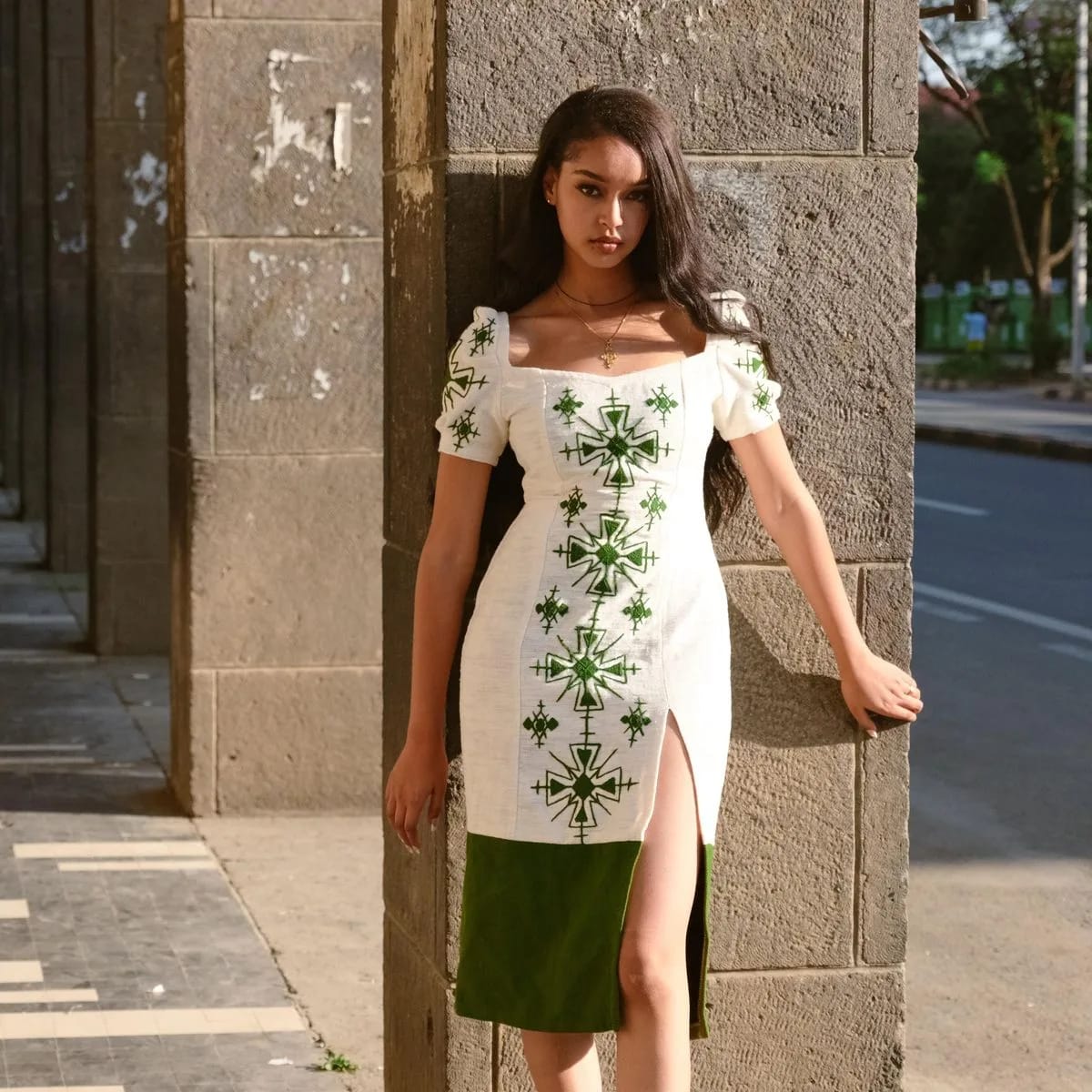
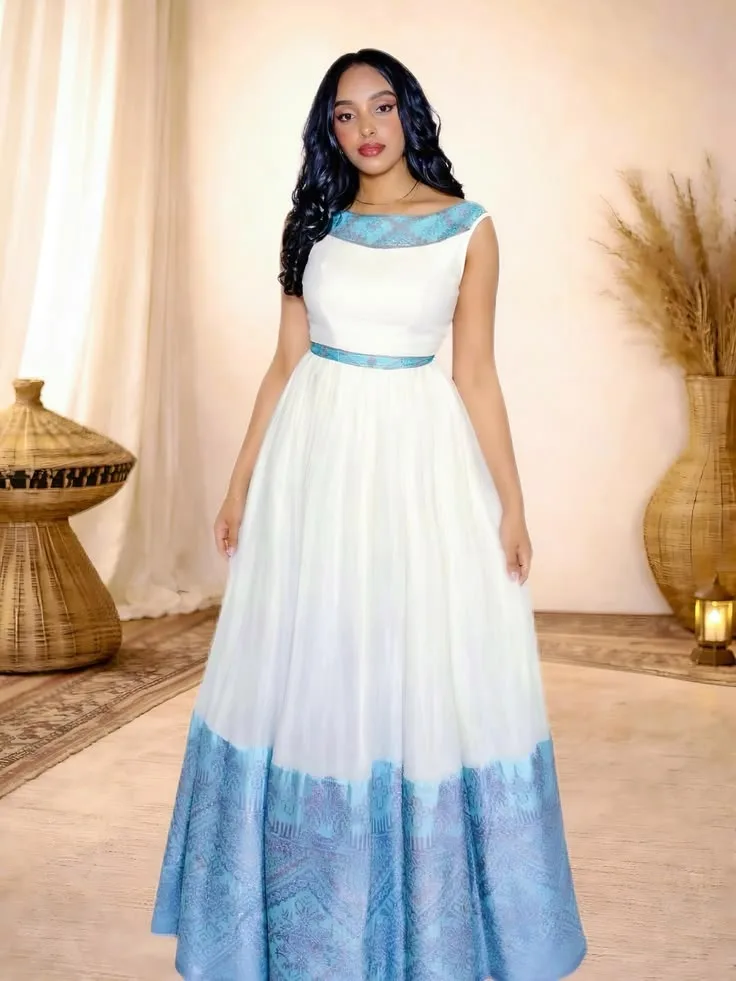
The zuria is the long, flowing dress traditionally worn by Eritrean women, typically handwoven from cotton and finished with the ornate tibeb border along the hem, sleeves, and neckline. A well-made zuria can take an experienced weaver anywhere from several days to a few weeks to complete on a traditional handloom. This is not fast fashion — it is slow, deliberate craftsmanship that has been refined over centuries.
The netela, meanwhile, is the lightweight shawl or wrap worn over the shoulders or draped over the head, often matching the tibeb pattern of the zuria beneath it. Historically, the netela served practical purposes — protection from sun and dust — but today it functions primarily as a ceremonial accessory, signaling elegance and cultural pride at weddings, church services, and holidays. Together, the zuria and netela form the backbone of formal Eritrean women's dress, much as the habesha kemis does in Ethiopian fashion.
What Makes the Tibeb Pattern So Significant
Tibeb refers to the decorative woven border that distinguishes handloom habesha textiles from ordinary cloth, and it is arguably the single most recognizable feature of Eritrean and Ethiopian traditional dress. Traditionally created using a supplementary weft technique on a handloom, tibeb patterns range from simple geometric lines in everyday garments to elaborate, multicolored designs reserved for weddings and major religious festivals. The complexity of the tibeb is often a direct indicator of the garment's value and the occasion it's meant for.
Modern tibeb work sometimes incorporates metallic gold or silver thread for bridal zuria, while everyday pieces use simpler cotton-on-cotton patterns in muted tones. When shopping for Eritrean traditional clothing, examining the tibeb closely — checking for consistent tension, clean thread work, and hand-finished edges — is one of the fastest ways to gauge authenticity and craftsmanship quality.
Color, Embroidery, and What They Signal
In Eritrean traditional clothing, color is rarely arbitrary. White remains the most common base fabric for both the zuria and netela, reflecting both practicality in a warm climate and a long association with purity and religious observance in Eritrean Orthodox Christian and Muslim communities alike. Bold colors — deep red, royal blue, emerald green, or gold — typically appear in the tibeb border rather than the full garment, concentrating visual richness where it matters most.
Embroidery density and color saturation often correlate with the formality of the occasion. A bride's zuria, for instance, may feature a wide, multicolored tibeb band with gold accents, while a garment worn for a casual family gathering might carry only a thin, single-color border. Some families and regions also use specific color combinations that have been passed down for generations, effectively functioning as a visual signature of lineage or hometown. Shoppers who want to honor this nuance should ask artisans or sellers about the regional or familial significance of a specific color pairing before assuming any pattern is purely decorative.
Men's Traditional Attire for Weddings and Holidays
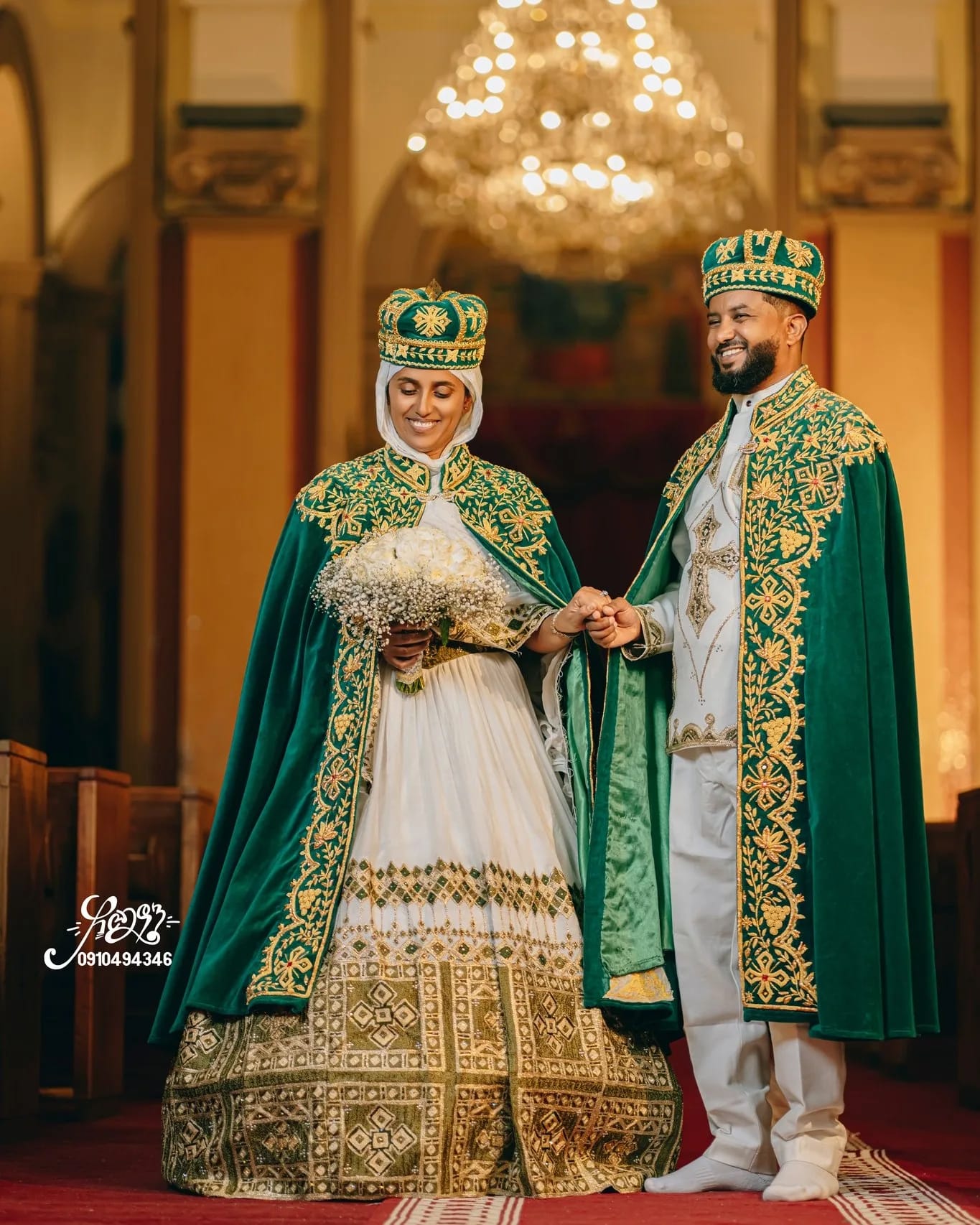
Eritrean men's traditional clothing centers on tailored tunics, often paired with a matching shawl or sash, cut from the same handwoven cotton used for women's garments and finished with coordinating tibeb trim. These tunics are typically worn over trousers and are essential formal wear at weddings, where the groom's attire is expected to visually complement the bride's zuria. At religious celebrations such as Timkat — the Orthodox celebration of Epiphany — men commonly wear white tunics with subtle tibeb borders, reflecting the solemn yet celebratory tone of the holiday.
For everyday cultural events, a simplified version of the tunic, sometimes paired with a modern blazer for diaspora settings, allows men to nod to tradition without full ceremonial dress. Many diaspora grooms now request custom tailoring that blends a traditional tibeb-trimmed tunic with a modern fit, giving them a garment that photographs beautifully for weddings while still respecting the original silhouette. This blending of old and new is increasingly common and widely accepted within the community, as long as the core elements — handwoven fabric and authentic tibeb — remain intact.
Why Authenticity Matters When Buying Eritrean Traditional Clothing
Authentic Eritrean traditional clothing is hand-loomed, not machine-printed, and that distinction has real consequences for both quality and cultural integrity. Mass-produced imitations — often printed with a tibeb-style pattern rather than woven — have flooded online marketplaces in recent years, marketed to diaspora buyers who may not know what to look for. These imitations are typically made from synthetic blends, lack the texture and durability of genuine cotton handloom fabric, and fade or fray far more quickly.
Verified artisan sourcing protects both the buyer and the weaving communities who have sustained this craft for generations. When you buy a hand-loomed zuria or netela, you're often supporting a specific weaver or small cooperative, many of whom rely on this income to sustain traditional weaving as a viable livelihood.
Cultural heritage organizations across the Horn of Africa have repeatedly warned that the decline of handloom weaving threatens not just an industry, but an entire intangible cultural practice.Buying authentic pieces, even at a higher price point, is a direct investment in keeping that tradition alive for the next generation.
How to Spot Authentic Craftsmanship
Look closely at the tibeb border for slight natural variations in thread tension — handloom work is never perfectly uniform, and that imperfection is actually a sign of authenticity. Genuine garments are almost always made from 100% cotton, which feels breathable and slightly textured rather than slick or synthetic. Finally, ask sellers direct questions about the weaver's region or cooperative; reputable sellers of Eritrean traditional clothing are usually proud to share this information and often can.
Styling Eritrean Traditional Clothing for Modern Occasions
Diaspora life rarely offers a one-to-one equivalent of traditional Eritrean ceremonial occasions, so many shoppers today are finding creative, respectful ways to incorporate these garments into Western milestones. A netela draped elegantly over the shoulders of a graduation gown has become a popular way for Eritrean and Ethiopian American students to honor their heritage during commencement ceremonies. Similarly, a tibeb-trimmed shawl worn over a simple modern dress works beautifully for a baptism, christening, or holiday family photo.
For men, pairing a traditional tunic with modern trousers and dress shoes — rather than the full traditional wrap — offers a versatile middle ground for cultural events that aren't strictly weddings or religious holidays. Layering is another popular approach: a netela worn as a scarf over a blazer, or a tibeb-patterned sash added to an otherwise modern outfit, lets wearers signal cultural pride in everyday settings like office holiday parties or community gatherings. The key is intentionality — these garments carry meaning, so wearing even a small piece thoughtfully honors that history far more than treating it as a costume.
Supporting Artisan Communities Through Direct Sourcing
Buying directly from verified Ethiopian and Eritrean artisans does more than guarantee quality — it sustains entire weaving communities whose skills have been passed down through families for generations. Many traditional weavers work in small workshops or cooperatives in cities like Adwa, Axum, and Asmara, where handloom weaving remains both a cultural practice and an economic lifeline. When diaspora buyers purchase through verified channels rather than anonymous mass-market sellers, more of that value returns directly to the artisans themselves.
This matters increasingly in 2026, as global interest in "slow fashion" and ethically sourced textiles grows alongside renewed diaspora interest in cultural dress. Choosing verified artisan-made Eritrean traditional clothing over cheap imports is one of the simplest, most tangible ways to participate in preserving this heritage while still getting a garment of genuine quality. It also tends to result in a far more durable, better-fitting piece — one that can be worn for decades and eventually passed down, the way these garments were always meant to be.
Conclusion: Carry the Tradition Forward
Eritrean traditional clothing is far more than ceremonial costume — it is a living record of craftsmanship, regional identity, and generations of cultural continuity between Eritrea and Ethiopia. From the handwoven zuria and netela to the tailored tunics worn by grooms at weddings and Timkat celebrations, every tibeb pattern and color choice carries meaning worth understanding before you buy. Whether you're dressing for a wedding, a graduation, or simply want to reconnect with your heritage, choosing authentic, hand-loomed pieces ensures you're honoring the artisans and traditions behind every garment.
Ready to find a piece that truly reflects this heritage? Shop authentic habesha kemis and Ethiopian & Eritrean traditional clothing on derBaba, where every garment is sourced from verified artisans committed to preserving this craft for generations to come.