Ethiopian Traditional Clothes: A Complete Diaspora Guide (2026)
Explore the meaning behind Ethiopian traditional clothes — habesha kemis, netela, tibeb patterns, and men's attire — plus how to buy authentic pieces in 2026.
Quick Answer: What Are Ethiopian Traditional Clothes?
Ethiopian traditional clothes are garments handwoven from cotton fabric called shema, often bordered with colorful tibeb patterns that signal regional identity, occasion, and craftsmanship lineage. The most recognized piece is the habesha kemis, a woman's dress typically paired with a netela shawl, though men's traditional attire like the kuta and gabi carry equal cultural weight. These clothes are not costumes — they are living expressions of Ethiopian and Eritrean heritage worn at weddings, religious holidays, and everyday moments of pride.
That handwoven habesha kemis your grandmother kept wrapped in cloth for decades isn't just fabric — it's a 3,000-year-old language woven in cotton and silver thread. For diaspora families scattered across North America and Europe, reconnecting with that language often starts with understanding what these garments actually mean, and how to find pieces that honor the artisans who still make them by hand.
Key Takeaways
- Ethiopian traditional clothes like the habesha kemis and netela carry centuries of symbolism tied to region, marital status, and religious occasion.
- Shema, the handwoven cotton fabric at the heart of habesha clothing, can take skilled artisans anywhere from several days to several weeks to complete on a traditional loom.
- Tibeb border patterns are far more than decoration — their colors and motifs often trace back to specific weaving traditions in Gondar, Tigray, Axum, and Bahir Dar.
- Men's traditional attire, including the kuta and gabi, deserves far more attention in diaspora fashion conversations than it typically receives.
- Learning to distinguish handloomed shema from machine-made imitations protects diaspora buyers from overpaying for inauthentic pieces.
- Buying directly from verified artisans keeps centuries-old weaving traditions alive while guaranteeing authenticity for weddings, holidays, and heirloom pieces.
The Cultural Roots of Ethiopian Traditional Clothes
Ethiopian traditional clothes trace their origins back thousands of years to the highland weaving traditions of the Habesha peoples, the term broadly used for Amhara, Tigrayan, and related ethnic groups across Ethiopia and Eritrea. Long before mass production touched the region, families relied on local weavers to produce cotton cloth for every life stage — birth, baptism, marriage, and death. That history is why a habesha kemis worn today still echoes patterns and techniques documented by travelers and traders centuries ago along ancient trade routes connecting Axum to the Red Sea.
What makes these garments distinct from generic "ethnic fashion" is the specificity of meaning embedded in every choice. The color of a border, the density of a weave, even the way a shawl is draped over one shoulder versus both can communicate a woman's marital status, her region of origin, or the formality of the occasion she's dressed for. This is part of why diaspora buyers searching for Ethiopian traditional clothes should look past surface-level aesthetics and ask questions about where and how a piece was made.
Habesha Kemis: The Centerpiece of Women's Traditional Dress
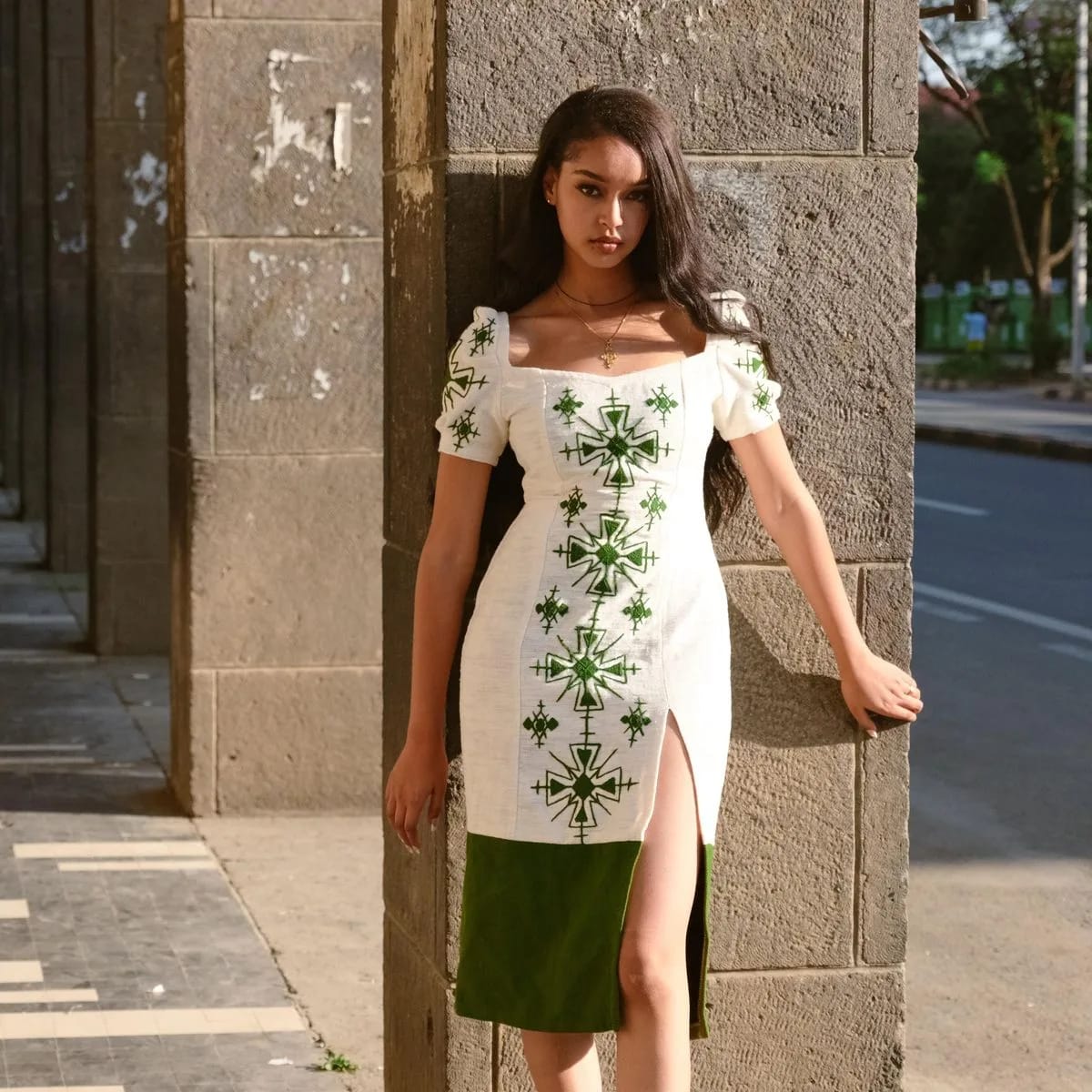
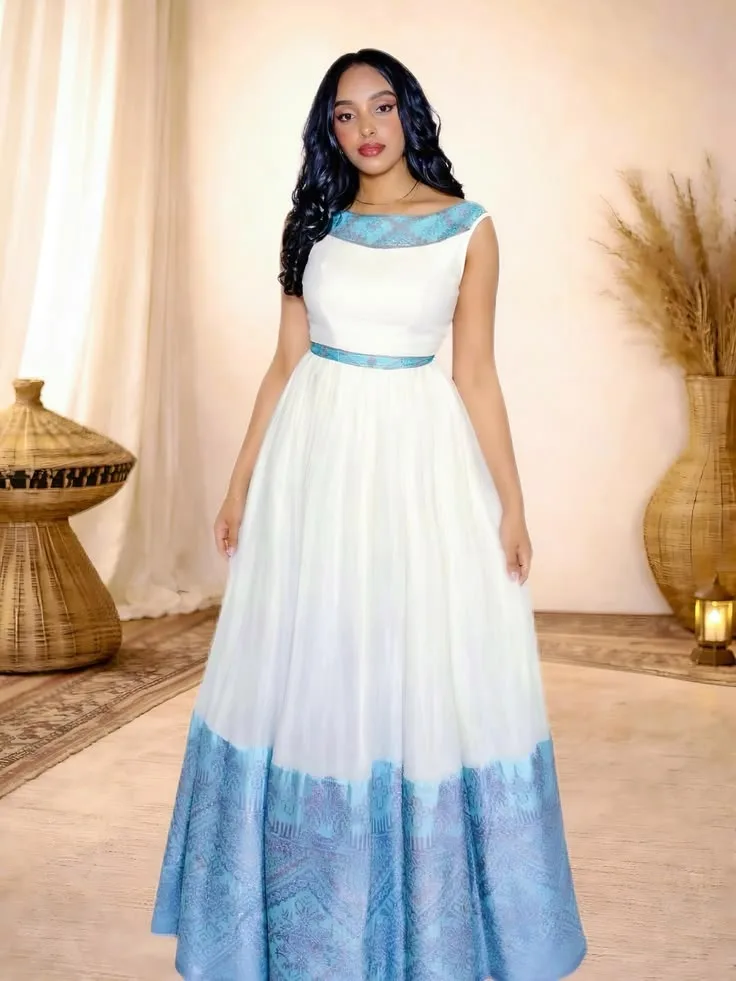
The habesha kemis is a long, flowing dress made from handwoven cotton, almost always featuring a decorative tibeb border at the hem, sleeves, and neckline. It is the single most recognizable piece among Ethiopian traditional clothes, worn for weddings, religious holidays, graduations, and cultural celebrations across the diaspora. Styles range from simple, understated daywear versions to elaborately embroidered bridal gowns that can take artisans weeks to complete.
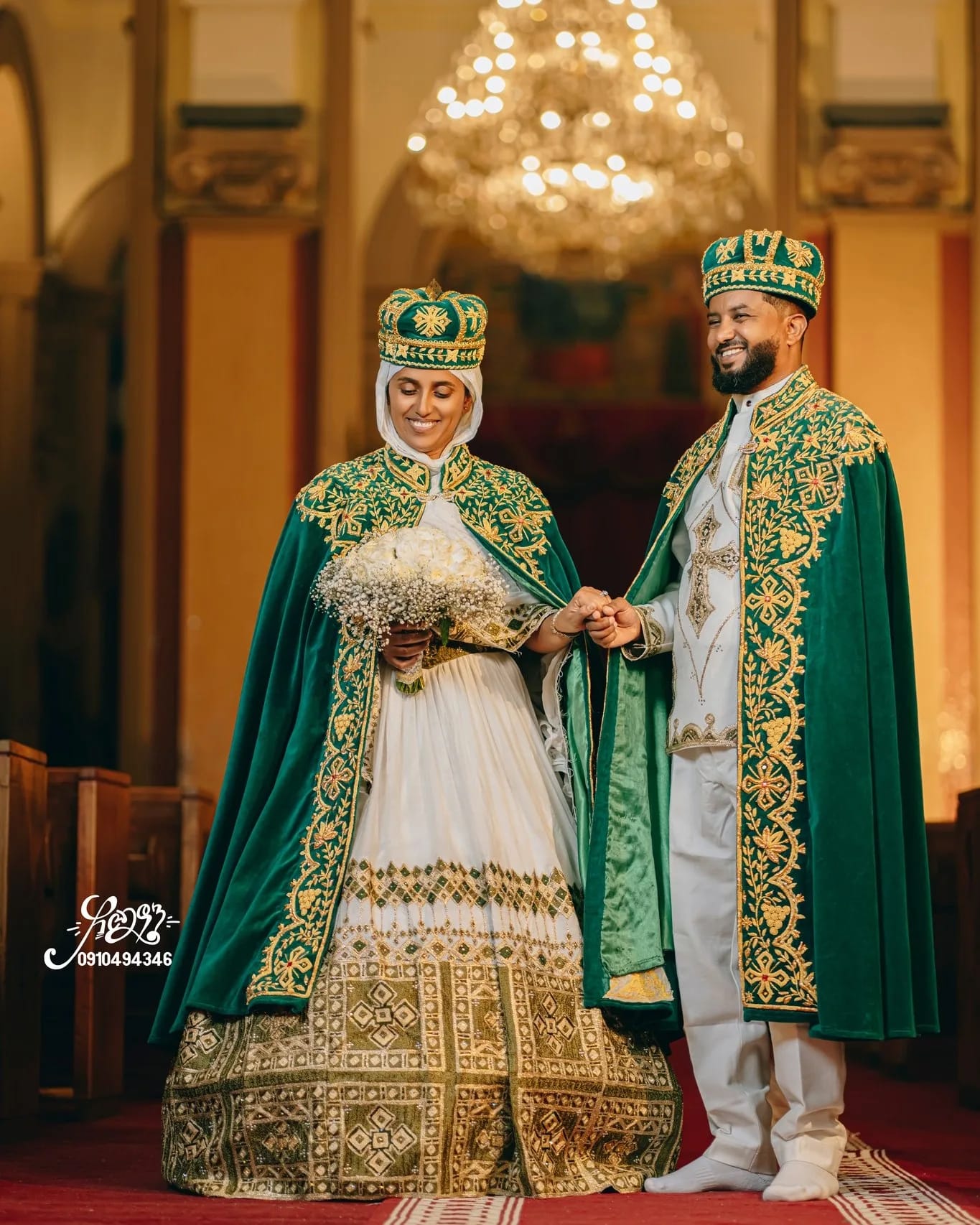
Modern habesha kemis designs have evolved to include fitted silhouettes, cap sleeves, and contemporary necklines while still honoring the traditional shema base and tibeb trim. Brides in particular often commission custom kemis in white or ivory with gold or multicolor tibeb work, sometimes paired with a matching netela and gold jewelry reflecting Ethiopian Orthodox or Eritrean Orthodox wedding customs. For everyday or semi-formal wear, lighter cotton kemis with simpler borders are common choices for church attendance or family gatherings.
Shema: The Handwoven Fabric Behind Authentic Habesha Clothing
Shema is the traditional handwoven cotton fabric that forms the foundation of nearly every authentic piece of Ethiopian traditional clothing, from the habesha kemis to men's tunics. Woven on wooden pit looms, often by men who specialize in the craft passed down through generations, shema production is slow and deliberate by design. A single high-quality shema piece can take anywhere from three days to several weeks depending on the complexity of the weave and the intricacy of any tibeb incorporated into the loom work.
This labor intensity is exactly why authentic shema-based garments carry a higher price point than mass-produced alternatives — and why that price is justified. Each thread is spun and woven by hand, meaning no two pieces are perfectly identical, a detail diaspora buyers often come to treasure once they understand it. When you purchase genuine shema clothing, you are directly supporting a weaving economy that remains a vital source of income for artisan communities in cities like Gondar, Dire Dawa, and Mekelle.
Tibeb Patterns: Reading the Regional Code
Tibeb refers to the woven or embroidered border patterns found on Ethiopian traditional clothes, and these patterns function almost like a regional dialect in textile form. A tibeb design common in Gondar may differ noticeably in color saturation and motif density from one woven in Axum or Tigray, reflecting distinct local weaving schools that have been refined over centuries. Bahir Dar weavers, for example, are often recognized for bold, multicolor tibeb work, while some Tigrayan styles favor more intricate, tightly woven geometric patterns.
Beyond geography, tibeb colors can carry symbolic weight tied to specific celebrations or life events. Gold and yellow threads frequently appear in bridal and festival pieces, while deeper reds and greens show up more often in everyday or semi-formal garments. Understanding even the basics of tibeb symbolism gives diaspora shoppers a much richer appreciation of what they're wearing — and helps them ask artisans more informed questions when commissioning custom pieces.
Netela: The Shawl That Completes the Look
The netela is a lightweight, handwoven cotton shawl worn draped over the shoulders, almost always featuring the same tibeb border as its matching kemis. It is worn by women across nearly every occasion, from Sunday church services to major holidays like Timkat and Meskel, and its draping style itself can signal context — a more formal wrap for religious observance, a looser drape for casual outings. Many diaspora families keep a netela as a treasured heirloom passed from mother to daughter, often the one piece that survives decades of migration intact.
A well-made netela uses the same quality benchmarks as the kemis itself: tightly spun cotton thread, even weaving tension, and clean, dense tibeb stitching along the border. Because the netela is often worn alone or over simple clothing, its quality is highly visible, making it one of the easiest garments for buyers to use as a litmus test for an artisan's overall craftsmanship.
Men's Traditional Attire: Kuta and Gabi Deserve the Spotlight
Men's traditional attire in Ethiopian and Eritrean culture is often overlooked in diaspora fashion conversations, but garments like the kuta and gabi carry just as much cultural significance as the habesha kemis. The kuta is a traditional tunic-and-trouser set, often made from the same handwoven shema cotton, sometimes featuring a tibeb trim along the collar or cuffs for formal occasions like weddings and holidays. Paired with a matching sash or simple vest, the kuta remains a staple for grooms, father-of-the-bride figures, and men attending major religious celebrations.
In many Ethiopian and Eritrean communities, the gabi — a thick, white handwoven cotton wrap — is worn by elders and respected men as a symbol of dignity, often during Timkat, funerals, and formal community gatherings.
The gabi differs from the netela in weight and purpose; it is heavier, warmer, and typically worn draped over both shoulders rather than one, reflecting its role as both practical outerwear in the highland cold and a marker of status and seniority. Diaspora buyers shopping for fathers, grandfathers, or grooms should look specifically for men's sections when browsing Ethiopian traditional clothes, since quality kuta and gabi pieces are frequently underrepresented compared to women's kemis in online boutiques.
Handloomed vs. Machine-Made: How to Spot the Difference
Knowing how to distinguish handloomed shema from machine-made imitation fabric is one of the most practical skills a diaspora buyer can develop before making a purchase. Genuine handwoven pieces typically show slight irregularities in thread tension, a subtly textured hand-feel, and tibeb patterns that are woven directly into the fabric structure rather than printed or machine-embroidered on top. Machine-made imitations, by contrast, often feel stiffer, display perfectly uniform stitching, and use synthetic blends rather than pure cotton.
Price is another telling signal: authentic handwoven habesha kemis pieces generally start in a higher price range because of the labor involved, while mass-produced versions are mass-manufactured at a fraction of the cost and sold at steep discounts. Buyers should also ask sellers direct questions — where was this woven, who made it, and how long did it take — since artisans and reputable boutiques can usually answer these details with specificity. A seller who cannot describe the origin of their shema or tibeb work is a red flag worth taking seriously.
Dressing for the Occasion: Holidays, Weddings, and Everyday Wear
Ethiopian traditional clothes are not one-size-fits-all in terms of styling, and diaspora buyers benefit from understanding how occasion shapes the right choice. For Timkat, the Ethiopian Orthodox celebration of Epiphany, white is the dominant color, with women wearing crisp white habesha kemis and netela while men often wear white kuta or gabi, reflecting the ceremonial purity associated with the holiday. Meskel, which commemorates the finding of the True Cross, follows a similarly reverent dress code, though some families incorporate brighter tibeb accents to mark its festive communal bonfires.
Enkutatash, the Ethiopian New Year celebrated in September, tends to invite more colorful, celebratory kemis choices, often with vibrant tibeb borders symbolizing renewal and joy. Weddings call for the most elaborate pieces in the entire wardrobe — custom bridal kemis, matching groom's kuta, and coordinated netela for bridal party members, frequently commissioned months in advance from trusted artisans. Baptisms and graduations occupy a middle ground, where a well-made but simpler kemis or kuta is appropriate, signaling respect for the occasion without the full formality reserved for weddings and major religious holidays.
Supporting Artisans in Addis, Gondar, Tigray, and Bahir Dar
Buying Ethiopian traditional clothes directly from verified artisans in cities like Addis Ababa, Gondar, regions across Tigray, and Bahir Dar does more than guarantee authenticity — it sustains an entire craft economy that has faced real pressure from cheap imports and shifting manufacturing trends. Many skilled weavers are part of family workshops that have operated for multiple generations, and diaspora demand remains one of the most important sources of income keeping those traditions economically viable. Every purchase of genuine handwoven shema is, in a very real sense, an investment in cultural continuity.
For diaspora shoppers in the United States, Canada, the United Kingdom, and across Europe, the challenge has historically been access — not every community has a local boutique stocked with verified, artisan-made pieces. This is precisely the gap that platforms built around direct artisan sourcing aim to close, connecting buyers abroad with weavers and tailors in Ethiopia and Eritrea without layers of markup from unrelated middlemen. When researching a seller, look for transparency about weaving origin, production timelines, and photos or descriptions that reflect genuine craftsmanship rather than generic stock imagery.
Wearing Your Heritage with Confidence
Ethiopian traditional clothes carry stories that stretch back thousands of years, from the handloomed shema cotton to the regionally coded tibeb borders that quietly announce where a piece — and perhaps its wearer's family — comes from. Whether you're preparing for Timkat, planning a wedding, or simply want a well-made kuta for your father, understanding these garments transforms a purchase into an act of cultural literacy. The habesha kemis, netela, gabi, and kuta are not relics; they are living garments still worn, still woven, and still worth getting right.
For diaspora families, the goal isn't just owning a beautiful piece of clothing — it's owning one that was made with integrity, by hands that learned the craft the way it's always been learned. Shop authentic habesha kemis and Ethiopian & Eritrean traditional clothing on Derbaba, where every piece connects you directly back to the artisans keeping this heritage alive.