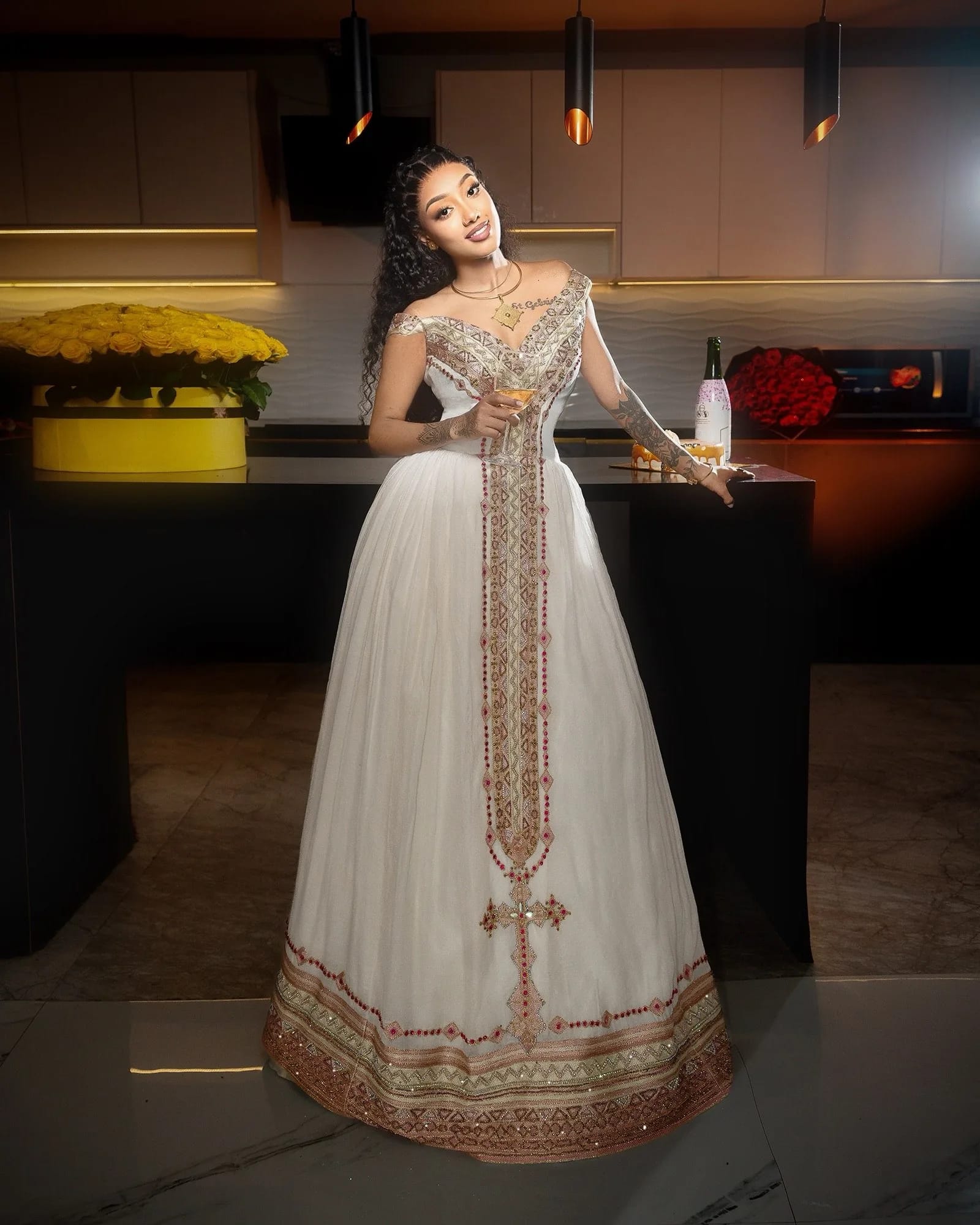
Ethiopian Wedding Dress: The Complete Habesha Bride Guide (2026)
Discover the meaning behind the Ethiopian wedding dress, from tibeb patterns to regional styles, sizing tips, and where to find authentic handwoven kemis.
What Is an Ethiopian Wedding Dress?
Every stitch on an Ethiopian wedding dress tells a story older than the bride wearing it — and getting it right matters more than most guides let on. The traditional Ethiopian wedding dress is called the habesha kemis, a floor-length gown handwoven from fine cotton called shema, finished with a bold decorative border known as tibeb. Unlike mass-market bridal gowns, a genuine habesha kemis is not simply chosen off a rack; it is commissioned, woven by hand, and often tied to a specific region, family tradition, or occasion.
For diaspora brides in the United States, Canada, and Europe, the habesha kemis represents more than aesthetics. It is a wearable link to Ethiopian and Eritrean heritage, worn at engagement ceremonies, religious wedding services, and cultural receptions. Understanding what makes a dress authentic — the weave, the border pattern, the regional style — helps brides make confident, informed choices instead of settling for imitation prints.
Key Takeaways
- The habesha kemis is the traditional Ethiopian wedding dress, handwoven from cotton with a decorative tibeb border, not a printed or machine-embroidered imitation.
- Regional weaving traditions from Gondar, Tigray, Addis Ababa, and Bahir Dar each produce distinct patterns, colors, and border widths.
- A wider, more intricate tibeb border generally signals a more formal event and, historically, higher family status.
- Authentic dresses take longer to produce because they are woven on traditional handlooms, so lead times of 4 to 8 weeks are standard for custom orders.
- Diaspora brides should order early, provide accurate measurements, and confirm shipping timelines before booking any wedding-related travel or events.
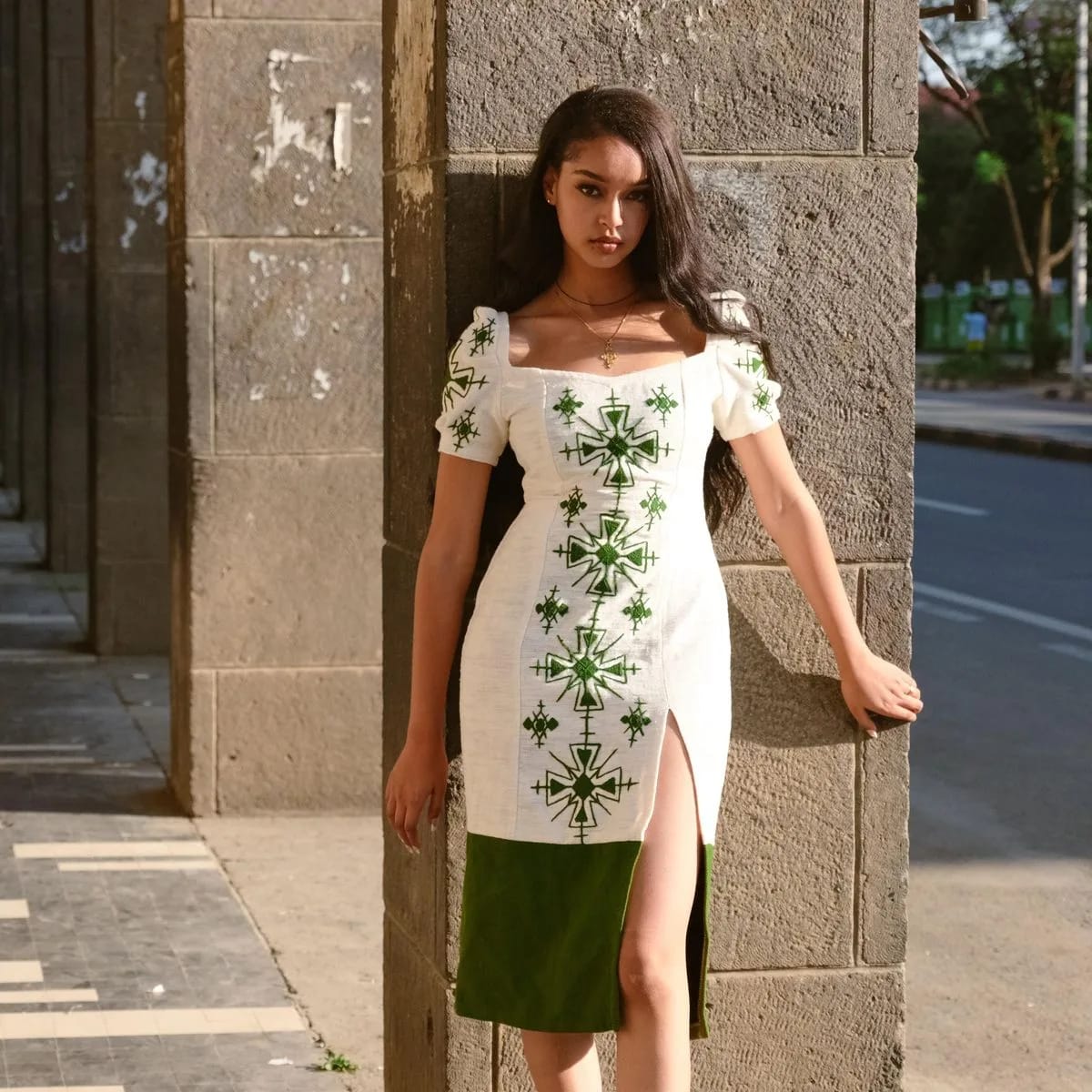
- Modern Ethiopian wedding dresses increasingly blend handwoven tibeb with contemporary silhouettes like fitted bodices, sweetheart necklines, and detachable trains.
The Habesha Kemis: Fabric, Weave, and Meaning
The foundation of every authentic Ethiopian wedding dress is shema, a lightweight, breathable cotton traditionally spun and woven on manual looms. Skilled weavers, many of them working from family workshops passed down through generations, produce this fabric in narrow strips that are later stitched together to form the full width of a garment. This is why a genuine habesha kemis often has a slightly textured, almost gauzy hand-feel that mass-produced polyester versions cannot replicate.
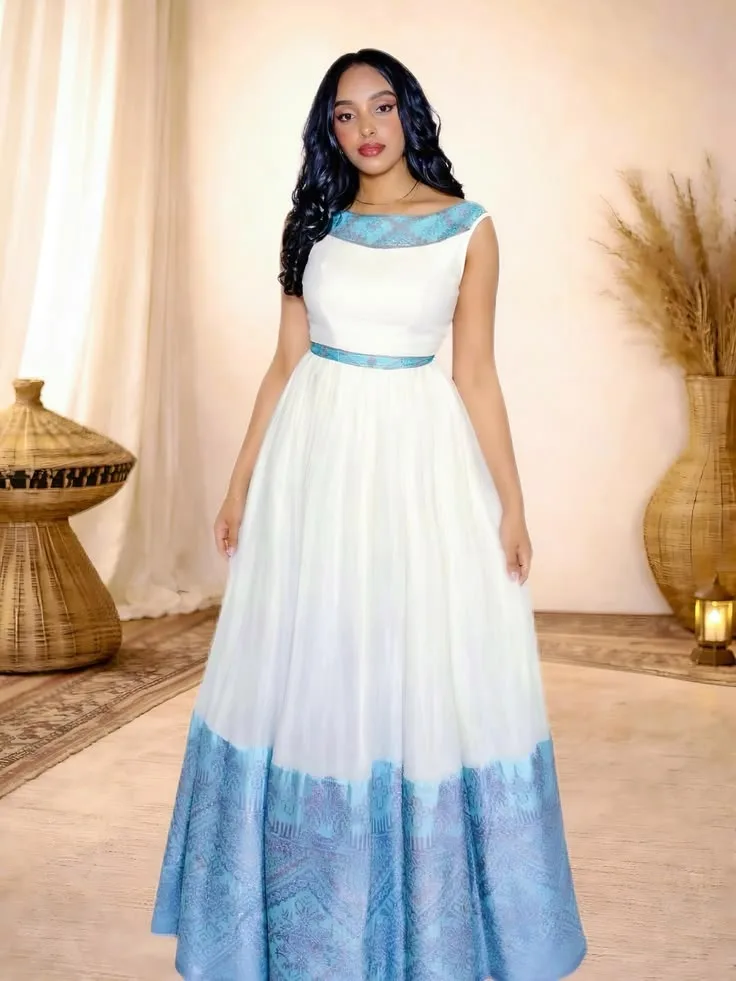
The tibeb border is what elevates the plain white shema into a bridal statement piece. Woven directly into the fabric rather than embroidered on top, tibeb patterns typically run along the hem, sleeves, and neckline in geometric or cross-inspired motifs. Colors carry meaning: gold and yellow threads often signal celebration and prosperity, while deep red can represent strength or sacrifice, and green ties back to the Ethiopian flag and national pride.
A wider, more elaborate tibeb border has traditionally signaled a more formal occasion — and, in some communities, greater family status or a more significant milestone being celebrated.
Because the tibeb is woven into the structure of the cloth, the process cannot be rushed. A single dress with a complex, multicolor tibeb border can take a skilled weaver several days to complete before the garment is even cut and sewn. This craftsmanship is central to why an authentic Ethiopian wedding dress commands a different price point — and a different level of respect — than a printed lookalike.
Regional Styles: Gondar, Tigray, Addis Ababa, and Bahir Dar
Ethiopia's weaving traditions are not monolithic. Each region has developed its own signature techniques, and recognizing these differences helps brides choose a style that reflects their family's specific heritage rather than a generic "Ethiopian" look.
Gondar Style
Gondar is often associated with some of the most elaborate tibeb work, featuring dense, multicolor borders that can extend well up the bodice and along both sleeves. Historically linked to Ethiopia's imperial past, Gondar-style kemis are frequently chosen for formal wedding ceremonies where a dramatic, richly patterned look is desired.
Tigray Style
Tigray weaving is known for sharper geometric patterns and a slightly heavier fabric weight, often incorporating deep reds and blacks alongside gold. Dresses from this tradition tend to have a more structured silhouette, and the tibeb border is frequently mirrored on a matching netela, or shawl.
Addis Ababa Style
As the capital and a hub for both traditional weavers and modern designers, Addis Ababa produces a wide range of styles, from strictly traditional kemis to fusion gowns that incorporate corseted bodices, lace overlays, or modern draping while keeping a woven tibeb panel as the focal point. This is often where diaspora brides find the most flexibility for custom, contemporary interpretations.
Bahir Dar Style
Bahir Dar, near Lake Tana, is known for softer color palettes and finer, more delicate shema weaving. Tibeb borders from this region tend to be narrower and more understated, making Bahir Dar-style dresses a popular choice for engagement ceremonies or daytime religious services rather than the most formal evening reception.
Reading the Tibeb: Color, Width, and Formality
Brides unfamiliar with Ethiopian textile tradition often ask a simple but important question: how do you know if a dress is formal enough for a wedding versus a smaller cultural gathering? The tibeb border is the clearest signal. Generally, the wider and more intricate the border — especially when it extends up the chest, sleeves, and hem simultaneously — the more formal and significant the occasion it's meant for.
Color choice adds another layer of meaning. Gold-heavy tibeb is the most common choice for weddings because of its association with celebration and abundance, while multicolor borders combining green, yellow, and red directly echo the Ethiopian national flag and are popular for cultural holidays like Timkat or Meskel as well as weddings. Some brides also choose colors that reflect their specific region or family lineage, using the dress as a subtle genealogical statement.
It's worth noting that formality signals are cultural conventions, not rigid rules — many contemporary brides mix traditions, wearing a Gondar-style border with an Addis-style silhouette. What matters most is understanding the meaning behind the choices being made, rather than defaulting to whatever pattern is most visually striking online.
Handwoven vs. Mass-Produced: What Diaspora Buyers Should Know
The global demand for Ethiopian wedding dresses has led to a flood of machine-printed imitations, particularly online, that mimic tibeb patterns using digital printing or basic embroidery on synthetic fabric. These versions are less expensive and ship faster, but they lack the texture, durability, and cultural authenticity of a handwoven kemis. For a wedding — arguably the most significant cultural event a bride will wear this garment for — the difference is worth understanding before you buy.
A genuine handwoven habesha kemis is made from cotton shema woven on a traditional loom, with the tibeb integrated into the weave structure itself rather than printed or appliquéd afterward. You can often tell the difference by feel: authentic shema has a slightly irregular, breathable texture, while printed polyester imitations feel uniformly smooth and can look flat or glossy under lighting. Price is another indicator — handwoven dresses with detailed tibeb work typically cost significantly more than printed versions because of the labor-intensive weaving process.
This doesn't mean every bride must choose the most expensive handwoven option. Some diaspora brides intentionally choose a lighter, simpler tibeb border for a rehearsal dinner or civil ceremony, saving a heavily woven, more elaborate kemis for the main religious or cultural wedding event. The key is buying with intention and asking sellers directly whether a garment is handwoven, and from which region's tradition it draws.
Sizing and Custom Fit for Diaspora Brides
Because many authentic Ethiopian wedding dresses are made to order rather than stocked in standard retail sizes, sizing works differently than shopping for a conventional bridal gown. Artisans typically request a set of measurements — bust, waist, hip, and full length from shoulder to floor — and weave or tailor the garment to those specifications. This custom approach generally produces a better fit than off-the-rack alternatives, but it requires planning ahead.
Diaspora brides should order their Ethiopian wedding dress 4 to 8 weeks before the event to account for weaving time, tailoring, and international or domestic shipping. Complex, multicolor tibeb designs or dresses requiring additional pieces like a matching netela and cape can push toward the longer end of that window. Rush orders are sometimes possible but often come with added fees and can compromise the quality of the weaving if the artisan has to work faster than usual.
It's also wise to confirm alteration policies before ordering. Because handwoven fabric behaves differently than mass-produced textiles, a local tailor unfamiliar with shema may struggle with adjustments, so many brides prefer working directly with the original seller or a specialist familiar with traditional Ethiopian garment construction for any last-minute fitting changes.
Modern Ethiopian Wedding Dresses for Diaspora Ceremonies
Ethiopian wedding fashion has evolved considerably, and 2026 brides have far more options than a strictly traditional, boxy kemis silhouette. Designers now regularly pair handwoven tibeb panels with fitted, corseted bodices, sweetheart or V-neck necklines, and dramatic detachable trains — creating a garment that feels equally at home at a traditional Orthodox ceremony and a Western-style reception. This fusion approach has become especially popular among diaspora brides who want to honor heritage without sacrificing a modern bridal silhouette.
Some brides choose two looks entirely: a fully traditional habesha kemis for the religious ceremony or cultural presentation, and a fusion or Western gown for the evening reception. Others opt for a single dress that incorporates just enough traditional tibeb detailing — along a sash, neckline, or hem — to visually anchor the look in Ethiopian heritage while keeping the overall silhouette contemporary. Both approaches are valid, and the right choice depends on the ceremony structure, family expectations, and personal style.
Regardless of silhouette, the presence of authentic tibeb weaving remains the detail that signals cultural respect and craftsmanship. A modern gown with a poorly imitated printed border undercuts the very tradition it's trying to reference, which is why many diaspora brides now specifically seek out sellers who can confirm the weaving origin of the tibeb used in fusion designs.
Completing the Look: Netela, Jewelry, and Hair
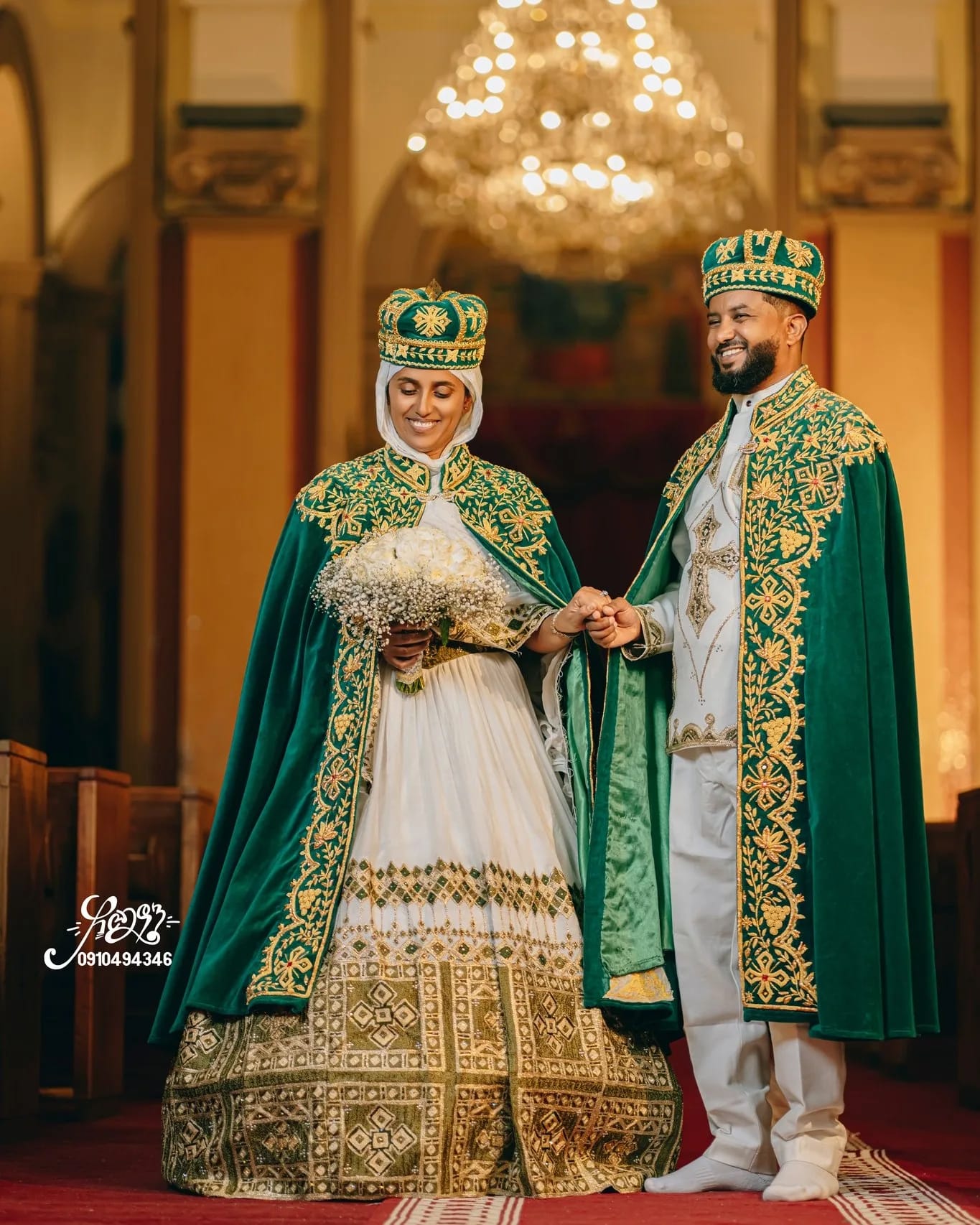
The habesha kemis is rarely worn alone. The netela, a lightweight, semi-sheer shawl often finished with a matching tibeb border, is draped over the shoulders and is considered an essential companion piece rather than an optional accessory. For weddings, a heavier, more ornate netela is common, sometimes embellished with additional embroidery beyond the standard tibeb.
Jewelry plays an equally important role in completing a traditional bridal look. Gold cross necklaces, wide woven or gold-toned collar necklaces, and matching earrings are traditional choices that complement the tibeb's gold tones without overwhelming the dress. Hair is often styled in traditional Habesha braids, sometimes adorned with small gold hair pins or a woven headpiece that echoes the dress's border pattern.
Together, these elements — the kemis, the netela, the jewelry, and the hairstyle — form a complete cultural presentation rather than a collection of separate accessories. Diaspora brides planning their look should budget time and coordination for all these pieces, ideally sourcing them together or with color-matching in mind, so the tibeb tones stay consistent across the entire ensemble.
Conclusion: Honoring Tradition on Your Wedding Day
An Ethiopian wedding dress is never just fabric and thread — it's a handwoven expression of regional heritage, family pride, and celebration that connects a modern bride to generations of Ethiopian and Eritrean craftsmanship. Whether you choose a richly bordered Gondar-style kemis, a softer Bahir Dar weave, or a fusion gown that blends tradition with a contemporary silhouette, understanding the meaning behind the tibeb ensures your dress reflects genuine cultural respect rather than a passing trend. Give yourself the 4 to 8 week window artisans need, ask questions about weaving origin, and pair your kemis thoughtfully with a netela, gold jewelry, and traditional hairstyling for a complete, authentic bridal look. Ready to find your dress? Shop authentic habesha kemis and Ethiopian & Eritrean traditional clothing on Derbaba, and discover handwoven pieces made by artisans who understand exactly what your wedding day deserves.