Habesha Man Style Guide: Traditional Ethiopian Menswear in 2026
Explore the heritage and modern style of the habesha man—kuta, gabi, and tibeb patterns explained, plus how to shop authentic pieces in 2026.
What does it really mean to dress as a habesha man today — somewhere between a grandfather's tunic folded in a cedar chest and a diaspora wedding hall in Toronto, Washington D.C., or Frankfurt? The answer isn't found in a single garment or a single rule. It lives in the handwoven cotton passed down through generations, in the tibeb trim stitched by artisans in Gondar and Tigray, and in the quiet pride of a young man choosing to wear his heritage rather than hide it. In 2026, that pride is more visible than ever, as Ethiopian and Eritrean men across North America and Europe reclaim traditional menswear for weddings, holidays, and everyday life.
Key Takeaways
- A habesha man's identity is rooted in Ethiopian and Eritrean heritage — it describes a cultural belonging, not merely a clothing aesthetic.
- Core traditional garments include the kuta (tunic), the gabi (wrap shawl), and netela-trimmed shirts woven from handloomed cotton.
- Authentic habesha menswear is distinguished by hand-loomed cotton and tibeb trim patterns tied to regional weaving traditions from Gondar, Tigray, and Bahir Dar.
- Diaspora men increasingly pair traditional pieces with modern tailoring for weddings, baptisms, and cultural festivals.
- Holidays like Timkat, Meskel, and Enkutatash each call for distinct style choices rooted in centuries-old customs.
- Spotting authentic, artisan-made habesha clothing online requires checking fabric weight, stitching, and verified sourcing rather than trusting price alone.
What It Means to Be a Habesha Man
The word "habesha" refers broadly to the peoples of Ethiopia and Eritrea, and being a habesha man carries a weight that goes far beyond fashion. It signals a connection to a shared history of ancient kingdoms, Orthodox Christian and Muslim traditions, Amharic, Tigrinya, and Oromo linguistic roots, and a textile heritage that predates European colonization of the continent. Clothing becomes a vessel for that identity — a way of carrying Axum, Gondar, and Asmara into a Los Angeles church hall or a London community center.
This is why many diaspora families treat traditional clothing as inheritance rather than costume. A father's gabi, worn at his own wedding decades ago, might reappear at his son's baptism ceremony or his daughter's engagement. Understanding this emotional and historical layer is essential before diving into fabric types or tailoring choices, because for the habesha man, dressing traditionally is an act of memory as much as style.
The Core Garments Every Habesha Man Should Know
Traditional habesha menswear is built around a small number of foundational pieces, each with deep functional and symbolic roots. Understanding these garments is the first step toward building an authentic wardrobe, whether for a single ceremony or a lifetime of cultural dressing.
The Kuta: The Everyday Tunic
The kuta is a lightweight, handwoven cotton shirt or tunic traditionally worn by men across Ethiopian and Eritrean highland communities. It's typically made from thin, breathable cotton suited to highland climates, often left plain or finished with a subtle tibeb-trimmed collar and cuffs. Historically worn daily, the kuta has transitioned into special-occasion wear for many diaspora men, reserved for holidays, church services, and family gatherings.
The Gabi: The Ceremonial Wrap
The gabi is a thick, handwoven cotton shawl or wrap, usually white, draped over the shoulders and sometimes the entire body. Traditionally worn by elders and respected community members, the gabi signals maturity, dignity, and status. During colder months in the Ethiopian highlands, it also served a practical purpose — a function diaspora men in Minnesota or Stockholm winters still appreciate when wearing it today.
Netela-Trimmed Shirts and Modern Adaptations
The netela, traditionally a women's shawl, has inspired a category of men's shirts finished with the same gauzy cotton and tibeb border detailing. Modern tailors in Addis Ababa and diaspora ateliers have adapted this into fitted, Western-cut shirts with traditional trim at the collar, cuffs, and hem — a popular hybrid piece for men who want visible heritage without a full traditional outfit. This adaptation has become especially popular among younger habesha men attending weddings where some guests dress traditionally and others dress in Western formalwear.
What Makes Habesha Clothing Authentic
Authentic habesha clothing for men is defined primarily by three things: hand-loomed cotton, tibeb trim patterns, and regional weaving lineage. Mass-produced imitations, often made from synthetic blends and printed (not woven) trim, have flooded some markets, making it increasingly important for buyers to know what they're looking for.
Hand-loomed cotton has a distinct texture — slightly irregular, breathable, and heavier at the selvage edges than machine-woven fabric. The tibeb, the colorful woven border pattern found on collars, cuffs, and hems, should be woven directly into the fabric structure, not embroidered or printed on top. Genuine tibeb work shows subtle inconsistencies between pieces because each one is made by hand on a traditional loom, often using foot-pedal mechanisms passed down through weaving families.
Regional Weaving Traditions Worth Knowing
Gondar is historically renowned for intricate, colorful tibeb patterns often associated with royal and ceremonial garments. Tigray weavers are known for durable, tightly woven cotton with bold geometric borders suited to both daily and ceremonial wear. Bahir Dar, near Lake Tana, has a strong tradition of fine-thread cotton weaving, often producing some of the lightest and most breathable kuta fabric available. Knowing which region a piece originates from can help a habesha man connect more specifically to his own family's regional heritage.
Authentic Ethiopian and Eritrean weaving is a living craft tradition, with techniques documented by cultural institutions such as the Smithsonian Institution as part of broader East African textile heritage studies.
Styling Traditional Menswear for Diaspora Life
Modern habesha men in the diaspora rarely wear fully traditional outfits for everyday life, but they frequently blend heritage pieces with contemporary tailoring for weddings, galas, and cultural events. A common modern approach pairs a fitted netela-trimmed shirt with tailored dress trousers and a blazer, creating a look that reads as "traditional-modern fusion" rather than purely historical costume.
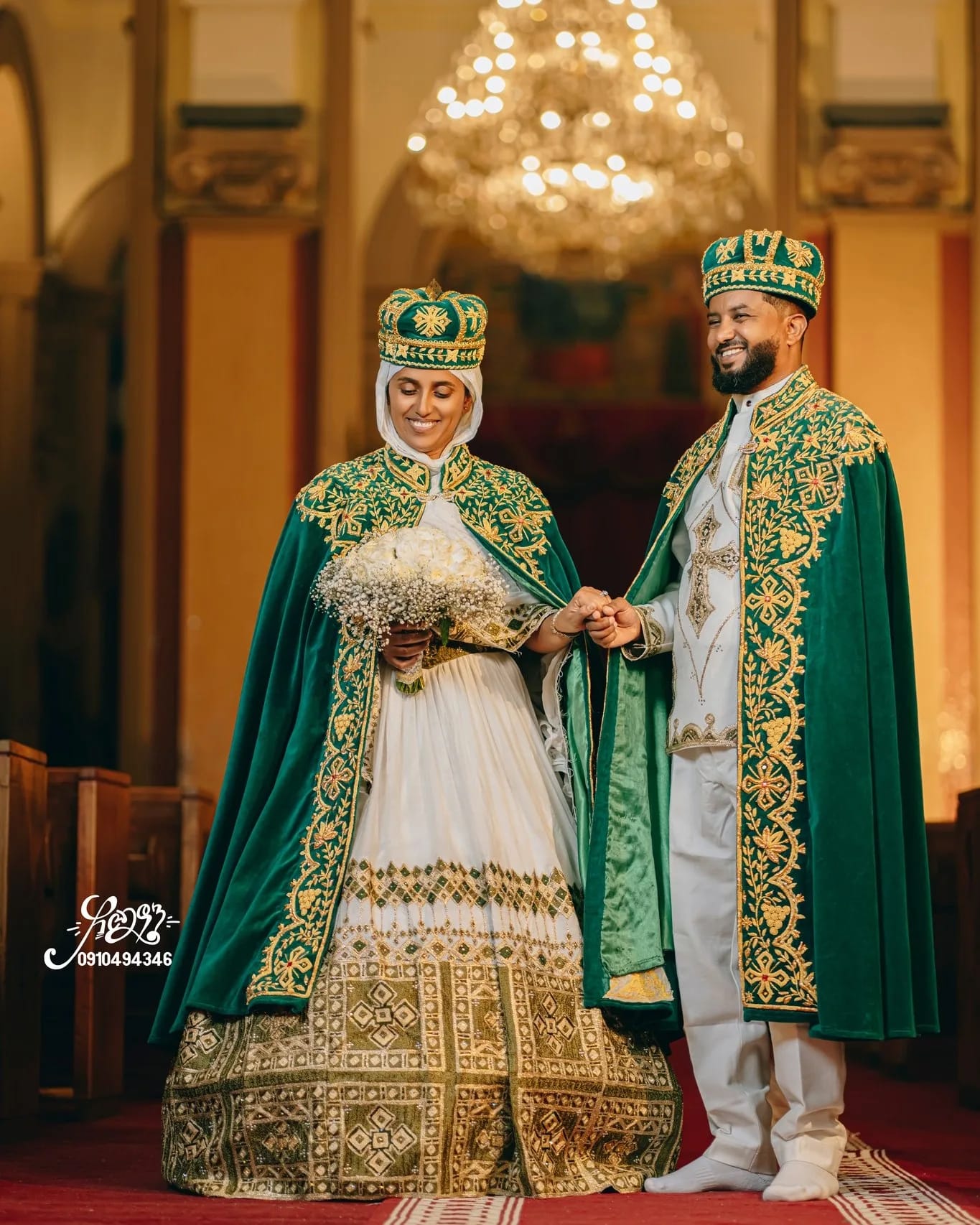
Another popular combination involves wearing a full kuta as a going-away outfit at weddings, switching from a Western suit worn during the ceremony itself. Grooms increasingly request custom tibeb trim in colors that match their wedding palette, turning an heirloom-style garment into a personalized statement piece. Groomsmen often coordinate in matching or complementary tibeb patterns, creating a visually unified wedding party that still honors individual family weaving traditions.
Everyday Pride Dressing
Beyond weddings, many diaspora men now incorporate smaller traditional elements into daily dress — a tibeb-trimmed scarf, a woven belt, or a kuta-inspired shirt worn casually with jeans. This "everyday pride" trend reflects a broader cultural shift where habesha identity is expressed subtly but consistently, not reserved only for major holidays.
Dressing for Timkat, Meskel, and Enkutatash
Each major Ethiopian and Eritrean holiday carries its own traditional dress expectations, and knowing these distinctions helps a habesha man dress with cultural accuracy rather than guesswork.
- Timkat (Ethiopian Epiphany, celebrated in January): Crisp white kuta and gabi combinations dominate, reflecting the solemnity and purity associated with the baptismal reenactment ceremonies held at rivers and reservoirs.
- Meskel (the Finding of the True Cross, celebrated in September): Bright, festive colors are more acceptable alongside traditional white, often with yellow Meskel flower motifs echoed in accessory choices.
- Enkutatash (Ethiopian New Year, also in September): Family gatherings call for fresh, clean traditional garments, often newly tailored for the year, symbolizing renewal.
- Baptisms and church ceremonies: Typically require a full white gabi and kuta, mirroring the symbolic purity worn during Timkat.
Diaspora communities in cities like Washington D.C., Seattle, and Toronto often hold large public Timkat and Meskel celebrations, where traditional dress becomes a visible, collective cultural statement rather than a private family matter. For many young habesha men, these public holidays are the first place they wear a full traditional outfit outside the home, making garment choice feel especially significant.
How to Buy Authentic Habesha Clothing Online
Buying authentic habesha clothing online requires more diligence than purchasing ordinary menswear, since the global market includes both skilled artisans and mass-production operations imitating traditional designs. A few practical checks can help diaspora buyers avoid costly mistakes.
First, examine fabric descriptions carefully — genuine pieces will specify handloomed or hand-woven cotton, not "cotton blend" or "polyester-cotton." Second, look closely at tibeb trim in product photos; woven trim has visible thread structure and slight pattern irregularity, while printed imitations look flat and perfectly uniform. Third, check whether the seller identifies the weaving region or artisan community, since reputable sellers are typically proud to credit Gondar, Tigray, or Bahir Dar origins.
Red Flags to Watch For
Extremely low prices relative to comparable handmade garments often indicate mass production rather than artisan weaving. Vague product descriptions that avoid mentioning fabric composition or weaving origin are another warning sign. Finally, a lack of sizing guidance specific to traditional cuts (which differ from standard Western shirt sizing) can suggest a seller unfamiliar with authentic garment construction.
Accessorizing the Habesha Man's Look
A complete traditional outfit extends beyond the kuta or gabi itself. The gabi wrap technique — draped over one or both shoulders — is itself a form of styling, with subtle variations signaling formality, age, or regional custom. Elders often wear the gabi fully wrapped around the torso, while younger men may drape it more casually over one shoulder for a modern, relaxed interpretation.
Ceremonial belts, often woven with matching tibeb patterns, cinch the kuta at the waist for a more tailored silhouette during weddings and formal events. Handcrafted leather sandals or modern dress shoes both pair acceptably with traditional outfits, depending on the formality of the occasion. Some men also incorporate a simple wooden or silver cross pendant, reflecting the strong Ethiopian Orthodox Christian threads woven through much of this clothing tradition — a practice rooted in centuries of religious history documented by institutions like the UNESCO World Heritage Centre, which recognizes Ethiopia's Lalibela churches and related cultural heritage sites.
Conclusion: Wearing Heritage With Pride in 2026
Being a habesha man in 2026 means carrying centuries of Ethiopian and Eritrean craftsmanship forward — whether that's a full gabi worn at Timkat, a tailored netela-trimmed shirt at a wedding, or a simple tibeb-trimmed scarf worn on an ordinary Tuesday. The garments themselves, from hand-loomed kuta tunics to regionally distinct tibeb patterns from Gondar, Tigray, and Bahir Dar, connect diaspora communities to a textile tradition that has survived migration, modernization, and generations of change. Choosing authentic, artisan-made pieces over mass-produced imitations isn't just a style preference — it's a way of honoring the weavers and families who keep this heritage alive.
Ready to build a wardrobe that reflects that pride? Shop authentic habesha kemis and Ethiopian & Eritrean traditional clothing on Derbaba today.