Enkutatash Dress Online: Shop Authentic Habesha Kemis in 2026
Find authentic habesha kemis for Enkutatash 2026. Learn regional styles, sizing tips, and how to order your Ethiopian New Year dress online with confidence.
Key Takeaways
- Enkutatash, the Ethiopian New Year, falls on September 11th (September 12th in leap years) — order your habesha kemis at least 6–8 weeks in advance for diaspora delivery.
- Authentic habesha kemis are hand-woven from Ethiopian cotton (telafi) and feature intricate tilet embroidery along the hem, collar, and cuffs.
- Regional styles differ significantly: Gondar kemis have bold geometric patterns, Harar pieces use vibrant multicolor stitching, and Addis Ababa styles favor elegant white-and-gold fine-line tilet.
- Always measure your bust, waist, and full length in centimeters before ordering — traditional sizing does not align with Western sizing charts.
- Platforms like Derbaba connect diaspora buyers directly with independent sellers in Addis Ababa, ensuring authenticity and fair artisan compensation.
- A quality habesha kemis is a versatile investment piece worn at Enkutatash, Timkat, Meskel, weddings, baptisms, and graduations throughout the year.
Why Enkutatash Calls for the Right Dress
Enkutatash is the most joyful day of the Ethiopian calendar — and your dress should match the moment. Whether you're in Toronto, London, or Washington D.C., finding an authentic habesha kemis online has never been more possible, and never more meaningful. The Ethiopian New Year arrives on September 11th each year, carrying with it the scent of fresh flowers, the sound of children singing, and the sight of women and girls dressed in flowing white kemis adorned with hand-stitched embroidery that tells a story older than any fashion trend.
For the Ethiopian and Eritrean diaspora, Enkutatash is more than a calendar event — it is a moment of cultural reclamation. Wearing a genuine habesha kemis in the streets of Atlanta or Amsterdam is an act of pride, connection, and memory. The challenge, of course, is finding a dress that truly honors that meaning rather than a mass-produced approximation that looks the part but carries none of the craft. This guide exists to solve exactly that problem.
Understanding the Habesha Kemis: What Makes It Authentic
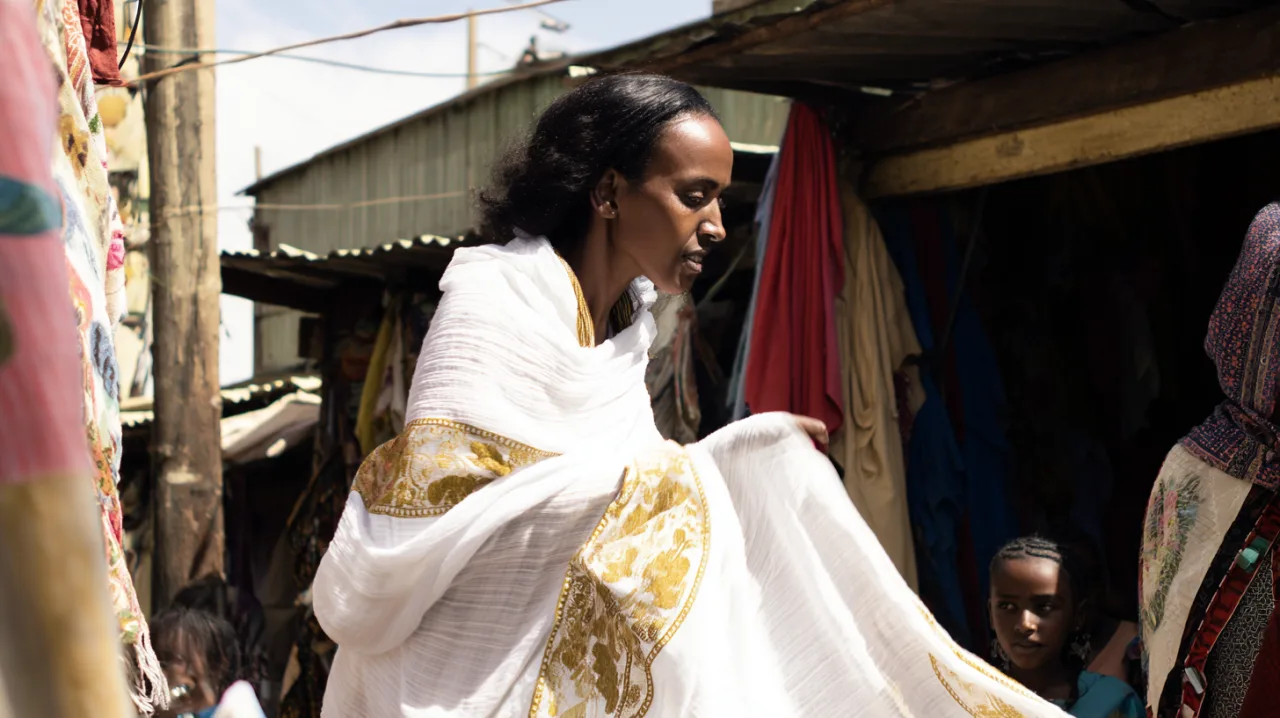
The habesha kemis is a full-length, traditionally white dress made from telafi — a hand-woven Ethiopian cotton fabric produced on traditional looms by skilled weavers, many of whom have inherited their craft across generations. The fabric itself has a distinctive texture: slightly heavier than commercial cotton, with a subtle natural weave that drapes beautifully and breathes well in warm weather. When you hold a genuine piece of telafi, you can feel the difference immediately.
What truly defines an authentic kemis, however, is the tilet embroidery — the intricate needlework applied along the hem, collar, and cuffs of the garment. Tilet is not printed, stamped, or machine-applied. It is hand-stitched by artisans who may spend days or even weeks completing a single dress, working geometric and floral motifs in colored thread that contrasts beautifully against the white base fabric. The density, precision, and color choices of the tilet are the clearest indicators of a garment's quality and origin.
How to Spot a Mass-Produced Imitation
The online market for Ethiopian traditional clothing has grown rapidly, and not all sellers offer genuine artisan work. Mass-produced imitations typically use machine-embroidered patterns that lack the slight irregularities and dimensional texture of hand-stitched tilet. The fabric is often a commercial cotton blend rather than authentic telafi, and the weight and drape feel noticeably different — lighter and less structured. If a listing does not specify hand-woven fabric or hand-embroidered tilet, those are significant red flags.
Another tell is price. A genuinely hand-woven, hand-embroidered habesha kemis represents many hours of skilled artisan labor. If a dress is priced comparably to a fast-fashion garment, it almost certainly is one. Authentic pieces from skilled artisans typically reflect the true cost of that craft — and purchasing them means your money goes directly to supporting Ethiopian weavers and seamstresses rather than overseas factories.
Regional Embroidery Styles Across Ethiopia
One of the most rewarding aspects of shopping for an enkutatash dress online is discovering the remarkable regional diversity within Ethiopian textile tradition. The habesha kemis is not a single uniform style — it is a living tradition that varies significantly by region, with each area contributing its own aesthetic vocabulary to the broader cultural tapestry.
Gondar kemis are perhaps the most immediately striking. Originating from the historic city of Gondar in the Amhara region, these dresses are characterized by bold, large-scale geometric patterns worked in deep colors — often royal blue, red, and black — against the white telafi ground. The embroidery tends to be wide and commanding, particularly along the hem, giving the dress a regal quality that reflects Gondar's history as an imperial capital.
Harar, Addis Ababa, and Tigray Styles
Harar kemis bring a completely different energy — vibrant, multicolor stitching that reflects the city's position as a crossroads of cultures and trade routes. Harari embroidery often incorporates a wider palette, with stitching in greens, oranges, yellows, and purples creating a festive, layered visual effect. These pieces are particularly popular for celebratory occasions where color and exuberance are welcome.
Addis Ababa styles tend toward refinement and elegance. The tilet in these urban pieces is typically finer in scale — delicate line work in white-on-white or subtle gold thread that rewards close inspection. This style has become closely associated with formal occasions and is a popular choice among diaspora shoppers who want something versatile enough to wear at both Enkutatash celebrations and upscale cultural events. Tigray kemis, meanwhile, feature distinctive cross-influenced motifs and often incorporate more structured collar embroidery, reflecting the region's deep connection to Ethiopian Orthodox Christianity.
Sizing Your Habesha Kemis for an Online Order
Sizing is one of the most common pain points for diaspora shoppers ordering an enkutatash dress online, and it deserves careful attention. Traditional habesha kemis sizing does not correspond to Western sizing systems — there is no direct equivalent of a US size 8 or a European size 38 in the Ethiopian tailoring tradition. Instead, the garment is sized by body measurements, and getting those measurements right is the single most important step you can take before placing an order.
You will need three key measurements, all taken in centimeters: your bust circumference (measured around the fullest part of your chest), your waist circumference (measured at the narrowest point of your natural waist), and your full length (measured from your shoulder or collarbone down to where you want the hem to fall, typically at the ankle). Many reputable sellers will also ask for hip measurements, particularly if you are ordering a kemis with a fitted silhouette rather than the more traditional loose cut.
Custom Tailoring vs. Ready-to-Wear
Many artisan sellers offer both ready-to-wear and custom-tailored options. Ready-to-wear kemis are made in standard artisan sizes and can be a good choice if your measurements fall within common ranges and you are ordering with sufficient lead time for any minor alterations. Custom tailoring, however, is the gold standard — your measurements are sent directly to the seamstress in Addis Ababa or Gondar, and the dress is made specifically for your body. The result is a garment that fits and moves as a habesha kemis should: gracefully and with intention.
Custom orders naturally require more lead time, which brings us to one of the most critical practical points for 2026 Enkutatash shoppers: order early. With Enkutatash falling on September 11th, diaspora shoppers in North America and Europe should place their orders no later than mid-July to allow 6–8 weeks for production and international shipping. Custom pieces may require even more time. Ordering in June gives you the most comfortable buffer and the widest selection of artisan availability.
Where to Shop Enkutatash Dress Online: Finding Sellers in Addis Ababa
The landscape of online Ethiopian clothing retail has matured considerably in 2026, but the challenge of verifying authenticity and artisan integrity remains real. The most trustworthy approach is to shop through platforms that have built direct relationships with weavers and seamstresses in Ethiopia, provide transparent information about who made each garment, and have established track records with diaspora customers.
Derbaba operates on exactly this model, connecting diaspora buyers directly with independent sellers in Addis Ababa. Each seller on the platform is vetted for authenticity, and the marketplace is designed specifically for the Ethiopian and Eritrean diaspora community — meaning the customer service, sizing guidance, and cultural context are built into the experience rather than bolted on as an afterthought. Shopping through a platform like Derbaba means your purchase supports the makers receiving fair compensation for their craft, not intermediaries who dilute both the cultural integrity and the economic benefit.
Questions to Ask Any Online Seller
If you are shopping outside a curated platform, there are several questions worth asking any seller before committing to a purchase. Ask whether the fabric is hand-woven telafi or a commercial cotton blend. Ask whether the embroidery is hand-stitched or machine-applied. Ask where the garment is made — specifically which city or region — and whether you can see photos of the weaving or embroidery process. A seller who can answer these questions with specifics and photos is almost certainly working with genuine artisans; one who deflects or gives vague answers is worth treating with caution.
Also ask about the seller's return and exchange policy, particularly for sizing issues. Reputable artisan sellers understand that international sizing can be tricky and will work with you on adjustments or exchanges. Read reviews specifically from diaspora customers who have received and worn the garments, as their feedback on fabric quality, embroidery detail, and fit is the most relevant to your situation.
Styling Your Enkutatash Kemis: Tradition Meets Personal Expression
Wearing a habesha kemis for Enkutatash is not simply about putting on a dress — it is about composing a complete look that honors tradition while reflecting your personal aesthetic. The kemis is the foundation, but the styling choices you make around it are what bring the look to life and make it distinctly yours.
The most traditional and universally beloved complement to a habesha kemis is the netela — a lightweight Ethiopian shawl, also woven from telafi, typically white with a colored border. The netela can be draped over the shoulders, wrapped loosely around the head, or arranged across one arm, and its versatility makes it a functional and beautiful addition to any Enkutatash outfit. Matching your netela's border color to the embroidery tones of your kemis creates a cohesive, intentional look.
Jewelry and Footwear
Traditional Ethiopian jewelry elevates the kemis beautifully. Habesha earrings — often worked in gold or silver with filigree detailing — are a classic choice, as is a kitab pendant, the traditional Ethiopian cross or prayer capsule worn on a chain. These pieces carry spiritual and cultural significance that complements the ceremonial weight of Enkutatash. For footwear, leather sandals in natural tones are the traditional pairing, grounding the look in the same artisan tradition as the dress itself.
For diaspora shoppers navigating between cultural celebration and everyday life, the habesha kemis is also surprisingly adaptable. A fine-line Addis Ababa-style kemis worn with minimal jewelry and contemporary sandals can move from an Enkutatash gathering to a cultural event or formal dinner with ease. The garment's inherent elegance does most of the styling work for you.
Beyond Enkutatash: A Year-Round Cultural Investment
A quality habesha kemis is far more than a single-occasion dress. For diaspora families, it is a wardrobe anchor that earns its place through repeated, meaningful wear across the Ethiopian liturgical and cultural calendar. Timkat, the Ethiopian Epiphany celebrated in January, calls for traditional dress as communities gather for processions and ceremonies. Meskel, the Finding of the True Cross celebrated in September, is another major occasion where the kemis is worn with pride.
Beyond religious holidays, the habesha kemis is the dress of choice for Ethiopian and Eritrean weddings, baptisms, and graduations — occasions where families want to honor their heritage in the most visible and beautiful way possible. Investing in a well-made, authentic kemis means you are building a garment that will be worn, admired, and perhaps even passed down. The telafi fabric, when properly cared for, is remarkably durable, and the hand-stitched tilet only gains character with age.
Care for your kemis by hand-washing in cool water with a gentle detergent, avoiding harsh wringing, and drying flat in the shade. Store it folded with the embroidery protected, and iron on a low setting with a pressing cloth over the tilet to preserve the stitching. With this care, a quality habesha kemis will remain a treasured part of your wardrobe for years and decades to come.
Conclusion: Celebrate Enkutatash 2026 in a Dress That Means Something
Enkutatash is a celebration of renewal — of the rains ending, the flowers blooming, and another year beginning with hope and color. The habesha kemis you wear on that day is not just clothing; it is a statement of who you are, where your roots run, and what you carry with you across oceans and years. Shopping for an enkutatash dress online in 2026 means you have access to genuine artisan work from across Ethiopia, delivered to your door in Toronto, London, or Washington D.C., in time to celebrate in the fullness of your heritage.
Start with your measurements, know your regional style preferences, ask the right questions of your sellers, and give yourself the 6–8 weeks of lead time that a handcrafted garment deserves. The result will be a dress that fits your body, honors your culture, and carries the hands of the weaver and seamstress who made it into every celebration you attend. Shop authentic habesha kemis and Ethiopian and Eritrean traditional clothing on Derbaba — where diaspora buyers meet sellers in Addis Ababa, and every purchase is a thread connecting you to home.