Ethiopian Kemis Size Guide: Find Your Perfect Fit
Order your habesha kemis with confidence. This Ethiopian kemis size guide covers bust, waist, hips, length, and sleeve measurements for a flawless fit.
Key Takeaways
- Ethiopian kemis sizing does not follow US, UK, or European size charts — always measure your body, not your clothing tag.
- Five core measurements — bust, waist, hips, total length, and sleeve length — are all you need to order with confidence.
- Hand-woven habesha tibeb cloth has minimal stretch, so sizing up by one is often the right call for comfort and movement.
- Regional styles from Gondar, Tigray, Addis Ababa, and Bahir Dar have distinct silhouettes that affect how your measurements translate to a finished garment.
- Ease allowance — the extra fabric built into a garment — is critical for traditional dancing and ceremonial wear.
- Custom-made kemis from artisan sellers on derBaba can be tailored to your exact measurements, eliminating guesswork entirely.
Why Sizing a Habesha Kemis Is Different
Ordering a habesha kemis from across the ocean shouldn't mean crossing your fingers and hoping it fits — but for too many diaspora shoppers, that's exactly what happens. You find a stunning white cotton kemis with intricate tibeb embroidery, place the order, and wait three weeks only to discover the sleeves are too short or the chest too narrow. This Ethiopian kemis size guide exists to end that frustration once and for all.
The core problem is a fundamental mismatch between sizing systems. A size "Medium" in the United States is not the same as a size "Medium" produced by an artisan in Addis Ababa or Gondar. Ethiopian garment sizing has historically been guided by the tailor's eye, local body proportions, and the specific drape of habesha cotton — not by the standardized numeric or letter-based charts used in Western retail. When you shop online without understanding this gap, you're essentially guessing.
There's also the matter of garment construction philosophy. Western clothing is often cut with a close, body-skimming fit in mind, with stretch fabrics compensating for size variation. A traditional kemis, by contrast, is designed to flow, to honor the body with graceful movement, and to allow the wearer to dance, pray, and celebrate freely. That requires a different approach to measuring and ordering.
The Five Measurements Every Kemis Buyer Needs
Before you browse a single listing, grab a soft measuring tape, wear form-fitting clothing or undergarments, and recruit a friend if possible — self-measuring can introduce errors, especially for bust and hip measurements. Record everything in centimeters, as most Ethiopian artisan sellers work in metric units.
1. Bust Measurement
Wrap the measuring tape around the fullest part of your chest, keeping it parallel to the floor and snug but not tight. This is your bust circumference. For a kemis, the bust measurement is the most critical number because the garment's bodice is cut to this dimension first. If you're between measurements, always round up — a kemis that is slightly generous across the chest is far more comfortable and authentic-looking than one that pulls.
2. Waist Measurement
Measure your natural waist, which sits above your hip bones and below your ribcage — typically the narrowest part of your torso. Many kemis styles, particularly those from Addis Ababa and the central highlands, are designed with a defined waist seam or a subtle A-line flare that begins at the natural waist. Knowing this measurement helps artisans cut the bodice-to-skirt transition correctly.
3. Hip Measurement
Stand with your feet together and measure around the fullest part of your hips, usually 7 to 9 inches below your natural waist. The hip measurement determines how much ease is built into the lower skirt panels. For styles with a straighter silhouette — common in some Tigray regional designs — the hip measurement is especially important because there is less flare to accommodate movement.
4. Total Length
This is the measurement most shoppers forget, and it causes the most disappointment. Total kemis length is measured from the top of your shoulder (at the base of your neck) straight down to where you want the hem to fall. Traditional kemis are floor-length, typically ending just above the ankle. However, modern interpretations and everyday styles may fall at mid-calf or knee length. Be explicit with your seller about your preferred hem point — do not assume "floor-length" means the same thing to everyone.
5. Sleeve Length
Measure from the top of your shoulder down to your wrist bone with your arm slightly bent. Ethiopian kemis sleeves range from sleeveless and cap-sleeved casual styles to the long, fitted sleeves characteristic of formal Gondar and Tigray ceremonial dress. If you're ordering for Timkat, Enkutatash, or a wedding, a long-sleeved style is traditional and expected — so get this measurement right.
How Fabric Type Affects Your Fit
Not all habesha kemis are made from the same material, and fabric choice has a direct impact on how a garment fits and feels. Understanding the difference between traditional hand-woven cloth and modern blended fabrics will help you make smarter sizing decisions.
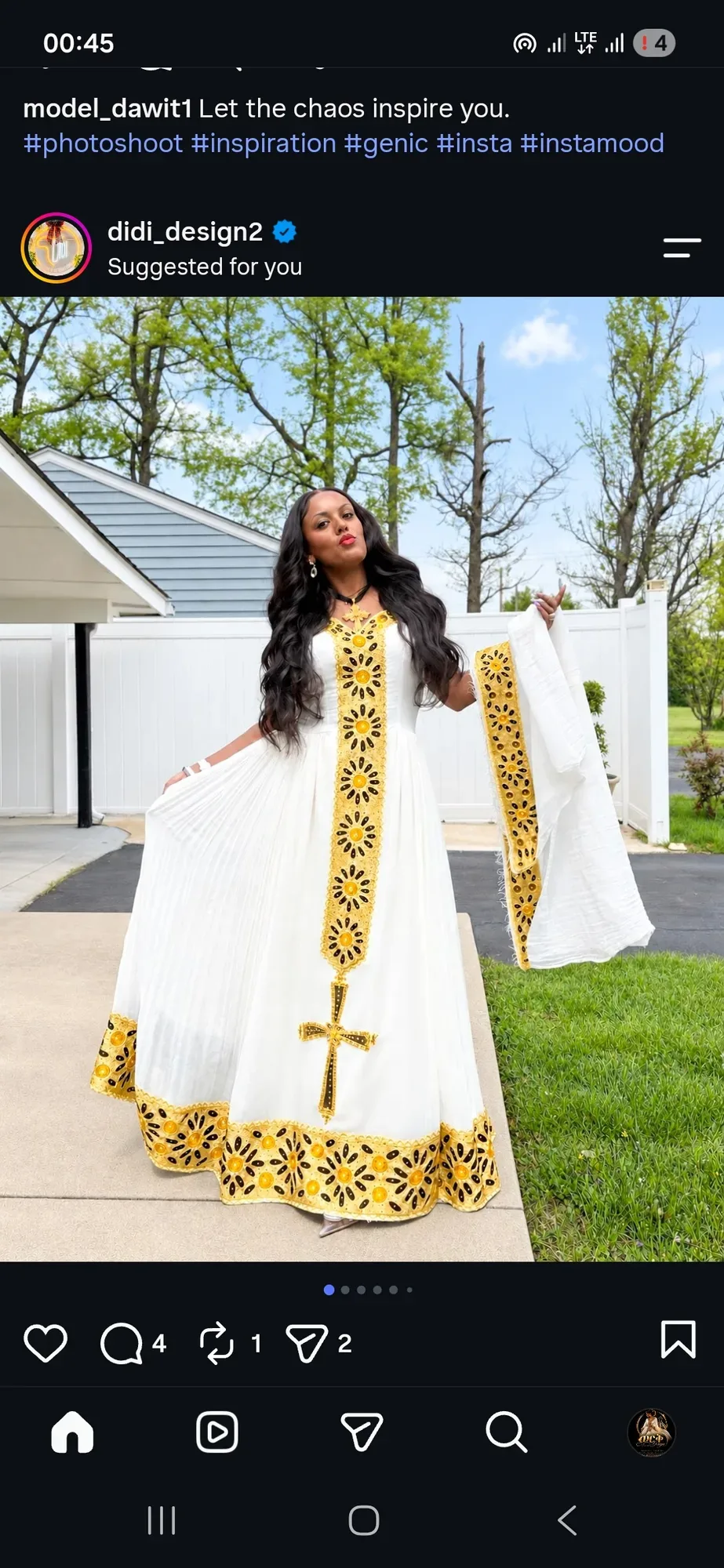
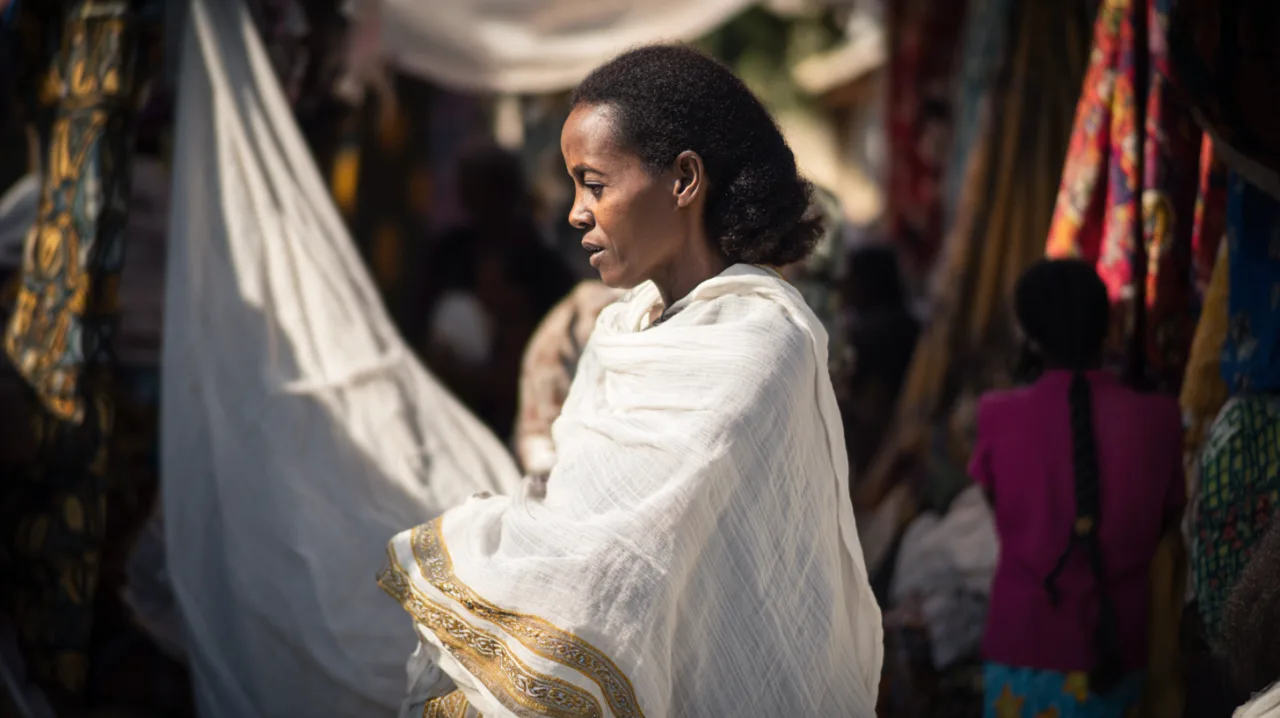
Authentic habesha cotton — the hand-woven fabric used in traditional kemis, often featuring the distinctive tibeb border embroidery — has almost no stretch. This is a dense, tightly woven textile that has been produced on traditional looms in Ethiopia and Eritrea for centuries. Its rigidity is part of its beauty: the fabric holds its shape, drapes with dignity, and improves with age. But because it doesn't give, you must size generously. If your bust measurement sits right on the boundary between two sizes, choose the larger one without hesitation.
Modern kemis made from cotton-polyester blends or machine-woven fabrics offer a small amount of stretch and may fit more like Western clothing. These are often more affordable and easier to care for, but they lack the texture, weight, and cultural authenticity of hand-woven tibeb cloth. If you're ordering a blend-fabric kemis, you may be able to follow the seller's size chart more closely — but when in doubt, still size up.
Pro tip: Always ask your seller whether the fabric is hand-woven habesha cotton or a blended material before finalizing your size selection. This single question can save you from a poor fit.
Regional Silhouettes and How They Change Your Measurements
Ethiopia is a country of remarkable cultural and regional diversity, and this diversity is expressed vividly in traditional dress. The kemis is not a single uniform garment — it exists in distinct regional interpretations, each with its own silhouette, embroidery placement, neckline, and cut. When using this Ethiopian kemis size guide, understanding which regional style you're ordering is essential.
Gondar Style
The Gondar kemis is widely considered the most formal and ceremonially significant style. It typically features a fitted bodice, long sleeves with embroidered cuffs, and a full, flowing skirt with elaborate tibeb borders along the hem and collar. Because of the fitted bodice, your bust and waist measurements must be precise. Gondar-style kemis are often ordered for weddings and major religious holidays like Timkat and Meskel.
Tigray Style
Tigrayan habesha dress tends toward a straighter, more columnar silhouette with distinctive bold embroidery patterns along the neckline and hem. The cut is less flared through the hip and skirt, which means your hip measurement plays a larger role in determining comfort and ease of movement. Tigrayan kemis are often characterized by particularly striking color combinations in the tibeb embroidery.
Addis Ababa and Urban Contemporary Styles
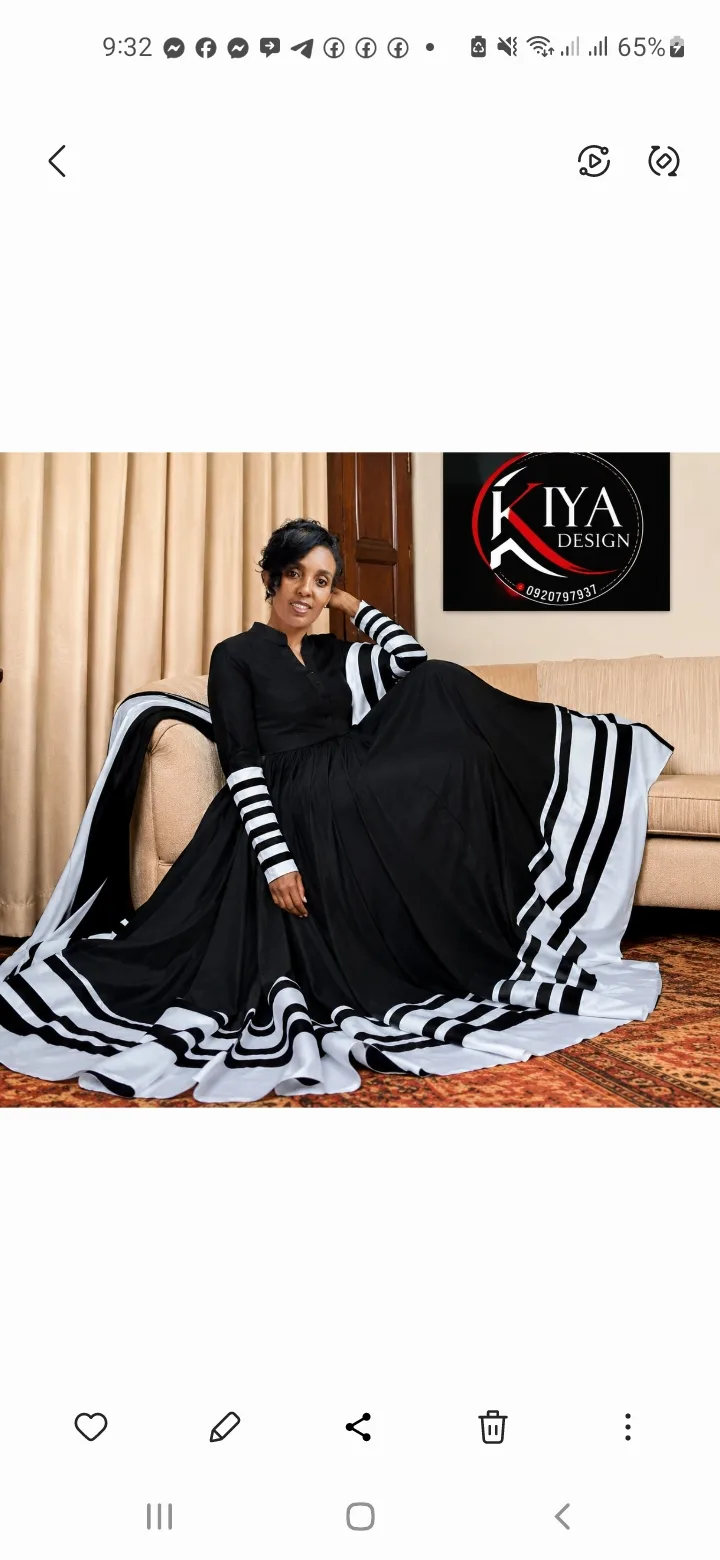
Urban Ethiopian kemis, particularly those produced in Addis Ababa boutiques and exported to the diaspora market, often blend traditional construction with contemporary silhouettes. You'll find A-line cuts, defined waists, and hemlines that range from floor-length to midi. These styles tend to be slightly more forgiving in fit because they're designed with a broader customer base in mind, but your five core measurements remain essential.
Bahir Dar and Amhara Styles
The Amhara regional style, common around Bahir Dar and the Lake Tana basin, features softer, more fluid draping with distinctive embroidery that often runs in vertical panels rather than horizontal borders. These garments are frequently cut with extra width through the body, making them particularly comfortable for all-day wear during multi-day celebrations like Enkutatash.
Understanding Ease Allowance in Kemis Construction
Ease allowance is the difference between your actual body measurements and the finished dimensions of a garment. It is the breathing room that allows you to move, sit, raise your arms, and — critically for habesha dress — dance. Most shoppers have never heard the term, but every skilled tailor builds ease into every garment they cut.
For a traditional kemis worn at a wedding or cultural celebration, you should expect and want a minimum of 2 to 4 centimeters of ease at the bust and 3 to 5 centimeters at the hip. This isn't because the garment is "too big" — it's because a kemis that restricts your movement is a kemis that has failed its purpose. When communicating with an artisan seller, you can simply say: "Please add standard ease for dancing" and most experienced makers will understand exactly what you mean.
For everyday or office-appropriate kemis styles, ease can be reduced slightly for a cleaner, more tailored silhouette. But for any garment destined for Enkutatash, a wedding reception, or Timkat processions, err on the side of generosity. You will never regret a kemis that moves beautifully with you.
Ordering Custom Kemis: How to Communicate with Artisan Sellers
One of the most powerful options available to diaspora shoppers today is ordering a fully custom-made kemis directly from an artisan seller. Platforms like derBaba connect buyers in North America and Europe with skilled Ethiopian and Eritrean clothing makers who can produce a garment tailored precisely to your measurements. The result is a kemis that fits as though it was made for you — because it was.
To place a successful custom order, you need to communicate clearly and completely. Write out your five measurements in centimeters. Specify your preferred hem length with a reference point (e.g., "I am 165 cm tall and want the hem 5 cm above my ankle"). State your preferred sleeve length and style. Describe the neckline you want — round, V-neck, or the traditional boat neck common in Gondar styles. If you have a reference photo of a style you love, share it.
Also communicate your occasion. A kemis for a graduation ceremony has different requirements than one for a Timkat procession or a weekend cultural event. Artisan sellers who specialize in habesha dress understand these nuances deeply — your job is simply to give them the information they need to serve you well.
"The difference between a kemis that fits and one that transforms you is usually just five measurements and a clear conversation." — derBaba artisan community
Common Sizing Mistakes and How to Avoid Them
Even with the best intentions, diaspora shoppers make predictable errors when ordering habesha kemis online. The most common is measuring over thick clothing — always measure over thin, form-fitting layers or directly on the body. The second most common mistake is ordering based on a Western size tag without taking actual body measurements. Your US size 8 or UK size 12 means nothing to an Ethiopian artisan working from centimeter measurements.
A third frequent error is forgetting to account for height. Two people can share identical bust, waist, and hip measurements but differ by 15 centimeters in height — and a kemis cut for one will look completely wrong on the other. Always include your height when ordering custom or made-to-measure garments. Finally, don't assume that a kemis you've ordered before from one seller will fit the same way from a different artisan. Construction practices vary, and every maker has their own approach to ease and cut.
Caring for Your Kemis to Preserve Its Fit
Proper care extends the life of your kemis and ensures it retains its shape and fit over time. Hand-woven habesha cotton should always be hand-washed or machine-washed on a gentle cold cycle — hot water can cause significant shrinkage in the first wash, which will undo all the careful measuring you did at the ordering stage. Lay the garment flat to dry rather than hanging it, which can stretch the shoulders and distort the silhouette.
If your kemis arrives slightly snug — perhaps you ordered a hand-woven style and the fabric ran a touch smaller than expected — gentle hand-washing and careful stretching while damp can recover a centimeter or two of ease. If it arrives slightly large, a skilled local tailor can take in the side seams without disturbing the tibeb embroidery. Neither situation is ideal, but both are recoverable. The goal, of course, is to measure carefully and get it right the first time.
Conclusion: Your Perfect Kemis Is One Measurement Away
The habesha kemis is more than a garment — it is a living expression of Ethiopian and Eritrean heritage, craftsmanship, and identity. Whether you're wearing it to celebrate Enkutatash with family, to honor a bride at a wedding, or simply to carry your culture with you on an ordinary day, you deserve a kemis that fits beautifully and moves with you. This Ethiopian kemis size guide gives you every tool you need: five core measurements, an understanding of fabric and regional styles, the concept of ease allowance, and the knowledge to communicate clearly with the artisans who make these extraordinary garments.
The investment of twenty minutes with a measuring tape will pay dividends every time you put on your kemis and feel it fall exactly right. Don't leave fit to chance when the solution is this straightforward. Shop authentic habesha kemis and Ethiopian and Eritrean traditional clothing on derBaba, where you'll find both ready-to-ship styles and custom-made options crafted by skilled artisans who take your measurements — and your heritage — seriously.
Wondering what a fair price looks like? See what 146 Addis Ababa shops actually charge for a habesha kemis — original field data on prices, lead times and fabric.