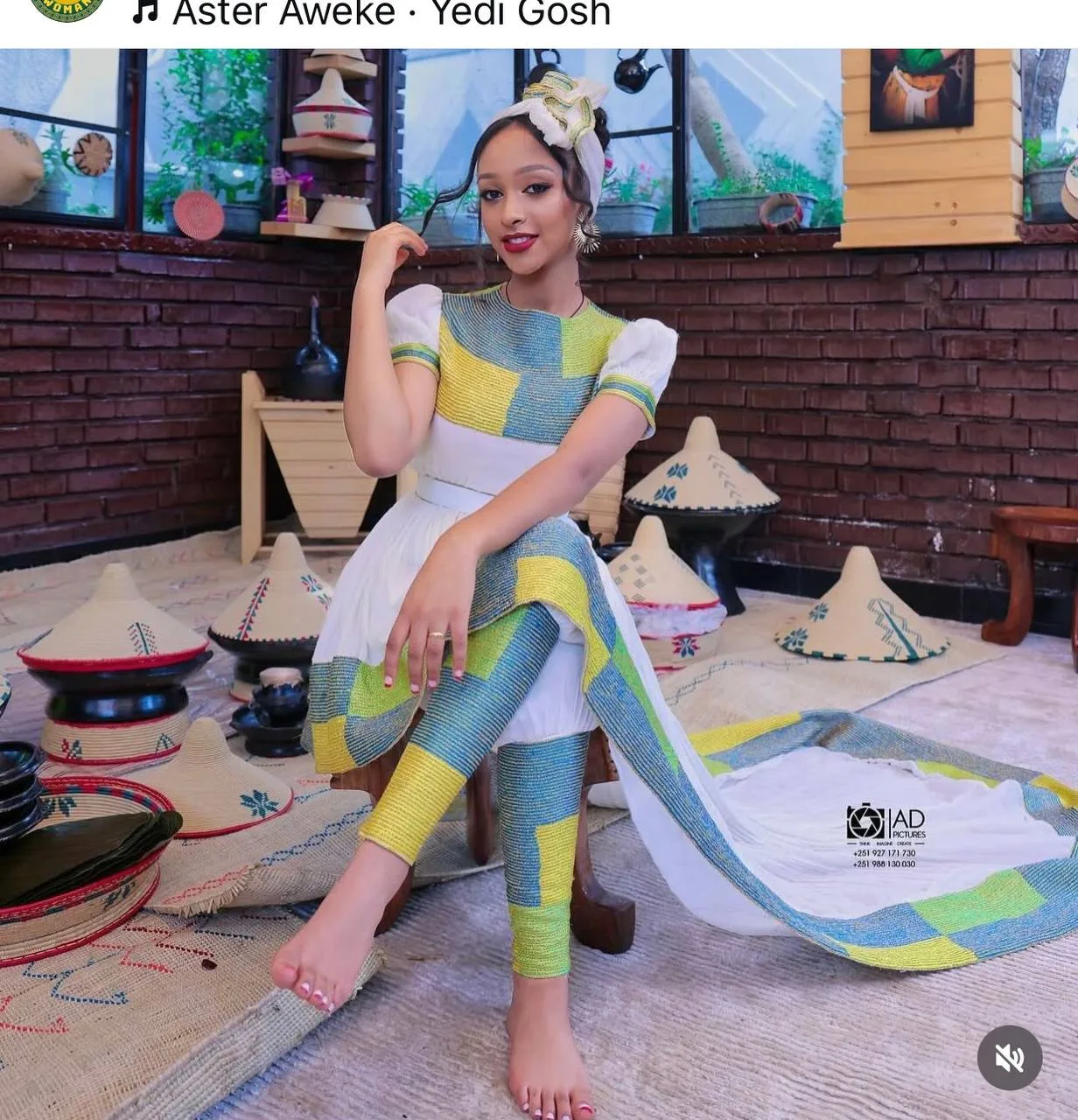
Where to Buy Habesha Clothing Online: Authentic Guide
Learn where to buy habesha clothing online, spot authentic handwoven pieces, and shop with confidence. Shop habesha kemis on Derbaba today.
You've found the perfect wedding invitation, the date is set, and now you need a habesha kemis that is truly authentic, not a cheap imitation. If you live in Toronto, Washington DC, London, Johannesburg, Tel Aviv, or the Gulf, knowing where to buy habesha clothing online can feel like a gamble. Sizing is uncertain, shipping takes time, and "handwoven" is a word that gets used far too loosely. This guide walks you through how to shop online with confidence, from finding trustworthy sellers to spotting real craftsmanship.
Habesha clothing is more than fashion. It is a living textile tradition shared by Ethiopians and Eritreans, worn at weddings, baptisms, Enkutatash, Timkat, Meskel, and Sunday church. Buying it well means honoring the weavers and embroiderers who make it, and protecting yourself as a buyer along the way.
Key Takeaways
- Authentic habesha clothing is handwoven cotton from regional traditions in places like Addis Ababa, Gondar, Tigray, and Bahir Dar.
- The best way to buy is direct from makers, and a good seller will happily send a video of the exact piece.
- Check weave density, hand-stitched tilet borders, fabric weight, and whether the seller can name the region and weaver.
- Sizing is the biggest challenge, so favor sellers who offer clear size charts, custom measurements, or made-to-order options.
- Order at least 6 to 8 weeks before a wedding or major holiday, and agree on price, deposit, and delivery in writing before you pay.
- Payment and delivery are arranged between you and the seller, so confirm every detail in chat first.
What Makes Habesha Clothing Authentic?
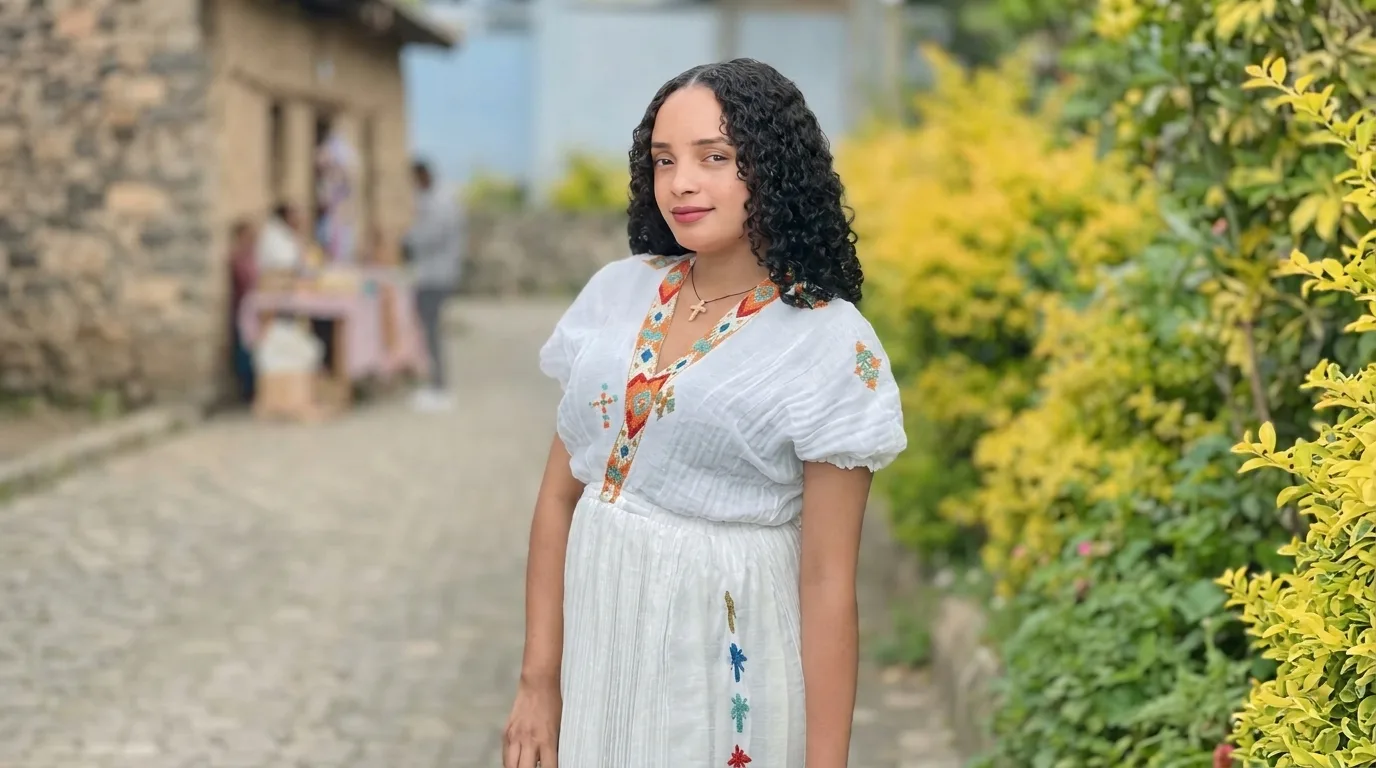
Authentic habesha clothing is made from handwoven cotton, usually spun and woven on traditional looms in regions such as Addis Ababa (the Shiro Meda weaving district), Gondar, Tigray, and Bahir Dar. The fabric is called shemma in Ethiopia, and it is the foundation of the classic white kemis, the netela shawl, and the gabi.
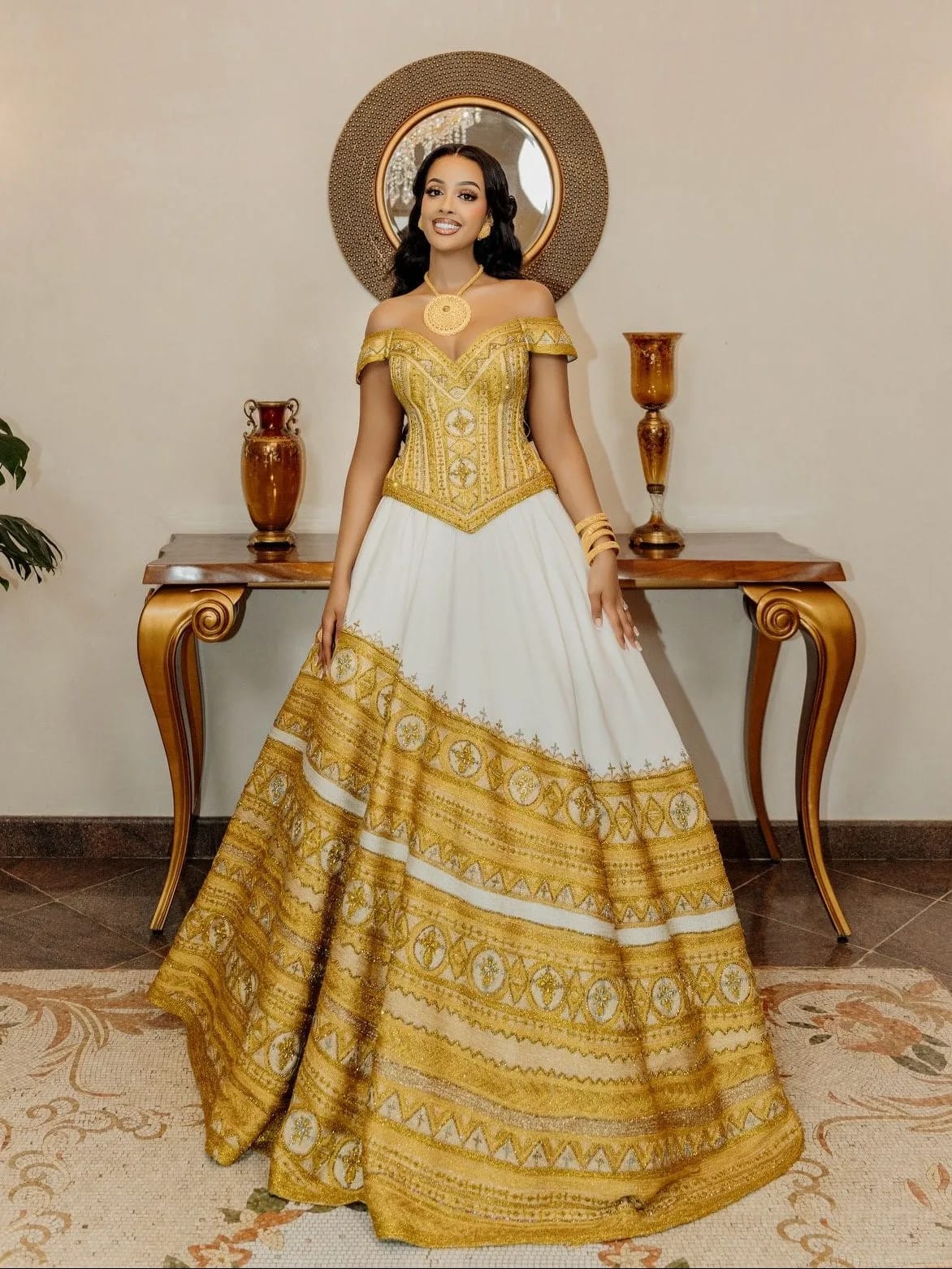
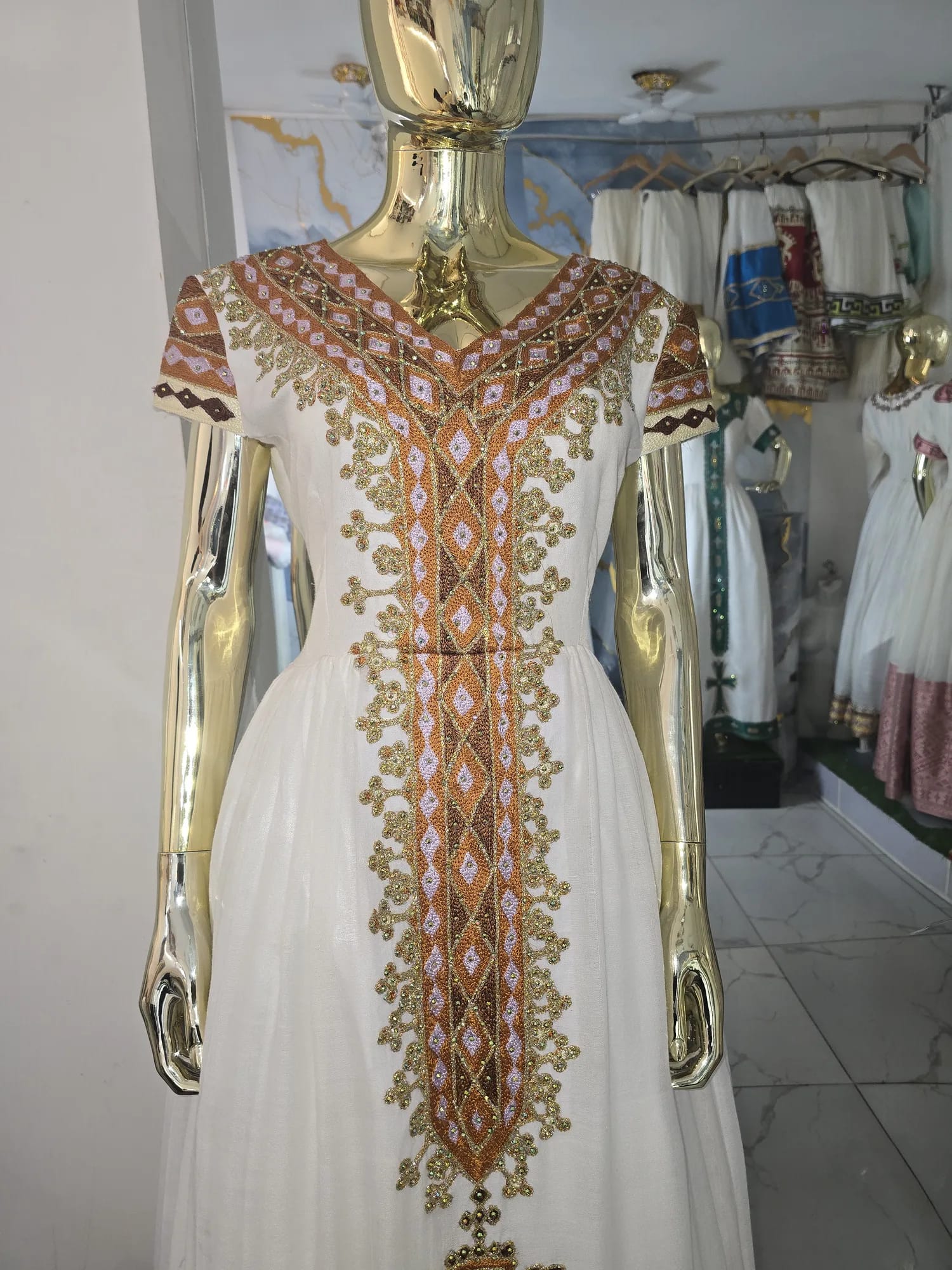
The decorative border woven or stitched along the hem, neckline, and sleeves is called tilet. On a traditional piece, these patterns carry regional character. Gondar, Tigray, Wollo, and Gojjam weaving each have recognizable motifs, color palettes, and levels of density.
Eritrean traditional dress shares deep roots with Ethiopian styles, particularly in Tigrinya-speaking communities, where the zuria and kidan habesha are worn with equal pride. Whether you are shopping for Ethiopian or Eritrean pieces, the same core principle applies: real craftsmanship leaves real evidence in the cloth.
Where to Buy Habesha Clothing Online
There are three main places to shop, and each has its own trade-offs between trust, price, and selection. Understanding them helps you choose the right route for the occasion.
Curated Marketplaces
A curated marketplace brings many boutiques and makers together in one place, which makes it easy to compare styles, prices, and sellers side by side. The advantage is selection: you can browse kemis, netela, and menen pieces without hunting across ten different accounts. On Derbaba, you can browse Habesha clothing from shops and open an individual seller's page to see their full collection.
The trade-off is that you still need to do your own checking. A marketplace connects you to sellers, but the transaction, including price, deposit, and delivery, is between you and the shop. Treat every listing as the start of a conversation, not a guarantee.
Boutiques on Social Media
Many of the best habesha boutiques operate on Instagram, TikTok, and Facebook, posting new arrivals and bridal pieces directly from their studios. This is often where you find unique, small-batch work and the most flexible custom orders. Prices can be fair because there is no middle layer.
The risk is inconsistency. Some accounts are run by skilled makers, while others simply resell imported machine-made items with handwoven captions. Always ask for a video, check how long the account has been active, and look at whether past customers appear in the comments.
Diaspora-Run Shops
Diaspora-run shops, often based in cities like Toronto, Minneapolis, London, Dubai, or Johannesburg, import from Ethiopia or Eritrea and sometimes hold stock locally. The benefit is that you may be able to confirm sizing or even see pieces in person, which lowers the risk considerably.
The trade-off is price: local stock carries import, rent, and handling costs, so the same kemis can cost more than ordering directly from a weaver or studio. For many buyers, that premium is worth it for a last-minute event or a first-time purchase.
How to Buy Direct From Makers
The most reliable way to get an authentic piece is to buy direct from the maker or a shop that works closely with its weavers. Direct buying shortens the chain between the loom and you, which usually means better transparency and fairer pricing for the artisan.
When you contact a seller, ask who made the piece and where. A genuine seller can usually tell you the region, the weaving style, and often the name of the weaver or workshop. Vague answers like "from Ethiopia" with no detail are a reason to slow down.
Then ask for a short video of the exact item, not a stock photo. A video shows how the fabric moves, how dense the weave looks, and how the tilet catches the light. It is the single most effective way to separate real handwork from catalog images.
How to Spot Authentic Shemma and Tilet Embroidery
You can judge authenticity by checking four things: weave density, tilet stitching, fabric weight, and seller knowledge. None of these require expert training, just a careful eye and a willingness to ask questions.
Weave Density and Texture
Handwoven cotton has a subtle, slightly irregular texture. Look closely at a video or photo: you should see a soft, breathable weave with natural variation, not the perfectly uniform, shiny surface of machine-made polyester blends. Real shemma is lightweight but substantial, and it drapes rather than clings.
Hand-Stitched Tilet Borders
On quality pieces, the tilet is either woven into the fabric on the loom or embroidered by hand with visible, even stitching. Zoom in on the border. Hand embroidery shows tiny variations in stitch spacing, while machine embroidery looks flat, identical, and often sits stiffly on top of the cloth. Check the back of the border too, since neat finishing on the reverse is a sign of care.
Fabric Weight and Feel
Ask the seller about the fabric weight and the cotton quality. A traditional kemis should feel airy enough to wear at a summer wedding yet hold its shape. Very heavy, stiff, or synthetic-feeling cloth is a red flag, as is fabric that is described as "cotton" but photographed with a plastic sheen.
Seller Knowledge
Finally, test the seller's knowledge. Someone who truly works with weavers can explain the difference between Gondar and Tigray patterns, how long a piece took, and how to care for it. If they cannot answer simple questions about the origin of their own stock, you may be buying from a reseller with no real connection to the craft.
Getting the Right Size When You Can't Try It On
Sizing is the biggest challenge when shopping online, because habesha dresses are fitted differently from Western clothing and every maker cuts a little differently. The safest approach is to choose sellers who publish clear size charts, accept custom measurements, or make pieces to order.
Before you buy, take your own measurements: bust, waist, hips, shoulder width, sleeve length, and full length from shoulder to hem. Send them to the seller and ask them to confirm the fit in writing. For weddings and special occasions, made-to-order is almost always the better choice, since it is cut for your body rather than pulled from existing stock.
For a detailed walkthrough of how to measure and read size charts, see our guide to finding your perfect kemis fit. Also remember that traditional dresses often have generous skirts and may be altered, so ask whether the seller can adjust length or add extra seam allowance if you are between sizes.
Shipping, Customs, and Timing
Plan to order at least 6 to 8 weeks before any major event, whether that is a wedding, Meskel, Timkat, or Enkutatash. Made-to-order pieces need weaving or embroidery time, and shipping across borders adds more. Rushing usually costs more and leaves no room for fixes if something is wrong.
Delivery options vary from seller to seller and from country to country, so never assume a shop ships everywhere. Ask directly whether they can deliver to your location, how long it typically takes, and who is responsible for any customs duties or import fees. Customs rules differ across Canada, the USA, the UK, and the European Union, and handmade textiles can sometimes be charged duty on arrival.
Agree on delivery method, timeline, and costs in the chat before any money changes hands, and keep that conversation as your record. If a seller is vague about delivery or promises impossibly fast turnaround on a custom piece, treat that as a warning sign.
Understanding Price: Why Habesha Clothing Costs What It Does
The price of habesha clothing reflects three main factors: fabric quality, hand embroidery hours, and whether the piece is handwoven or machine-made. Knowing this helps you compare listings fairly instead of simply chasing the lowest number.
A simple handwoven cotton kemis with a modest woven border sits at the accessible end. A bridal kemis with dense, hand-stitched tilet across the bodice, sleeves, and hem can represent many days of skilled labor, and the price rightly climbs. Machine-made imitations can look similar in a small photo but cost a fraction, because there is no weaving or embroidery time behind them.
If a price seems too good to be true for a piece described as handwoven and hand-embroidered, it probably is. That does not mean you must spend the most, only that you should ask the seller what you are paying for and expect an honest answer.
How to Protect Yourself When Buying Online
You can protect yourself by asking for proof, agreeing on terms in writing, and using payment methods you trust. Payment is arranged between you and the seller, so careful communication is your main safeguard.
- Ask for real photos and videos of the exact item, including close-ups of the tilet and the fabric in natural light.
- Agree on price, deposit, and delivery in chat before paying, and save the conversation.
- Use only the contact number shown on the shop's page rather than a different number someone sends you in a message.
- Check the return and exchange policy, especially for made-to-order pieces, which are often final sale.
- Read buyer reviews and look for photos from real customers wearing the pieces.
- Choose traceable payment methods where possible, and be cautious of anyone who pushes you toward an unusual or irreversible method.
Small deposits for custom work are normal, since the maker needs to buy materials and set aside time. Just make sure the deposit amount, the balance, and the delivery date are all clear before you commit.
Shopping for Weddings, Holidays, and Everyday Wear
Match your purchase to the occasion. For a wedding, start early, choose made-to-order, and plan at least one round of fit confirmation. For Meskel, Timkat, and Enkutatash, white handwoven kemis and netela are the classic choices, and demand rises sharply in the weeks beforehand, so ordering early protects you from sold-out stock.
For everyday and church wear, you may prefer lighter pieces with simpler borders that are easy to wash and wear repeatedly. Whatever the occasion, treat your kemis as a garment to keep: ask the seller for care instructions, and store it folded in a cool, dry place to preserve the cotton and the embroidery.
Conclusion: Buy With Confidence, Wear With Pride
Knowing where to buy habesha clothing online comes down to a few habits: buy direct from makers when you can, ask for a video of the exact piece, check the weave, tilet, and fabric weight, confirm sizing carefully, and settle price, deposit, and delivery in chat before you pay. Do that, and you will avoid most of the disappointments that make online shopping feel risky.
Every authentic kemis carries the work of weavers and embroiderers whose skills have been passed down for generations, and choosing it well keeps that tradition alive. When you are ready to start, shop authentic habesha kemis and Ethiopian & Eritrean traditional clothing on Derbaba.